

Most dogs never need manual anal gland expression. If your dog is scooting repeatedly, smelling persistently fishy, or licking their rear end more than usual, that’s when expression becomes worth considering — but only after a vet has ruled out other causes and confirmed the glands are actually full.
Before anything else, check for these red flags. If any are present, skip the home remedies and call your vet today:
- Visible swelling, heat, or a lump near the anus
- Blood or pus in the discharge
- Your dog cries or snaps when you touch the area
- Fever, lethargy, or loss of appetite alongside anal discomfort
- The area looks like it might rupture (skin discolored, taut, or weeping)
Do not attempt at-home expression if any red flag above is present. Impacted, infected, or abscessed glands require veterinary treatment — antibiotics, flushing, or in some cases surgical drainage. Pressing on an infected sac can rupture it internally and cause serious harm.
If no red flags are present, the conservative first step is dietary: firmer stools from added fiber often resolve mild fullness on their own. Expression — by a groomer, vet, or you at home — is the next step only if signs persist and a vet has cleared it.
Table of Contents
- What anal glands are and how they normally work
- How to tell if your dog needs anal gland expression
- Common causes and risk factors for anal gland problems
- How vets diagnose anal gland problems and when to see one urgently
- Treatment choices: expression, medical care, and surgery
- Step-by-step at-home expression: what you need and how to do it safely
- How often glands may need expressing and what it costs
- Evidence-based prevention: diet, fiber, and weight management
- Risks, complications, and aftercare following expression
- Key Takeaways
- The part most guides skip about anal gland expression
- Useful sources and where to learn more
- Petbite’s grooming services are the easier path for most owners
What anal glands are and how they normally work
Anal glands (more precisely, anal sacs) are two small, fluid-filled pouches sitting just inside the anus at roughly the 4 o’clock and 8 o’clock positions. Each sac connects to the skin surface through a tiny duct. The fluid inside is oily, strong-smelling, and unique to each dog — it’s used for scent marking and identity signaling, which is why dogs sniff each other’s rear ends on first meeting.
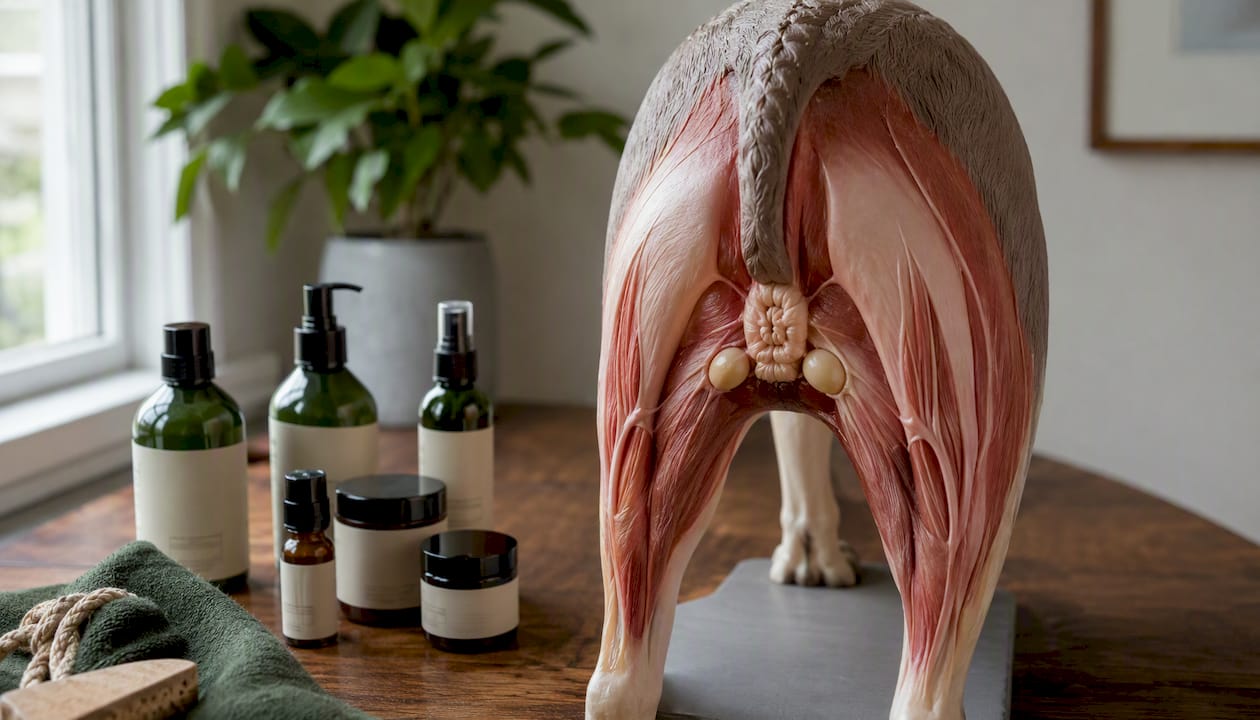
Under normal circumstances, the pressure of a firm stool passing through the rectum squeezes both sacs and expresses a small amount of fluid automatically. No intervention needed. The system only breaks down when stools are consistently soft or loose, because soft stool doesn’t generate enough pressure to empty the sacs. Fluid accumulates, thickens, and eventually causes discomfort or infection.
[Editor note: A simple labeled diagram showing sac positions at 4 and 8 o’clock, the duct opening at the anal surface, and the surrounding sphincter muscle would help readers visualize this without requiring surgical detail.]
How to tell if your dog needs anal gland expression
The classic signs of full or problematic glands are recognizable once you know what to look for:
- Scooting — dragging the rear end across the floor, carpet, or grass
- Persistent fishy odor that doesn’t go away after bathing
- Excessive licking or chewing at the base of the tail or rear end
- Redness or visible swelling around the anus
- Straining or discomfort during defecation
- Visible discharge — a brownish, oily, or bloody fluid near the anus
Here’s the catch: scooting is common but non-specific. Intestinal parasites, seasonal allergies, perianal dermatitis, and even ear infections (dogs sometimes scoot when itchy anywhere near the tail base) can all look identical. A vet exam before you establish any home-expression routine is the only way to confirm the glands are actually the problem.
Pro Tip: Photograph any swelling or discharge and note when it happens — after walks, after grooming, after meals. That pattern gives your vet far more to work with than a verbal description alone.
Common causes and risk factors for anal gland problems
Stool quality is the single biggest driver. When a dog consistently produces soft, loose, or small-volume stools, the sacs don’t get the mechanical pressure they need to empty. Everything else on this list tends to feed back into that same problem:
- Obesity reduces muscle tone and changes the angle of the sacs relative to the rectum
- Chronic diarrhea from food sensitivities, infections, or inflammatory bowel disease
- Low-fiber diet that produces small, soft stools without enough bulk
- Allergies (food or environmental) that cause chronic loose stool or perianal inflammation
- Breed and anatomy — small breeds like Chihuahuas, Toy Poodles, and Basset Hounds are disproportionately affected, likely due to sac positioning
- Inactivity and sedentary lifestyle, which reduces overall muscle engagement
When a dog needs expression every few weeks despite dietary management, that frequency is a signal, not just a maintenance schedule. Recurrent impaction warrants a full veterinary workup: allergy testing, fecal exam for parasites, and sometimes imaging to rule out structural abnormalities or masses.
How vets diagnose anal gland problems and when to see one urgently
A typical veterinary assessment starts with history — how long the signs have been present, stool consistency, diet, and any prior episodes. The vet then performs a rectal palpation, feeling each sac for size, firmness, pain response, and wall texture. If discharge is present, cytology (microscopic examination of the fluid) can distinguish normal secretion from infection. Sedation is occasionally needed for painful dogs, and imaging is added when a mass is suspected.
Book an urgent appointment if your dog shows any of these:
- A swelling that is hot, rapidly growing, or visibly discolored
- Any blood or pus near the anus
- Fever or systemic signs (not eating, unusually tired)
- Complete inability to defecate comfortably
- A previous abscess that may be recurring
If red flags are present, do not attempt home expression. Anal sac disease can progress from impaction to infection to abscess, and in rare cases to anal sac adenocarcinoma. Catching it early at the vet is far less costly — financially and for your dog’s comfort — than managing a ruptured abscess.
Treatment choices: expression, medical care, and surgery
Not all expression is equal, and the right choice depends on what’s actually going on.
| Method | Who performs it | What it involves | Best for | Limitations |
|---|---|---|---|---|
| External groomer expression | Groomer | Squeezing from outside the anus | Mild fullness, routine maintenance when vet-indicated | Less thorough; can cause chronic inflammation if done routinely without medical need |
| Veterinary internal expression | Veterinarian | Digital rectal technique | Full emptying, diagnostic assessment, impaction | Requires professional training; higher cost |
| At-home external expression | Owner (vet-cleared only) | Owner-performed external squeeze | Dogs with confirmed history, vet-approved owners | Risk of injury if done incorrectly or when contraindicated |
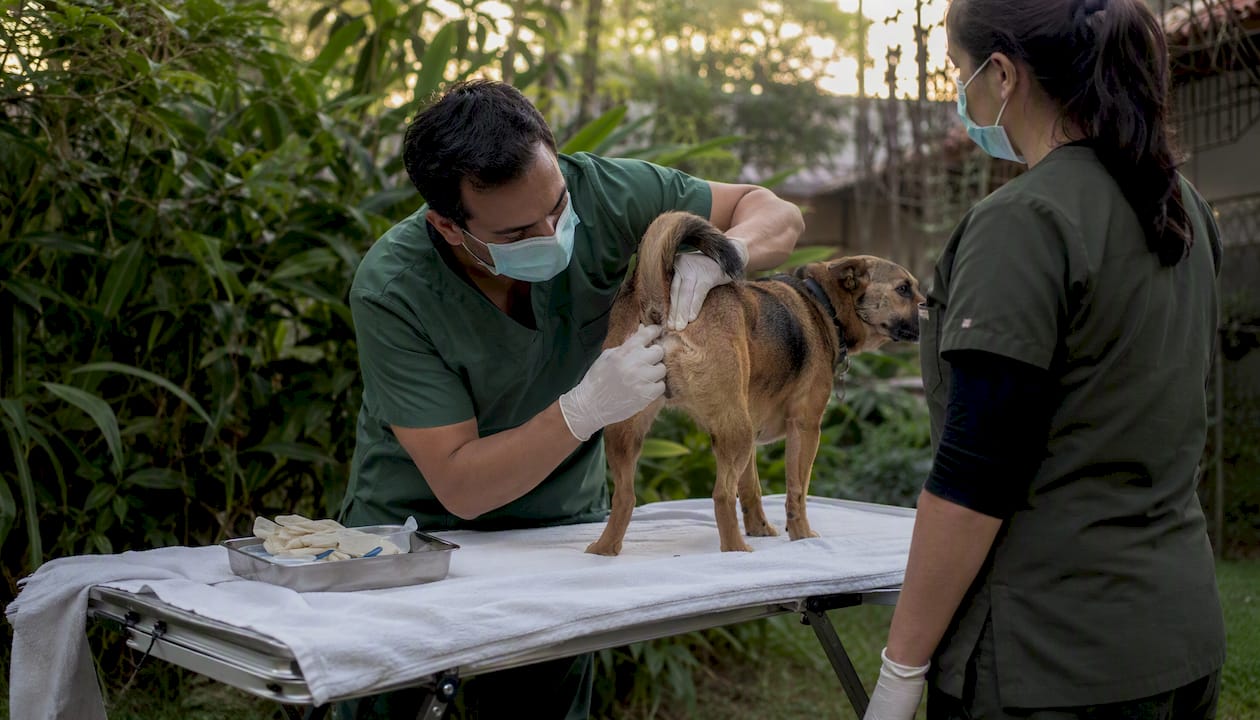
Veterinary internal expression is the most thorough option. The digital rectal method allows the clinician to assess gland wall thickness, detect pain, and identify masses — none of which is possible from outside. Groomer expression is convenient and fine for dogs with a confirmed, vet-documented history of needing it, but many veterinarians discourage making it a standing appointment for every dog at every groom.
When infection is present, expression alone isn’t enough. Antibiotics, sac flushing under sedation, or surgical drainage may be needed. Anal sacculectomy — surgical removal of the sacs — is reserved for recurrent severe disease or tumors, and it carries real risks including infection and, in a small number of cases, fecal incontinence.
One pattern worth avoiding: routine groomer expression every few weeks without a vet confirming the glands are actually full. Done repeatedly without medical indication, external expression can irritate the ducts, cause scarring, and create the very problem it’s meant to prevent.
Step-by-step at-home expression: what you need and how to do it safely
Only proceed if your veterinarian has examined your dog, confirmed the glands need expression, and specifically cleared you to do this at home. This is not a routine grooming task for every dog.
Supplies checklist
- Disposable latex or nitrile gloves (two pairs)
- Paper towels or a thick cloth
- Pet-safe lubricant (optional, for comfort)
- Dog-safe wipes for cleanup
- High-value treats for calm reinforcement
- A second person to help restrain, if your dog is anxious
Positioning
For small dogs, place them on a non-slip surface at waist height. For larger dogs, have them stand on the floor while you crouch behind them. A helper holding the dog’s head and offering treats makes the process faster and less stressful for everyone.
External expression method (vet-cleared owners only)
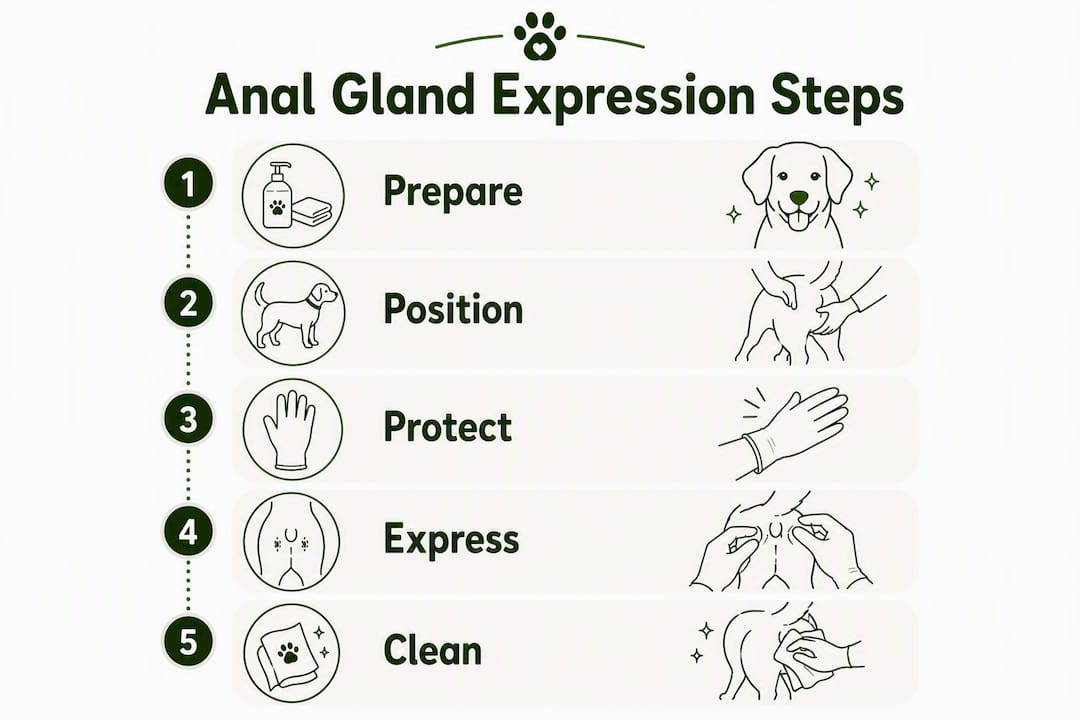
- Put on gloves and have paper towels ready.
- Lift the tail gently but firmly.
- Locate the sacs at approximately 4 o’clock and 8 o’clock — they feel like small, firm grape-sized bumps just inside the anal opening.
- Using your thumb and forefinger, apply gentle inward and upward pressure simultaneously on both sides.
- A small amount of brownish, oily fluid should release. Wipe immediately with a paper towel.
- Repeat on the other side if needed.
Stop immediately if:
- Your dog cries, snaps, or shows sudden distress
- You see blood or chunky, purulent (pus-like) discharge
- Nothing releases after gentle pressure — do not force it
- The area feels unusually hard, hot, or swollen
PetMD’s stepwise home method reinforces these same stop conditions and stresses that internal expression — inserting a finger into the rectum to express from inside — is a veterinary procedure and should never be attempted by owners at home without specific hands-on training from a vet.
How often glands may need expressing and what it costs
There is no fixed schedule. Most healthy dogs empty their sacs naturally during every bowel movement and never need manual expression at all. For dogs with a documented history of problems, frequency is set by how quickly the sacs refill — which varies from every few weeks to a few times a year — and is individualized by the veterinarian.
| Service | Typical cost range | Notes |
|---|---|---|
| Groomer external expression | $7–$20 | Add-on to a groom; no diagnostic assessment |
| Basic veterinary expression | $25–$50 | Includes internal technique and basic assessment |
| Vet visit with full exam | $50–$100 or more | Recommended for first-time or recurrent cases |
| Antibiotics / flushing | varies | Added when infection is present |
| Abscess drainage or surgery | varies | Complication management; costs vary by clinic |
Ask your vet for a written estimate before any procedure involving sedation or surgery. Tracking how quickly signs return after each expression also helps your vet set the right follow-up interval — if your dog needs expression every three weeks, that frequency itself is a diagnostic clue worth investigating.
Evidence-based prevention: diet, fiber, and weight management
Firm, consistent stool is the most effective prevention for anal gland problems. Dietary fiber and weight management are the two levers with the strongest veterinary support — both work by producing bulkier, firmer stools that apply natural pressure to the sacs during defecation.
Practical daily steps:
- Hydration: Make sure your dog drinks enough water; dehydration contributes to dry, hard stools at one extreme and can worsen GI inflammation at the other.
- Fiber adjustment: Plain canned pumpkin (not pie filling) is a commonly used, low-risk fiber source. Vet-prescribed fiber supplements are a more targeted option for dogs with chronic issues. A gut health supplement formulated for pets can support digestive regularity, but introduce any supplement under veterinary guidance.
- Stool monitoring: Check consistency daily. Firm, well-formed stools are the goal; loose or soft stools more than a day or two in a row warrant a call to your vet.
- Diet trial: If allergies or food sensitivities are suspected, a vet-supervised elimination diet can identify triggers that cause chronic loose stool.
- Weight management: If your dog is overweight, even modest weight loss can improve muscle tone and stool quality.
Fish oil and probiotic supplements are sometimes suggested online, but the evidence for their direct effect on anal gland health is limited. Use them only if your vet recommends them for a specific reason.
Pro Tip: Keep a one-week stool log before your next vet visit — note consistency (firm, soft, loose), frequency, and any dietary changes. That data helps your vet make a targeted recommendation far faster than a general description.
Risks, complications, and aftercare following expression
Expression is a minor procedure, but it’s not without risk. The most common immediate effects are temporary soreness and mild irritation around the anus. More serious complications develop when expression is done incorrectly, when an infection is present but missed, or when the glands are expressed too frequently without medical indication.
Progressive complications include impaction hardening into a solid plug, bacterial infection, abscess formation, and in rare cases rupture through the skin or development of anal sac adenocarcinoma. These are not scare tactics — they’re the reason a vet exam before establishing any expression routine matters.
Aftercare checklist following expression:
- Wipe the area gently with a pet-safe, fragrance-free wipe
- Check the skin around the anus for redness, swelling, or discharge over the next 24–48 hours
- Keep the area clean and dry; avoid bathing for 24 hours if the skin looks irritated
- Restrict intense running or rough play for the rest of the day
- Record the date, what was expressed (color, consistency, volume), and your dog’s comfort level
Call your vet if you notice:
- Persistent pain or sensitivity beyond 24 hours
- Redness, heat, or swelling that is getting worse, not better
- Blood or pus appearing after the procedure
- Fever, lethargy, or loss of appetite in the days following
Key Takeaways
Most dogs never need manual anal gland expression; when they do, firm stool through diet and weight control is the first line of prevention, and red flags like pain, swelling, or blood always require veterinary care before any home attempt.
| Point | Details |
|---|---|
| Most dogs don’t need expression | Healthy dogs empty their sacs naturally during defecation; manual expression is for dogs with confirmed problems. |
| Firm stool prevents most issues | Dietary fiber and weight management produce the stool bulk that empties sacs naturally. |
| Red flags require vet care | Pain, heat, swelling, blood, or systemic signs mean skip DIY and call your vet the same day. |
| Groomers vs. vets | Groomer expression is convenient for confirmed cases; veterinary internal expression is more thorough and diagnostic. |
| Petbite grooming services | Petbite’s certified groomers in Orléans offer professional grooming with over 500 animals served and a 5-star rating. |
The part most guides skip about anal gland expression
The advice you’ll find most places is technically correct: watch for scooting, see a vet if it’s bad, add fiber to the diet. What gets glossed over is the dependency cycle that builds when expression becomes a standing appointment rather than a response to an actual problem.
Many dog owners — and some groomers — treat anal gland expression as routine maintenance, the same way you’d trim nails or clean ears. It isn’t. Repeated external expression without medical indication can irritate the duct openings, cause low-grade chronic inflammation, and eventually make the sacs less capable of emptying on their own. You end up needing to express more often precisely because you expressed when you didn’t need to.
The smarter approach is to treat expression as a diagnostic event, not a service. Every time your dog needs it, ask why. Is the stool too soft? Is there an underlying allergy? Is the frequency increasing? Those questions lead to solutions. Scheduling it every six weeks without asking them leads to a dog who needs it every four weeks by the end of the year.
If you’d rather leave the assessment and expression to a professional, that’s the right call for most owners. Petbite’s professional grooming service is available for owners who prefer a certified, experienced groomer over DIY, and your local veterinarian remains the right first stop whenever signs are new, worsening, or accompanied by any of the red flags covered above.
Useful sources and where to learn more
These are the primary veterinary and clinical resources referenced throughout this guide. Each covers a different angle of the topic:
- Cornell University College of Veterinary Medicine — Anal Sac Diseases: Clinical overview of impaction, infection, abscess, and surgical management.
- Merck Veterinary Manual — Anal Sac Disease in Dogs and Cats: Detailed clinical reference covering progressive complications and treatment protocols.
- American Kennel Club — Anal Gland Disease in Dogs: Accessible owner-facing overview of signs, prevention, and dietary management.
- VCA Hospitals — Anal Sac Disease in Dogs: Practical diagnostic guidance and explanation of why scooting requires differential diagnosis.
- PetMD — How to Express a Dog’s Anal Glands: Step-by-step at-home external expression method with safety stop conditions.
- Preventive Vet — Anal Glands: What to Do When They Are a Problem: Explains the risks of routine non-indicated expression and the groomer dependency cycle.
- University of Bristol — Expressing Canine Anal Glands (Clinical Skills): Veterinary clinical skills document describing internal technique and its diagnostic value.
For personalized advice specific to your dog’s history and anatomy, consult your local US veterinarian. This guide is general information, not a substitute for professional veterinary diagnosis or treatment.
Petbite’s grooming services are the easier path for most owners
Anal gland expression is one of those tasks that sounds straightforward until you’re actually doing it on a squirming dog. For most owners, the honest answer is: let a professional handle it.
Petbite’s certified groomers in Orléans have worked with over 500 animals and hold a 5-star average rating. They offer professional grooming sessions that include external expression for dogs whose veterinarians have confirmed it is appropriate, in a calm, stress-minimized environment. If your dog also needs dietary support to firm up their stools and reduce how often expression is needed, Petbite carries premium raw foods like Iron Will Raw Basic Salmon and Iron Will Raw Basic Beef, both vet-compatible protein options that support consistent stool quality. Free same-day delivery is available within 3 km of the Orléans location. Book a grooming session or order supplies directly at petbite.ca.