

For most healthy dogs, grain inclusive dog food is the veterinarian-aligned, nutritionally complete default. It delivers steady energy from complex carbohydrates, gut-supporting fiber, and a range of B vitamins and minerals. Crucially, it sidesteps the cardiac concerns that have followed certain pulse-heavy grain-free formulas since the FDA began investigating unusual DCM cases in 2018.
The bottom line: For the vast majority of dogs, grains provide digestible energy, fiber, and essential vitamins. Grain-free diets are only clearly superior when a veterinarian has confirmed a grain or gluten intolerance.
Three reasons grain-inclusive formulas hold up as the low-risk choice:
- Steady, sustained energy. Whole grains like brown rice and oats release glucose gradually, avoiding the blood-sugar spikes that highly fermentable starches can cause.
- Gut health and micronutrients. Cereal grains contribute soluble and insoluble fiber alongside B vitamins, iron, and manganese that support digestion and metabolism.
- Lower association with pulse-linked cardiac signals. Peer-reviewed feeding trials have shown that rice-based diets produce fewer subclinical cardiac changes than pulse-heavy grain-free recipes.
Petbite stocks a curated selection of grain-inclusive and specialty formulas for dogs in Orléans, so you can get personalized guidance alongside the product.
Table of Contents
- What does “grain inclusive” actually mean on a dog food label?
- Why grain-inclusive diets benefit most dogs
- What does the evidence say about grain-free vs. grain-inclusive diets?
- What do common grain and grain-free ingredients actually contribute?
- How do you choose the right grain-inclusive food for your dog?
- How do you switch your dog to a grain-inclusive food safely?
- When does a dog actually need a grain-free or special diet?
- Key Takeaways
- The grain-free debate deserves more honesty than it usually gets
- Petbite has the formulas and the guidance to back this up
- Sources and further reading
What does “grain inclusive” actually mean on a dog food label?
Grain-inclusive dog food contains cereal grains such as wheat, barley, rice, or maize as sources of carbohydrates, fiber, and micronutrients. That puts it in direct contrast with grain-free diets, which swap those grains for legumes, potatoes, or other pulses. The term itself is not a regulated marketing claim — it simply describes what the formula contains.
Label language gets confusing fast. Here is what the common terms actually mean:
- Whole grain (e.g., whole brown rice, whole oats): the entire kernel, including bran and germ, which preserves fiber and micronutrients.
- Rice flour / ground corn: processed grain fractions that still provide digestible carbohydrates but with less fiber than whole-grain equivalents.
- Grain by-product (e.g., wheat middlings, rice bran): milling leftovers that vary widely in nutritional value; not inherently harmful, but lower on the quality scale than whole grains.
- Gluten: the protein fraction of wheat or corn; only problematic for the rare dog with a confirmed gluten sensitivity.
Label-reading checklist: A named meat source (chicken, salmon, beef) should appear first. Look for at least one whole-grain ingredient in the top five. Confirm the guaranteed analysis lists protein, fat, fiber, and moisture. An AAFCO nutritional adequacy statement tells you the formula meets recognized standards — without it, the bag is incomplete.
Why grain-inclusive diets benefit most dogs
The case for keeping grains in your dog’s bowl goes well beyond tradition.
Stable energy and digestion. Complex carbohydrates from whole grains digest more slowly than simple sugars, which means a steadier glucose release over the course of the day. Brown rice and oats also add both soluble and insoluble fiber, feeding beneficial gut bacteria and supporting regular stools.

Micronutrient density. Whole grains bring B vitamins (thiamine, niacin, folate), iron, magnesium, and manganese to the formula. These aren’t trace amounts — they contribute meaningfully to a dog’s daily requirements, especially in formulas where the grain fraction makes up a meaningful portion of the recipe.
The allergy misconception. Dog owners often switch to grain-free because they suspect a grain allergy. Most reported food allergies in dogs are actually to animal proteins like beef, dairy, and chicken — not grains. Removing grains while keeping the same protein source rarely resolves allergy signs. True grain allergies exist but are uncommon.
Cost-to-nutrition value. Grain-inclusive kibbles tend to cost less per serving than grain-free alternatives, partly because whole grains are a cost-effective energy source. That savings doesn’t come at a nutritional cost when the formula is properly balanced.
Pro Tip: If you’re worried about grains, look for a formula where a named whole grain (brown rice, oats, barley) appears in the top five ingredients and a named animal protein sits at number one. That combination signals both quality and balance.
What does the evidence say about grain-free vs. grain-inclusive diets?
The evidence leans clearly toward grain-inclusive as the lower-risk default for most dogs. Grain-free diets remain useful when a veterinarian has medically indicated one — but the science does not support choosing grain-free as a general health upgrade.
The FDA investigation and DCM reports
In 2018, the FDA began investigating reports of dilated cardiomyopathy (DCM) in dogs eating certain grain-free diets, particularly those high in peas, lentils, and other legumes. The FDA did not issue a blanket recall but recommended veterinary consultation for owners feeding these diets. The cases were unusual because DCM was appearing in breeds not genetically predisposed to the condition.
Key finding: A 28-day controlled feeding trial found that pulse-based diets produced subclinical cardiac changes and reduced digestibility in some metrics compared with rice-based diets — even when taurine levels were not always definitively low.
Why pulses are the focus
Pulses like peas, lentils, and chickpeas are high in protein and fiber but tend to be low in sulfur amino acids, specifically methionine and cysteine. Those amino acids are precursors to taurine, which the heart muscle depends on. When a diet is heavy in pulses and light in animal-derived methionine and cysteine, some dogs may not synthesize adequate taurine — though the exact mechanism is still being studied.
The honest answer is that researchers have not established definitive causation. What they have established is a consistent association, and that association is enough for many veterinary cardiologists to prefer grain-inclusive diets as a precaution, especially for breeds already predisposed to heart disease.
What the 2023 peer-reviewed data adds
A peer-reviewed feeding trial published in 2023 strengthened the concern. Dogs fed pulse-based diets showed measurable subclinical cardiac changes within 28 days compared with dogs on rice-based diets. That is a short window for a cardiac signal to appear, which suggests the effect is not purely about long-term taurine depletion.
Pro Tip: Before switching your dog to a grain-free diet, ask your vet for a taurine level check and, if your dog is a predisposed breed (Doberman, Boxer, Golden Retriever, Great Dane), request a cardiac screening. Those results — not marketing claims — should drive the decision.
What do common grain and grain-free ingredients actually contribute?
Grains worth knowing
- Brown rice: Highly digestible, low allergenic potential, good source of manganese and B vitamins. A reliable anchor grain in quality kibble.
- Oats: Rich in soluble fiber (beta-glucan), which supports gut health. Also provide iron and zinc. Whole oats in formulas like Merrick’s Healthy Grains line are a practical example of quality grain inclusion.
- Barley: Lower glycemic index than white rice; good fiber content and a source of selenium.
- Corn (whole ground): Often maligned but actually a digestible energy source with useful antioxidants (lutein, zeaxanthin). The issue is corn by-products, not whole corn.
Common grain-free substitutes and their tradeoffs
- Peas and lentils: High protein and fiber, but low in sulfur amino acids and linked to the DCM research signals above. Fine in small amounts; problematic when they dominate the first five ingredients.
- Potatoes and sweet potatoes: Digestible starch sources with some potassium and vitamin C, but minimal protein and no meaningful taurine precursors.
- Tapioca: Essentially pure starch with little nutritional contribution beyond calories.
Red flags on any label
- Peas, lentils, or legume flour appearing in the first three ingredients.
- A vague “grain blend” with no specific grains named.
- No guaranteed analysis on the packaging.
- Missing AAFCO nutritional adequacy statement.
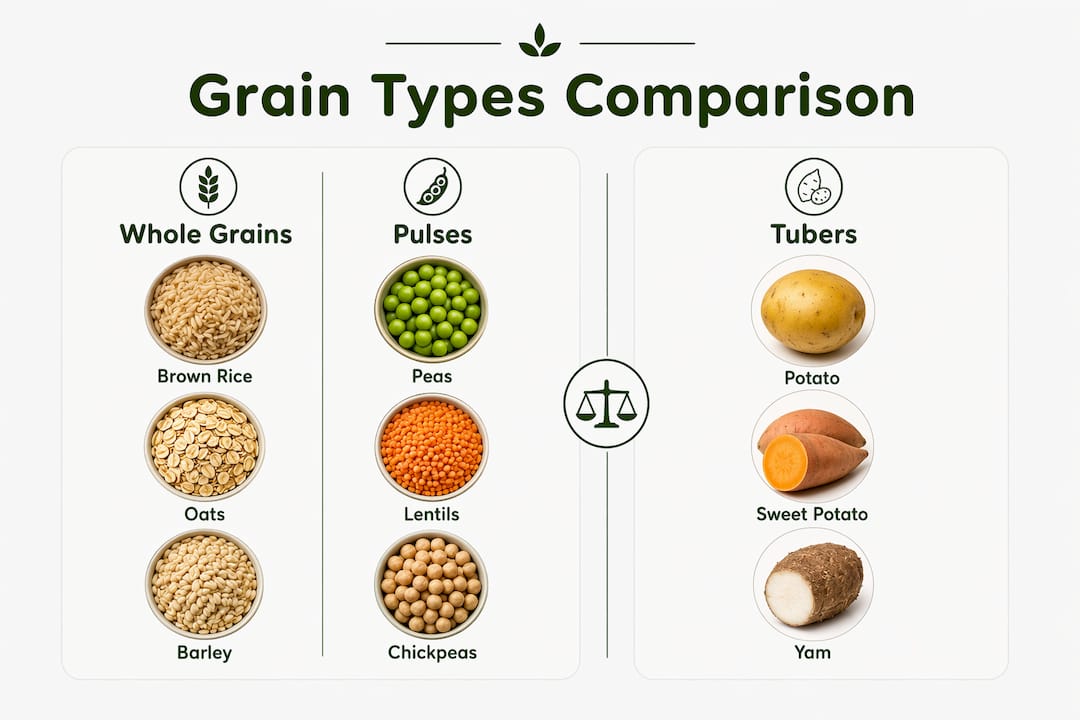
Whole grains vs. pulses vs. tubers at a glance
| Attribute | Whole grains (brown rice, oats) | Pulses (peas, lentils) | Tubers (potato, sweet potato) |
|---|---|---|---|
| Digestible energy | High | Moderate | High |
| Dietary fiber | Moderate–High | High | Moderate |
| Taurine precursors (methionine/cysteine) | Moderate | Low | Very low |
| DCM research signal | Not associated | Associated in pulse-heavy diets | Limited data |
| Micronutrient density | High (B vitamins, minerals) | Moderate (folate, iron) | Low–Moderate |
How do you choose the right grain-inclusive food for your dog?
Start here: prioritize a complete and balanced, AAFCO-formulated grain-inclusive diet with a named animal protein as the first ingredient and at least one whole grain in the top five. Everything else is refinement.
Selection checklist
- Life stage formulation. Puppies need higher protein and calcium ratios than adults; seniors often benefit from lower phosphorus. The bag must state the life stage it is formulated for.
- Guaranteed analysis targets. For most adult dogs, look for at least 18% crude protein and 5% crude fat on dry matter basis. Active dogs need more.
- Named protein source. “Chicken,” “salmon,” or “lamb” beats “poultry meal” or “meat by-products.” Named meals (chicken meal, salmon meal) are concentrated and acceptable; unnamed meals are not.
- Whole-grain presence. Brown rice, oats, or barley in the top five ingredients signals quality formulation.
- Pulse concentration check. If peas or lentils appear more than once in the ingredient list (peas, pea protein, pea flour all count separately), the pulse load is likely high.
- AAFCO statement. Look for “formulated to meet AAFCO nutritional profiles” or, better, “animal feeding tests using AAFCO procedures.” The feeding trial statement is the stronger signal.
- Manufacturer transparency. Can you find the manufacturer’s contact information, recall history, and quality control practices easily? Opacity is a red flag.
Questions to ask at the store or on the product page
- Does this formula have an AAFCO feeding trial statement or a formulation statement?
- What percentage of the formula comes from pulses versus grains?
- Has this brand had any recalls in the past five years?
A quick note on price
Grain-inclusive dry kibble for a medium-sized dog typically costs a moderate daily amount depending on the brand tier. Premium formulas cost more per bag but often have higher caloric density, meaning you feed less per meal. Calculate cost per day, not cost per bag.
How do you switch your dog to a grain-inclusive food safely?
Most dogs can transition to a new grain-inclusive formula without drama using a 7–10 day graduated swap. Rushing it is the most common cause of loose stools and upset stomachs during a food change.
The transition timeline
- Days 1–3: 25% new food, 75% current food.
- Days 4–6: 50% new food, 50% current food.
- Days 7–9: 75% new food, 25% current food.
- Day 10: 100% new food.
If your dog shows loose stools, vomiting, or significant gas at any stage, hold at that ratio for two to three extra days before moving forward. A slow transition is always better than backtracking.
Portion guidance
- Use the feeding chart on the bag as a starting point, not a fixed rule. Those charts are calibrated for average activity levels.
- Adjust by body condition score: you should be able to feel your dog’s ribs without pressing hard, but not see them.
- Active dogs, working breeds, and nursing mothers need more; senior dogs and spayed/neutered adults often need less than the bag suggests.
- Weigh food with a kitchen scale for the first few weeks rather than eyeballing cup measurements. Kibble density varies significantly between brands.
Pro Tip: Keep a simple log during the transition: date, ratio, stool quality (1–5 scale), and energy level. Two weeks of notes gives your vet something concrete to work with if problems arise.
When does a dog actually need a grain-free or special diet?
Consult your veterinarian before switching to a grain-free or prescription diet. Only a confirmed grain or gluten intolerance, or another diagnosed condition, typically justifies it.
Medical triggers that warrant a special diet
- Confirmed food allergy via elimination trial. An 8–12 week strict elimination diet (novel protein or hydrolyzed protein formula) is the diagnostic standard. If grains are confirmed as the trigger, a grain-free formula makes sense. If an animal protein is the trigger, switching to a novel protein formula is the right move.
- Diagnosed malabsorption or inflammatory bowel disease. Some dogs with IBD do better on highly digestible, limited-ingredient diets. Your vet will specify.
- Cardiac concerns in predisposed breeds. If a cardiologist identifies DCM or early cardiac changes, they may recommend a specific diet formulation. That recommendation should come from the specialist, not from a marketing claim.
Tests vets use to make the call
Elimination diet trial: The gold standard for food allergy diagnosis. Nothing else confirms a food trigger reliably.
Blood taurine levels: A simple blood test that can flag whether taurine is low. Useful for dogs already on grain-free diets or for predisposed breeds.
Cardiac screening: NT-proBNP blood test as a screening tool, followed by an echocardiogram if elevated. Cardiologist referral is appropriate for breeds like Doberman Pinschers, Boxers, and Golden Retrievers showing any cardiac signs.

Pro Tip: Before your vet appointment, write down every food your dog has eaten in the past three months: kibble brand and formula, treats, toppers, table scraps, and supplements. That dietary history cuts the diagnostic process significantly.
Key Takeaways
Grain-inclusive dog food is the veterinarian-backed, lower-risk default for most healthy dogs, supported by peer-reviewed research and AAFCO nutritional standards.
| Point | Details |
|---|---|
| Grain-inclusive is the default | Most healthy dogs thrive on grain-inclusive formulas; grain-free is only justified when a vet confirms a specific medical need. |
| Pulse-heavy diets carry cardiac signals | A 28-day feeding trial found pulse-based diets produced subclinical cardiac changes compared with rice-based diets. |
| Grain allergies are rare | Most canine food allergies involve animal proteins, not grains; removing grains rarely resolves allergy signs if the protein stays the same. |
| Read labels for AAFCO and whole grains | Look for a named protein first, a whole grain in the top five, and an AAFCO nutritional adequacy statement. |
| Petbite stocks vetted options | Petbite carries grain-inclusive and specialty formulas in Orléans, with convenient local delivery and in-store guidance. |
Action step: Check your dog’s current food for an AAFCO statement and the position of pulses in the ingredient list. If you suspect an allergy or have a cardiac-predisposed breed, book a vet appointment before making any diet change.
The grain-free debate deserves more honesty than it usually gets
The grain-free trend took off because “no grains” sounds cleaner, more ancestral, more premium. That framing is almost entirely marketing. Wild canids eat grains incidentally through prey stomach contents, and domesticated dogs have evolved amylase genes that help them digest starch efficiently. The “wolves don’t eat grains” argument was never a strong nutritional case.
What frustrates me about the ongoing debate is that both sides often overstate their certainty. The anti-grain-free camp sometimes implies that every grain-free diet causes heart disease, which the evidence does not support. The pro-grain-free camp dismisses the DCM research as inconclusive, which undersells a genuine and consistent signal from peer-reviewed trials. The honest position is that pulse-heavy grain-free diets carry a plausible cardiac risk mechanism, that the risk appears real in feeding trials, and that there is no proven benefit to grain-free for a dog without a confirmed intolerance.
The practical implication is simple: if your dog is healthy and has no diagnosed grain sensitivity, a well-formulated grain-inclusive diet is the lower-risk, better-supported choice. If your dog has a confirmed medical need for a specialized formula, work with your vet. Don’t let a bag’s marketing language make that decision for you.
Petbite has the formulas and the guidance to back this up
Choosing the right food is easier when you can talk to someone who actually knows the products. Petbite is a local pet supply store in Orléans carrying premium grain-inclusive kibbles, raw frozen options like Iron Will Raw, and specialty formulas for dogs with sensitivities — all vetted for quality and formulation transparency.

What sets Petbite apart from a big-box retailer isn’t just the product selection. It’s the ability to walk in (or order online) and get a straight answer about ingredient lists, life-stage formulations, and whether a formula carries an AAFCO feeding trial statement. Free same-day delivery within 3 km of the Orléans location means you don’t have to wait or haul a 25-lb bag. Browse the full product range at Petbite or stop in to talk through your dog’s specific needs.
This article is for general informational purposes only and does not substitute for professional veterinary advice. Consult your veterinarian for guidance specific to your dog’s health and dietary needs.
Sources and further reading
The recommendations in this article draw on peer-reviewed research, veterinary guidance, and official nutritional standards. These are the primary sources.
| Source | Relevance |
|---|---|
| 28-day pulse vs. grain feeding trial (PMC, 2023) | Peer-reviewed trial showing subclinical cardiac changes and reduced digestibility in pulse-based diets vs. rice-based diets in dogs. |
| Grain-Free Diets Review, Animals (MDPI) | Updated review covering nutritional effects, health considerations, and label terminology for grain-free vs. grain-inclusive diets. |
| Vetstreet: Grain-Free Dog Food — What the Science Says | Veterinary expert summary of the grain-free debate, FDA investigation context, and clinical caution around pulse-heavy formulas. |
| PetMD: Are Grain-Free Diets Bad for Dogs? | Overview of DCM links, diet-change outcomes, and the unresolved mechanism question. |
| AAFCO Nutritional Adequacy Statements | Practical standard for evaluating whether a formula meets recognized canine nutritional requirements. |
For individualized dietary advice, always consult a licensed veterinarian or board-certified veterinary nutritionist. Your dog’s breed, age, activity level, and health history all affect which formula is the right fit.