

For most Canadian households, a properly formulated kibble or commercial cooked diet is the safer, lower-effort baseline. A raw diet can work well for motivated owners who accept stricter hygiene, higher costs, and closer veterinary monitoring. That is the honest starting point for this comparison.
Here’s what that means in practice:
- Most households: A complete and balanced kibble or wet food meets your dog’s nutritional needs with minimal risk and maximum convenience.
- Raw may suit you if: You have no young children, no immunocompromised people at home, you can commit to proper freezer storage and handling, and your vet supports the switch.
- Avoid raw feeding if: Anyone in your home is pregnant, elderly, undergoing chemotherapy, or under 5 years old. The pathogen risk extends to people, not just pets.
- Whatever you choose: Ask your vet before switching, check labels for “complete and balanced” statements, and source from reputable Canadian suppliers like Petbite.
Key Takeaways
For most Canadian households, a complete and balanced kibble is the safer, lower-effort baseline; raw feeding can work for motivated owners who manage hygiene strictly, source AAFCO-compliant products, and monitor with their vet.
| Point | Details |
|---|---|
| Safety risk is real | Freeze-drying does not eliminate pathogens; raw-fed dogs can shed Salmonella asymptomatically, posing household transmission risk. |
| Nutritional completeness | Homemade raw rations frequently show calcium:phosphorus and trace-mineral shortfalls; AAFCO-compliant commercial products address these gaps. |
| Short-term evidence | Raw-fed dogs showed a leaner median body condition score in 2026 observational data, but no long-term randomized trials confirm longevity benefits. |
| Household risk first | Households with young children, pregnant members, elderly, or immunocompromised individuals should avoid raw feeding regardless of diet quality. |
| Petbite for local sourcing | Petbite in Orléans stocks PetKind and Iron Will Raw lines with free same-day delivery within 3 km for Canadian owners. |
Table of Contents
- What do “raw” and “kibble” actually mean?
- Health claims for raw vs. kibble: what does the evidence show?
- What are the safety risks of raw feeding?
- Why “complete and balanced” matters more than you think
- Cost, storage, and day-to-day convenience
- Which dogs and households are better matched to each diet?
- How to switch diets safely and what to monitor
- What Canadian authorities say about raw feeding
- A checklist for evaluating any dog food before you buy
- What we’ve learned advising customers in Orléans
- Petbite makes it easier to source safe options locally
- Sources
What do “raw” and “kibble” actually mean?
The terms cover more ground than most people realize, and the format you choose affects both safety and nutrition in very different ways.
Raw diets come in several forms:
- Homemade raw (80/10/10): 80% muscle meat, 10% raw edible bone, 10% organ meat. Common among committed raw feeders, but this ratio addresses composition, not completeness. Without added micronutrient supplementation or careful rotation, it often falls short.
- Frozen commercial raw: Pre-portioned patties or chubs, frozen immediately after production. Products like Iron Will Raw Basic Beef are examples of this format.
- Freeze-dried and dehydrated: Shelf-stable and convenient, but not sterile. Freeze-drying removes moisture without heat, so bacteria survive the process.
- Raw-coated kibble and toppers: Kibble sprayed with raw coating or mixed with freeze-dried pieces. Nutritionally closer to kibble than raw.
Kibble (extruded dry food) is cooked at high heat, shaped, and dried. A product labeled “complete and balanced” has been formulated to meet AAFCO (Association of American Feed Control Officials) or FEDIAF nutrient profiles for a specific life stage. That label means something: it’s a minimum nutritional guarantee, not marketing language. The AKC recommends checking labels carefully for this statement regardless of which format you choose.
Moisture content is one of the biggest practical differences. That gap affects shelf life, storage requirements, and how much your dog drinks.
Health claims for raw vs. kibble: what does the evidence show?
This is where the conversation gets complicated, because the evidence is real but limited.
What short-term studies suggest
Raw-fed dogs tend to show higher apparent digestibility and smaller, firmer stools in short-term studies. A 2026 observational dataset found raw-fed dogs had a leaner median body condition score compared with kibble-fed dogs. Owners also report improved coat quality and palatability, particularly in picky eaters.
Kibble, on the other hand, offers a predictable nutrient profile. When a product carries an AAFCO complete and balanced statement backed by feeding trials, you have documented evidence that dogs maintained health on that diet. That’s a meaningful safety baseline that most homemade raw diets simply don’t have.
Where the evidence runs out
No large, long-term randomized controlled trials have demonstrated that raw feeding extends lifespan or prevents disease compared with quality kibble. The peer-reviewed literature consistently shows short-term measurable differences in digestibility and stool characteristics, but robust evidence for longevity benefits is absent. Observational studies can’t rule out confounding factors: owners who feed raw often exercise their dogs more, buy higher-quality food overall, and visit vets more frequently.
| Outcome | Raw diet evidence | Kibble evidence |
|---|---|---|
| Digestibility | Higher apparent digestibility in short-term studies | Lower apparent digestibility in some comparisons |
| Body condition | Leaner median BCS in 2026 observational data | Variable; depends heavily on formulation and portion |
| Nutrient completeness | Frequent Ca:P and trace-mineral shortfalls in homemade rations | Predictable when AAFCO-compliant |
| Long-term health | No controlled trial data | Long-term safety baseline established |
| Palatability | Often higher, especially for picky dogs | Variable by brand and formulation |
What are the safety risks of raw feeding?
The safety picture is the strongest argument for caution, and it’s one that Canadian veterinary bodies take seriously.
Pathogens in commercial and homemade raw:
- Salmonella, Listeria, and E. coli have been documented in commercial raw products, including freeze-dried formats.
- Some products have tested positive for extended-spectrum beta-lactamase (ESBL)-producing bacteria, which are resistant to common antibiotics.
- Dogs fed raw can shed pathogens asymptomatically, contaminating surfaces, hands, and other pets.
Cornell University’s Riney Canine Health Center states that freeze-drying does not eliminate pathogens and that commercial raw products have been documented to contain Salmonella and antimicrobial-resistant bacteria, posing household transmission risk.
The household transmission angle is the one most raw-feeding guides underplay. Infants, elderly family members, pregnant people, and anyone on immunosuppressive therapy are genuinely at elevated risk from a dog that eats raw and then licks hands or faces. The AVMA maintains active recall and alert pages specifically for raw pet food products.
Bone hazards deserve their own mention. Raw bones carry risks of dental fractures, choking, and gastrointestinal obstruction. Cooked bones are more dangerous still, because cooking makes them brittle and prone to splintering. The ASPCA Animal Poison Control documents bone-related emergencies as a recurring category. Petbite’s raw bones safety guide covers which bone types are lower-risk and what warning signs require an emergency vet visit.

Pro Tip: Treat raw pet food exactly the way you’d treat raw chicken for your own kitchen. Use a dedicated cutting board, wash hands immediately after handling, disinfect food bowls after every meal, and store raw portions in sealed containers at the back of the freezer. Never leave thawed raw food at room temperature for more than two hours.
Why “complete and balanced” matters more than you think
The nutritional gap between a well-formulated commercial diet and a homemade raw recipe is often larger than owners expect.
The 80/10/10 ratio is a starting framework, not a complete diet. Studies consistently find homemade raw rations low in calcium relative to phosphorus, deficient in iodine, manganese, zinc, and vitamins D and E. These shortfalls don’t show up immediately. They accumulate over months or years, and by the time clinical signs appear, the damage can be significant, particularly in growing puppies or pregnant dogs.
The WSAVA and board-certified veterinary nutritionists recommend asking any raw food manufacturer whether the diet was formulated by a credentialed veterinary nutritionist, whether feeding trials were conducted, and whether a full nutrient analysis is available on request.
Life stages where balance is non-negotiable:
- Puppies: Calcium:phosphorus ratio errors cause skeletal deformities. The margin for error is narrow.
- Pregnant and lactating dogs: Caloric and mineral demands spike; homemade recipes rarely account for this.
- Senior dogs: Kidney and liver function changes alter how nutrients are processed.
- Dogs with chronic disease: Conditions like kidney disease, pancreatitis, or cancer require precisely controlled nutrient levels.
Commercial AAFCO-compliant raw products address many of these gaps. The difference between a compliant frozen raw product and a homemade recipe is the same as the difference between a pharmacist-compounded supplement and a kitchen experiment. Both use real ingredients; only one has been verified. If you’re committed to homemade raw, a consultation with a board-certified veterinary nutritionist (DACVN) is the responsible path, not an optional extra.
For further reading on nutrient bioavailability, the Journal of Animal Science has published relevant digestibility and clinical marker studies.
Cost, storage, and day-to-day convenience
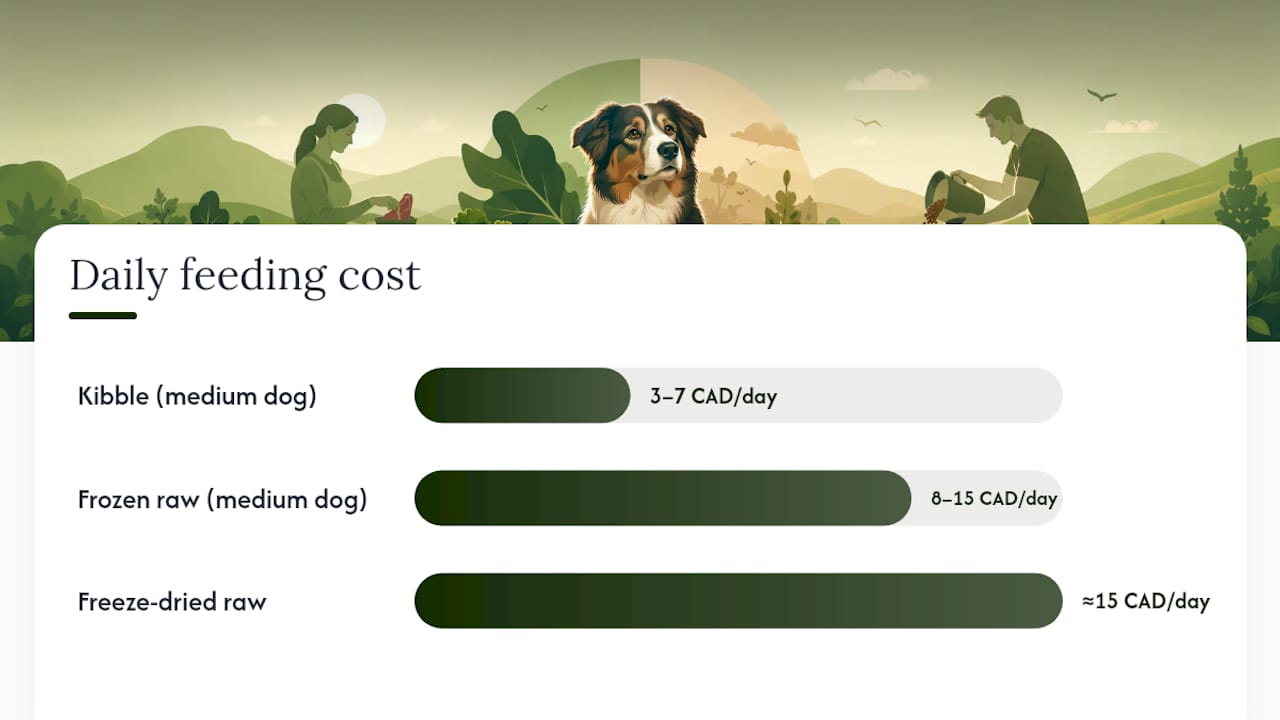
Raw feeding costs more. For a medium-sized dog (25–35 kg), a quality frozen raw diet typically runs $8–$15 CAD per day depending on the brand and protein source. Quality kibble for the same dog generally costs $3–$7 CAD per day. Freeze-dried raw sits at the high end of the cost range and adds up quickly for larger breeds.
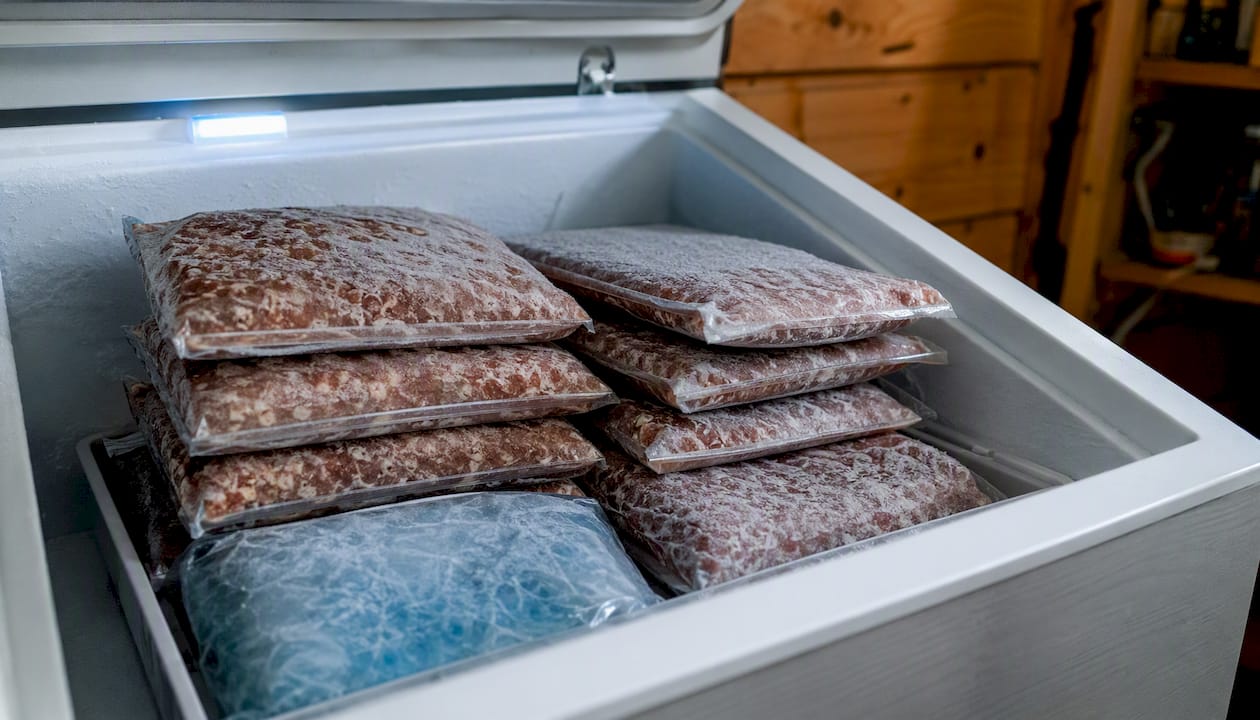
Storage is the other practical constraint. Frozen raw requires dedicated freezer space, careful thaw rotation, and attention to freezer burn. A month’s supply for one large dog can occupy a significant portion of a standard household freezer. Kibble, by contrast, stores at room temperature for 12–18 months in a sealed container.
Quick comparison:
| Factor | Raw (frozen/commercial) | Kibble (complete and balanced) |
|---|---|---|
| Daily cost (medium dog) | Higher | Lower |
| Storage | Freezer required | Room temperature, sealed container |
| Prep time | Thaw in the fridge, portion, clean bowl | Scoop and serve |
| Shelf life (opened) | 3–4 days refrigerated after thawing | 4–6 weeks in sealed container |
| Travel convenience | Difficult without freezer access | Easy |
| Waste risk | Freezer burn, thaw-and-discard | Minimal if stored correctly |
Multi-dog households and frequent travelers find kibble significantly easier to manage. Raw feeding works best when you have a dedicated chest freezer, a consistent schedule, and a local supplier you trust. Petbite’s raw dog food delivery guide covers freezer logistics and delivery options for Canadian owners who want to make raw feeding more manageable.
Which dogs and households are better matched to each diet?
Choose a complete and balanced kibble or commercial wet food if:
- Anyone in your home is under 5, over 70, pregnant, or immunocompromised.
- Your dog has a history of pancreatitis, certain cancers, or is on immunosuppressive medication.
- You travel frequently or lack dedicated freezer space.
- You want a diet with a long-term safety track record and minimal prep.
Raw may be worth discussing with your vet if:
- Your household has no elevated-risk members.
- Your dog has specific palatability issues or weight management goals that haven’t responded to other approaches.
- You can commit to sourcing AAFCO-compliant commercial raw products from reputable suppliers.
- You’re prepared to monitor body condition, stool quality, and run periodic bloodwork.
Self-assessment checklist:
- [ ] No immunocompromised, pregnant, elderly, or very young people in the home
- [ ] Dedicated freezer space available
- [ ] Willing to treat raw food with the same hygiene as raw human meat
- [ ] Budget allows for $8–$15 CAD/day (medium dog) or equivalent
- [ ] Vet has been consulted and supports the plan
- [ ] Sourcing from a supplier who can confirm AAFCO compliance or nutritionist formulation
How to switch diets safely and what to monitor
Step-by-step transition plan:
- Consult your vet first. Get a baseline weight and body condition score (BCS) before changing anything.
- Start with a 10-day transition. Days 1–3: 75% old diet, 25% new. Days 4–6: 50/50. Days 7–9: 25% old, 75% new. Day 10: full new diet.
- Watch stool quality daily. Loose stools for 2–3 days are common. Persistent diarrhea, blood, or vomiting beyond day 3 means stop and call your vet.
- Weigh your dog weekly for the first month. A 5% body weight change in either direction warrants a vet check.
- Recheck BCS at 6 weeks. Your vet can assess whether the new diet is maintaining appropriate body condition.
- Run bloodwork at 3–6 months if switching to raw, particularly a complete blood count and chemistry panel to catch any early nutrient imbalances.
Ongoing monitoring checklist:
- Body condition score (BCS): assessed monthly at home, confirmed by vet at annual exam
- Stool consistency: firm, small stools are a positive sign on raw; persistent loose stools need attention
- Coat and skin condition: improvement often visible within 6–8 weeks on a well-formulated raw diet
- Appetite and energy: sudden changes in either direction signal a problem
- Fecal pathogen testing: ask your vet about periodic Salmonella/Campylobacter screening if feeding raw, especially if household risk factors exist
The ASPCA Animal Poison Control is a useful emergency resource if your dog ingests a bone fragment or foreign body during the transition period.
What Canadian authorities say about raw feeding
Canada has specific regulatory context that matters for how you source, store, and handle pet food.
The Canadian Food Inspection Agency (CFIA) provides guidance on pet food handling and rules for transporting animal food across borders, which is relevant for Canadian owners who source raw products from the U.S. or travel with their pets. Raw pet food is subject to import restrictions, and not all U.S. commercial raw products are cleared for Canadian entry.
The AVMA advises caution about unregulated raw feeding because of documented pathogen and recall risks, and maintains an active recall and alert page for raw pet food products. The WSAVA and the Canadian Veterinary Medical Association (CVMA) align with this position.
Practical steps for Canadian raw feeders:
- Source from Canadian suppliers who can confirm CFIA-compliant production and AAFCO or FEDIAF nutritional statements.
- Monitor the CFIA recall database and AVMA alerts for any products you’re currently feeding.
- Store raw pet food in sealed, labeled containers separate from human food in your freezer.
- Follow the same cross-contamination rules you’d apply to raw poultry in your kitchen.
- When traveling within Canada with raw food, keep it frozen and in an insulated cooler; check provincial rules if crossing into the U.S.
Petbite’s raw dog food safety guide covers Canadian-specific handling protocols in practical detail.
A checklist for evaluating any dog food before you buy
Use this before committing to a new diet, whether raw or kibble.
Label checks:
- [ ] “Complete and balanced” statement present, with the life stage specified (adult, puppy, all life stages)
- [ ] AAFCO or FEDIAF nutrient profile cited, or feeding trial statement included
- [ ] First ingredient is a named protein source (chicken, beef, salmon), not a by-product meal or generic “meat”
- [ ] Guaranteed analysis shows protein, fat, fiber, and moisture percentages
Questions for your vet:
- [ ] Is this diet appropriate for my dog’s current life stage and health status?
- [ ] Should we run baseline bloodwork before switching?
- [ ] How often should we recheck body condition and lab values?
Questions for the manufacturer (especially for raw):
- [ ] Was this diet formulated by a board-certified veterinary nutritionist (DACVN)?
- [ ] Has it undergone AAFCO feeding trials, or is it formulated to meet a nutrient profile?
- [ ] Can you provide a full nutrient analysis on request?
- [ ] What pathogen testing protocols are used during production?
The one rule for homemade raw: If you can’t answer yes to nutritionist involvement and periodic nutrient analysis, don’t feed homemade raw as a primary diet. The risk of long-term deficiency is too high, particularly for puppies and seniors.
For more guidance on evaluating commercial raw options, Petbite’s best raw dog food guide covers what to look for in Canadian-available products.
What we’ve learned advising customers in Orléans
The raw vs. kibble debate lands differently in a local store than it does in a research paper. At Petbite, we talk to dog owners every week who’ve read conflicting things online and want a straight answer.
What we’ve noticed: the owners who do best with raw feeding are the ones who treat it like a system, not a philosophy. They source from suppliers they’ve vetted, they keep their freezers organized, they have a vet they check in with, and they don’t cut corners on hygiene. The owners who struggle are usually the ones who start with homemade recipes without nutritionist input and assume “natural” means “complete.”
Petbite stocks PetKind lines and Iron Will Raw basics because these products come from Canadian manufacturers with clear AAFCO statements and traceable sourcing. When a customer asks about raw, we walk them through the format options, the household risk questions, and the storage realities before we recommend anything. Same-day delivery within 3 km of our Orléans location means you’re not stuck hauling frozen product across town, which matters more than it sounds when you’re managing a chest freezer rotation.
We also see customers who try raw and decide it’s not for them. That’s a completely valid outcome. A high-quality kibble like PetKind Canada Fresh CF1 is a genuinely good diet, not a compromise.
Petbite makes it easier to source safe options locally
Choosing between raw and kibble is one decision. Finding a reliable local source for whichever you choose is another. Petbite stocks a curated range of AAFCO-compliant raw and dry options for Canadian dog owners in Orléans, with free same-day delivery within 3 km so you’re never scrambling for a last-minute restock.

For raw feeding, Petbite carries frozen commercial formats and wet options like PetKind Tripett Red Meat Formula and PetKind Tripett Green Beef Tripe with Venison, both from a Canadian manufacturer with a clear nutritional statement. For owners who prefer dry, PetKind Canada Fresh CF1 Red Meat Formula is a grain-free kibble with Canadian-sourced protein. Browse the full selection and place your order at Petbite.
Sources
- Raw foods for dogs: Evidence-based advice from the Riney Canine Health Center | Cornell University College of Veterinary Medicine
- Raw Diet for Dogs vs. Kibble: The 2026 Evidence
- Fresh vs Raw Dog Food vs Kibble - Nutrition (AKC)
- Avma
- Inspection
This article is general information, not a substitute for advice from a qualified doctor. Consult a qualified healthcare professional about your own circumstances before acting on anything here.