

Lick mats are flat, textured surfaces designed to hold spreadable food while your dog licks it off slowly. They work. For most dogs, a lick mat delivers genuine calming, mental enrichment, and slower eating in a single low-effort tool. Veterinarians and certified trainers recommend them for anxious dogs, fast eaters, and as a distraction during grooming or vet visits. If your dog is an aggressive chewer, supervise closely or skip them entirely until you find a mat rated for chewers. For everyone else, a lick mat used a few times a week as part of a broader enrichment routine is one of the simplest upgrades you can make to your dog’s daily life.
Table of Contents
- What types of lick mats should you look for?
- What to put on a lick mat: safe spreads and recipes
- How to clean and maintain lick mats
- Safety rules and when not to use lick mats
- How to choose the right lick mat for your dog
- Practical prep, freezing tricks, and creative uses
- Troubleshooting: ignored mats, chewing, and digestive upset
- What veterinarians and trainers say about lick mats
- Key Takeaways
- A note on what actually works
- Petbite has what you need for lick mat sessions
- Useful sources and further reading
What types of lick mats should you look for?
Material comparison
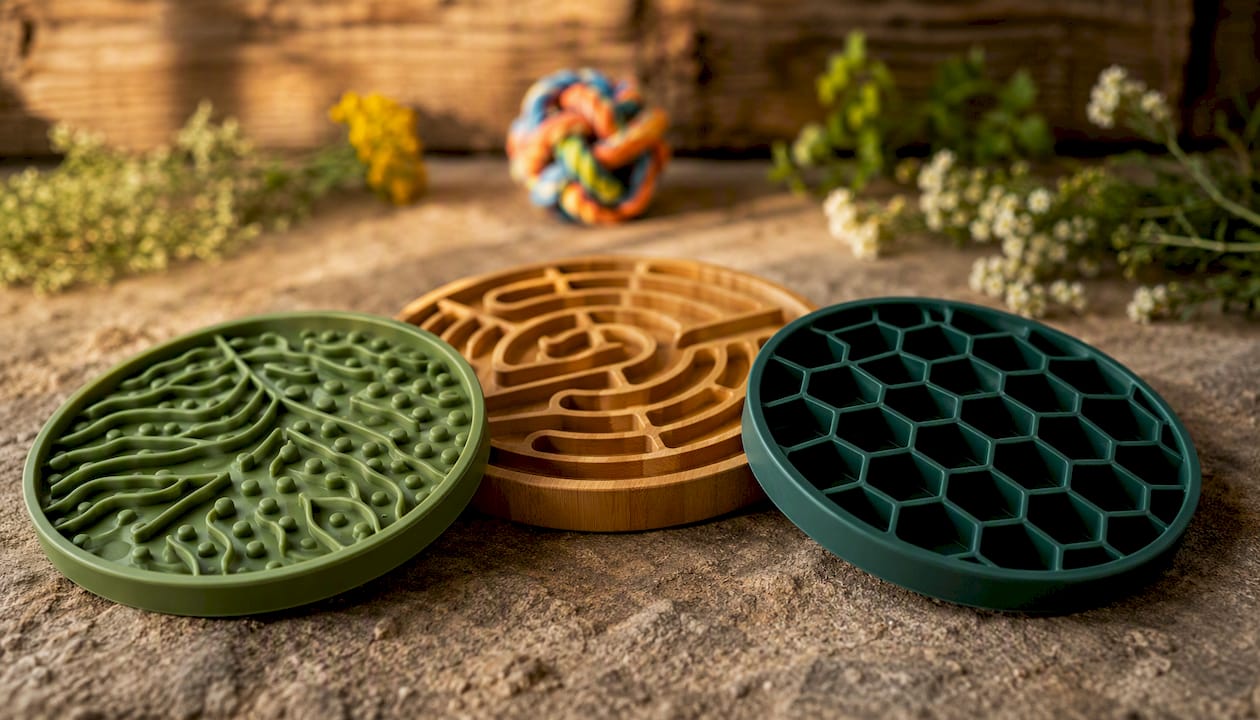
The material determines almost everything: chew resistance, cleaning options, freezer compatibility, and how long the mat lasts. According to the AKC’s lick mat guide, most mats are made from food-grade silicone or natural rubber, and cleaning instructions vary significantly between them.
| Material | Chew Resistance | Dishwasher Safe | Freezer Safe | Best For |
|---|---|---|---|---|
| Food-grade silicone | Moderate | Usually top-rack | Yes | Most dogs, easy cleaning |
| TPR/natural rubber | Low–moderate | Handwash recommended | Yes | Gentle chewers, flexibility |
| Firmer plastic | Higher | Often yes | Check label | Aggressive lickers, durability |
A professional dog trainer’s real-world testing notes highlight that groove depth and frame stiffness matter more than most buyers expect. Shallow grooves suit puppies and senior dogs with dental sensitivity. Deep, narrow grooves extend lick time but are harder to clean. Framed mats reduce spills when you carry them fully loaded, which matters if you are walking the mat to a crate or bath station.
What to put on a lick mat: safe spreads and recipes
Recipe ideas by goal
SodaPup’s recipe guide and Petcube’s vet-reviewed filling ideas both organize fillings by purpose, which is the most practical way to think about it:
Low-calorie everyday options: Plain canned pumpkin (not pie filling), plain Greek yogurt (no added sweeteners), mashed sweet potato, or diluted low-sodium chicken broth.
Long-lasting frozen sessions: Spread a thin layer of pumpkin, add a few blueberries pressed into the grooves, top with a drizzle of yogurt, and freeze flat for at least 2 hours. Freezing significantly extends lick time compared to a room-temperature mat.
High-value training spreads: A thin scrape of xylitol-free peanut butter, a small amount of cream cheese, or a spoonful of PetKind Tripett wet food pressed into the grooves. Reserve these for high-stakes situations like vet visits.
Puppy-safe options: Plain yogurt, mashed banana, or diluted bone broth. Keep portions small and fillings simple until you know how your puppy’s digestion responds.
Portion guidance
Treats and mat fillings count toward your dog’s daily calorie allowance. A tablespoon of peanut butter adds roughly 90–100 calories. For a 20-pound dog on a 600-calorie daily budget, that is a significant chunk. Adjust the main meal down on days you use a loaded mat, and consult your vet if you are using one daily.
Pro Tip: Prep a week of frozen mats on Sunday. Line them up on a baking sheet, freeze solid, then stack them in a zip-lock bag. Each morning you pull one out and it is ready by the time your dog needs it.
How to clean and maintain lick mats
Cleaning is where a lot of owners fall short, and a mat with dried food residue in the grooves becomes a bacteria trap fast.
Handwashing: Use warm water and dish soap immediately after use. A soft bottle brush or old toothbrush reaches deep grooves that a sponge misses. Rinse thoroughly; soap residue in grooves can irritate a dog’s stomach.
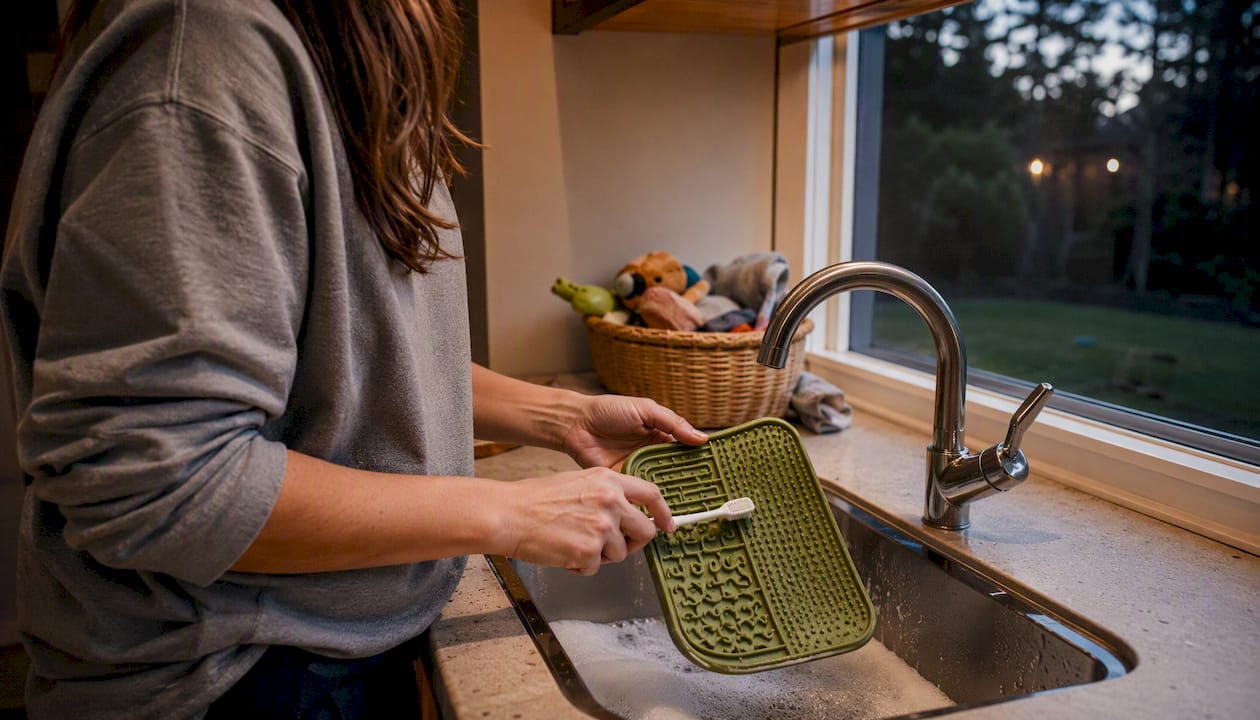
Dishwasher: Food-grade silicone mats typically handle the top rack well. Natural rubber mats often warp or degrade with repeated high-heat cycles, so check the manufacturer’s label before loading them. Never put any mat on the bottom rack where water temperatures run highest.
Boiling caution: Boiling can sterilize but also degrades silicone and rubber faster than normal washing. Reserve it for a mat that has been in contact with raw meat, and check whether your specific mat is rated for it.
Storage: Dry the mat completely before storing. Even a slightly damp mat stored in a closed container will develop mold within days. Store flat or hanging, not folded, to prevent creases that crack the material over time.
Pro Tip: Run your finger across every groove after washing. If you feel any stickiness or residue, wash again. Dried yogurt and pumpkin hide in narrow channels and are easy to miss on a quick rinse.
When to replace a mat
Inspect the mat after every few uses. Replace it immediately if you notice:
- Punctures, tears, or jagged edges (ingestion risk)
- Thinning material in high-lick zones
- Persistent discoloration or odor that does not wash out
- Any piece that has been bitten off (stop use, check your dog for ingestion signs)
Safety rules and when not to use lick mats
Used correctly, lick mats are safe for most dogs. Used carelessly, they create real hazards.
- Supervise every session for the first few uses, especially with puppies or dogs new to the tool.
- Never leave an aggressive chewer alone with a mat. Silicone and rubber pieces can cause intestinal obstruction if swallowed.
- Check every ingredient for xylitol, even in products labeled “natural.”
- Limit high-fat fillings for dogs with pancreatitis, obesity, or liver disease.
- Do not use a mat as a substitute for meals in dogs that need precise calorie management.
Veterinary note: Dr. Sirois, cited by Rover’s expert review, recommends lick mats specifically for distraction during anxiety-inducing events but is clear that they do not replace professional dental care. The licking motion may reduce surface food residue, but it does not address tartar, plaque buildup, or periodontal disease. Pair a lick mat routine with actual dental care products for complete oral health.
Food guarding and behavioral red flags
Some dogs develop resource guarding around a lick mat, growling or snapping when approached during a session. If you see stiffening, hard staring, or growling, stop using the mat in that context and consult a certified professional dog trainer (CPDT-KA) before reintroducing it. A mat should reduce stress, not create a new flashpoint.
How to choose the right lick mat for your dog
Price ranges
Entry-level mats ($5–$12) are typically thin silicone with basic textures. They work, but they wear faster and often lack suction cups or frames. Mid-range mats ($13–$25) cover most dogs well: food-grade silicone, dishwasher-safe, with suction cups and decent groove variety. Premium options ($26 and up) add rigid frames, lids, two-sided designs, and thicker material that holds up to more determined lickers.
Pro Tip: Buy two mats at the same time. One goes in the freezer loaded and ready; the other is in use or being cleaned. You will never be caught without a prepared mat when you need one fast.
Special considerations
Puppies need shallow grooves and simple fillings. Senior dogs with dental sensitivity benefit from soft silicone and smooth-textured spreads rather than chunky fillings that require more jaw effort. Nervous dogs respond better to high-value fillings in a quiet, familiar spot for the first few sessions. Aggressive chewers should use only the thickest, most rigid mats available, always supervised, and ideally with a mat keeper or protective frame that limits direct biting access.
Practical prep, freezing tricks, and creative uses
Step-by-step frozen mat prep
- Lay the mat flat on a small baking sheet or cutting board.
- Spread your base filling (yogurt, pumpkin, or wet food) in a thin, even layer, pressing it into the grooves with a spreader or the back of a spoon.
- Add any mix-ins: blueberries, a few pieces of kibble, a drizzle of broth.
- Freeze flat for a minimum of 2 hours. Freezing on a flat surface prevents the filling from pooling to one side.
- Once solid, store in a zip-lock bag or airtight container. Frozen mats keep well for up to two weeks.
A SPOT Seek-A-Treat Freezer Tray is a practical tool for batching multiple frozen portions at once, especially if you are prepping a week’s worth in one go.
Creative use cases
- Bath time. Stick a suction-cup mat to the tub wall at nose height. Your dog focuses on licking while you shampoo and rinse. Pair with a slicker brush for a full grooming session your dog will actually tolerate.
Pro Tip: For vet visits, use a filling your dog only gets in that context — something genuinely exciting like a thin scrape of sardine or cream cheese. The rarity of the filling makes the association stronger.
Troubleshooting: ignored mats, chewing, and digestive upset
When your dog ignores the mat
Start with the filling. A dog unfamiliar with lick mats often needs a high-value spread for the first few sessions. Peanut butter (xylitol-free) or a thin layer of wet food usually works. Warm the filling slightly to amplify the smell. Keep the first sessions short and supervised, and sit near the dog so the mat is associated with calm, positive attention.
If the dog sniffs and walks away, try a different texture. Some dogs find deep grooves frustrating at first. A nearly flat mat with a thin smear of something irresistible is a better starting point than a heavily ridged surface.
- Switch to a higher-value filling for the first 3–5 sessions.
- Warm the mat slightly (10 seconds in a microwave, check for hot spots).
- Sit with your dog during the session and use a calm verbal cue like “lick it.”
- Gradually introduce the mat in the context where you most need it (bath, crate, departure) only after the dog is reliably engaged at home.
When your dog chews the mat
Remove it immediately. Check the dog’s mouth and monitor for vomiting, lethargy, or changes in stool over the next 24 hours. If you suspect ingestion of a significant piece, call your vet.
Replace with a thicker, more rigid mat or add a mat keeper frame that limits biting access. Supervised sessions only until the mouthing behavior stops. Some dogs need a few weeks of short, closely watched sessions before they understand the mat is for licking, not chewing.
Pro Tip: If your dog consistently tries to chew the mat, try pressing the filling deeper into the grooves so there is less surface material exposed. Less grabbable texture means less temptation to bite.
What veterinarians and trainers say about lick mats
The expert consensus is clear: lick mats are a legitimate behavioral management tool when used with intention, not a cure-all or a substitute for training and exercise.
Behavioral consultants emphasize that lick mats work best as a counter-conditioning tool, not just a distraction. Pairing a low-stress version of a trigger with a mat repeatedly builds a genuine positive association over time. The mat becomes a cue that something good is happening, which changes how the dog feels about the trigger itself. That is meaningfully different from simply keeping a dog busy. (Daily Paws, dog trainer and behaviorist review)
Trainers who use lick mats in desensitization protocols typically follow a structured approach:
- Identify the specific trigger (nail trims, strangers, car rides).
- Introduce the mat in a completely neutral context first, so the dog loves it before it is ever used near the trigger.
- Present the mat at the lowest intensity version of the trigger (clippers on the table, not touching the dog).
- Gradually increase trigger intensity across sessions, always keeping the dog under threshold.
- Never use the mat to push through a dog that is already over threshold.
On dental claims: veterinarians cited by Rover are consistent that lick mats can reduce surface food residue but do not address tartar or periodontal disease. For real dental support, pair the mat routine with dedicated dental treats or an oral care kit designed for that purpose. The Dogster overview of lick mat benefits reinforces this: the behavioral and enrichment benefits are well-supported; the dental angle is overstated in most marketing.
Petbite’s grooming team has seen firsthand how a lick mat changes the dynamic of a grooming session for anxious dogs. Introducing the mat during a professional grooming appointment is one of the most effective ways to build a positive association before you try it at home during nail trims or baths.
This article is general information, not veterinary or behavioral advice. Consult your veterinarian or a certified professional dog trainer for guidance specific to your dog’s health and behavior.
Key Takeaways
Lick mats deliver real calming and enrichment benefits for most dogs when used as a planned part of a routine, not as an unlimited daily treat source.
| Point | Details |
|---|---|
| Core benefit | Licking releases endorphins and serotonin, producing a genuine calming effect useful before stressors. |
| Safety first | Always check for xylitol, supervise chewers, and count mat fillings toward your dog’s daily calorie allowance. |
| Cleaning matters | Wash after every use with warm soapy water; inspect grooves for residue and inspect the mat for wear or tears. |
| Choose by chew style | Match material thickness and groove depth to your dog’s chewing behavior and age, not just size. |
| Petbite’s stock | Petbite carries lick-mat-compatible wet foods, freezer trays, and dental care products, with free same-day delivery within 3 km of Orléans. |
A note on what actually works
Lick mats get oversold in two directions. Some owners treat them as a magic anxiety cure; others dismiss them as a gimmick. The truth sits squarely in the middle, and it is more interesting than either extreme.
The licking mechanism is real neuroscience. Repetitive, rhythmic oral behavior activates the parasympathetic nervous system in dogs the same way it does in humans. That is why dogs lick their paws when stressed and why a loaded mat can visibly drop a dog’s arousal level within minutes. The tool works.
What it does not do is address the root cause of anxiety. A dog that panics during thunderstorms needs a behavior modification plan, possibly medication, and a veterinary behaviorist’s input. A lick mat makes that plan easier to execute. It is not the plan itself.
The detail most owners miss: the mat’s effectiveness depends almost entirely on timing and context. Presented before the stressor, it builds a calming ritual. Presented after the dog is already in full panic, it is mostly ignored. That timing distinction is what separates owners who swear by lick mats from those who tried one and gave up after a week.
Petbite has what you need for lick mat sessions
Getting the most out of a lick mat comes down to having the right filling on hand and a mat that holds up. Petbite stocks a curated selection of lick-mat-compatible foods, including PetKind Tripett wet food, which presses cleanly into grooves and works equally well frozen or at room temperature. For owners who want to prep a week of frozen mats at once, the SPOT Seek-A-Treat Freezer Tray makes batching straightforward.
Petbite also carries food-grade accessories, dental care products, and grooming tools to round out your dog’s enrichment routine. If your dog has never used a lick mat before, Petbite’s certified groomers can introduce one during a professional grooming session, a low-pressure first exposure that sets the right tone. Free same-day delivery is available within 3 km of the Orléans location. Browse the full selection at petbite.ca or book a grooming appointment to get started.
Useful sources and further reading
The following sources informed this guide and are worth bookmarking for deeper reading:
- Lick mats for dogs: everything you need to know to choose one
- Lick Mat Dog Treat Recipes: A Vet Guide to Benefits, Safety, and Calming Enrichment | Dr Duncan Houston
- Does Your Dog Need a Lick Mat? Experts Review the Benefits
- The Benefits of Dog Lick Mats, According to a Dog Trainer and Behaviorist
- What to Put on a Lick Mat: 25 Dog-Safe Recipes and Fillings
- DIY Lick Mat Recipes: Healthy Treats for Your Dog
- Best Lick Mats for Dogs — Thoughts from a Professional Dog Trainer
For in-person product demos or a grooming-introduction session where your dog can try a lick mat in a supervised setting, contact Petbite directly through petbite.ca.