

The safest chews for puppies fall into three categories: stuffable durable rubber toys (think KONG-style), soft puppy-specific dental or nylon chews designed for baby teeth, and selected single-ingredient edible chews like bully sticks or dehydrated fish skin. Before you buy anything, three rules apply no matter what you choose.
- Supervise every session. No chew is fully safe left unsupervised, and puppies can go from chewing to choking faster than you’d expect.
- Match size and hardness to your puppy’s age and jaw strength. A chew that’s fine for a six-month-old Lab can crack a ten-week-old’s baby teeth.
- Retire any chew that becomes small or damaged. The rule of thumb: once a chew is shorter than your puppy’s snout, it’s a choking hazard and goes in the trash.
Puppies typically begin teething around 3 weeks old and finish by about 6 months, so the chews you choose now will need to evolve as those adult teeth come in. Petbite carries a curated selection of puppy-safe chews and KONG toys in Orléans, with free same-day delivery within 3 km if you’d rather skip the trip.
Table of Contents
- What chews are actually safe for puppies?
- Chews you should avoid and safer swaps
- How to match chews to your puppy’s age and chewing style
- Practical teething-relief options you can use today
- How to inspect chews and know when to retire them
- Teaching your puppy what’s okay to chew
- What to check before you buy any puppy chew
- Key Takeaways
- The part most puppy guides skip
- Petbite has the puppy chews you need, delivered today
- Authoritative sources and further reading
What chews are actually safe for puppies?
Understanding the categories helps you shop with confidence instead of guessing at the pet store.
Stuffable durable rubber toys
These are the gold standard. Veterinarians recommend stuffable rubber toys because they don’t splinter, hold up to sustained chewing, and can be frozen for extra soothing relief. Fill a KONG Puppy toy with measured kibble, plain yogurt, or a small amount of canned pumpkin, then freeze it overnight. The frozen filling slows your puppy down, extends the session, and keeps calorie intake in check.
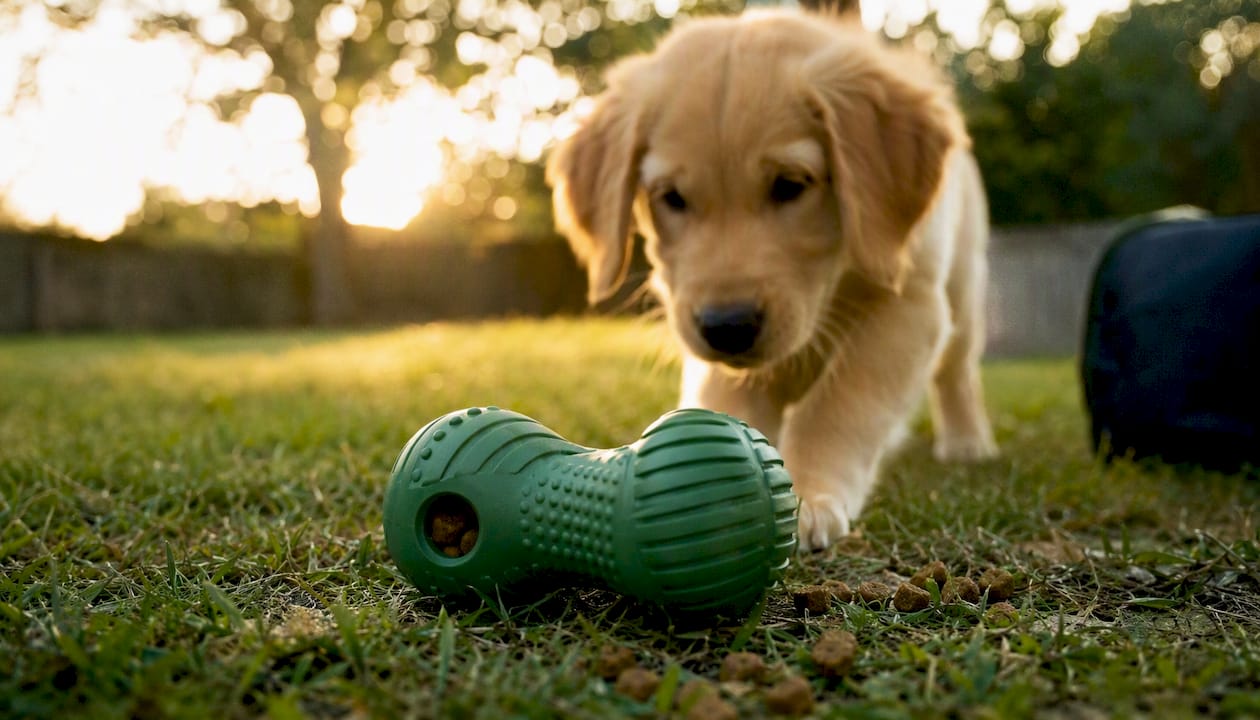
Pro Tip: Use your puppy’s regular kibble as the stuffing rather than high-value treats. It counts toward their daily food allotment, so you’re not adding extra calories on top of meals.
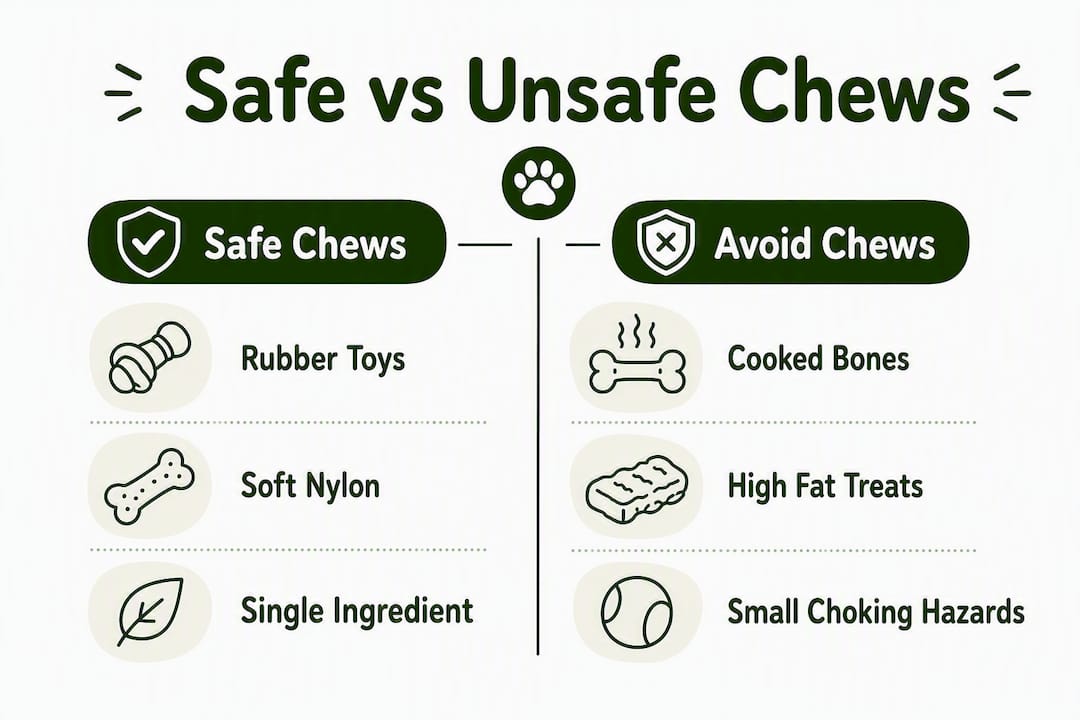
Soft puppy-specific dental and nylon chews
Products like Nylabone’s puppy line are made from softer material than adult nylon chews, specifically to protect baby teeth. These are appropriate for gentle chewers during the teething phase but are not suited for aggressive chewers or once adult teeth arrive. Check that the packaging says “puppy” or specifies an age and weight range — adult nylon chews are too hard for a puppy’s jaw.
Single-ingredient edible chews
Bully sticks, beef cheek rolls, and dehydrated fish skin are popular choices, and for good reason: they’re digestible, long-lasting, and free of artificial additives. The catch is calories. Edible chews like bully sticks can be calorie-dense, so count them as part of your puppy’s daily food allowance, not as extras on top of it. Offer them in timed sessions rather than letting your puppy go until the chew is gone.
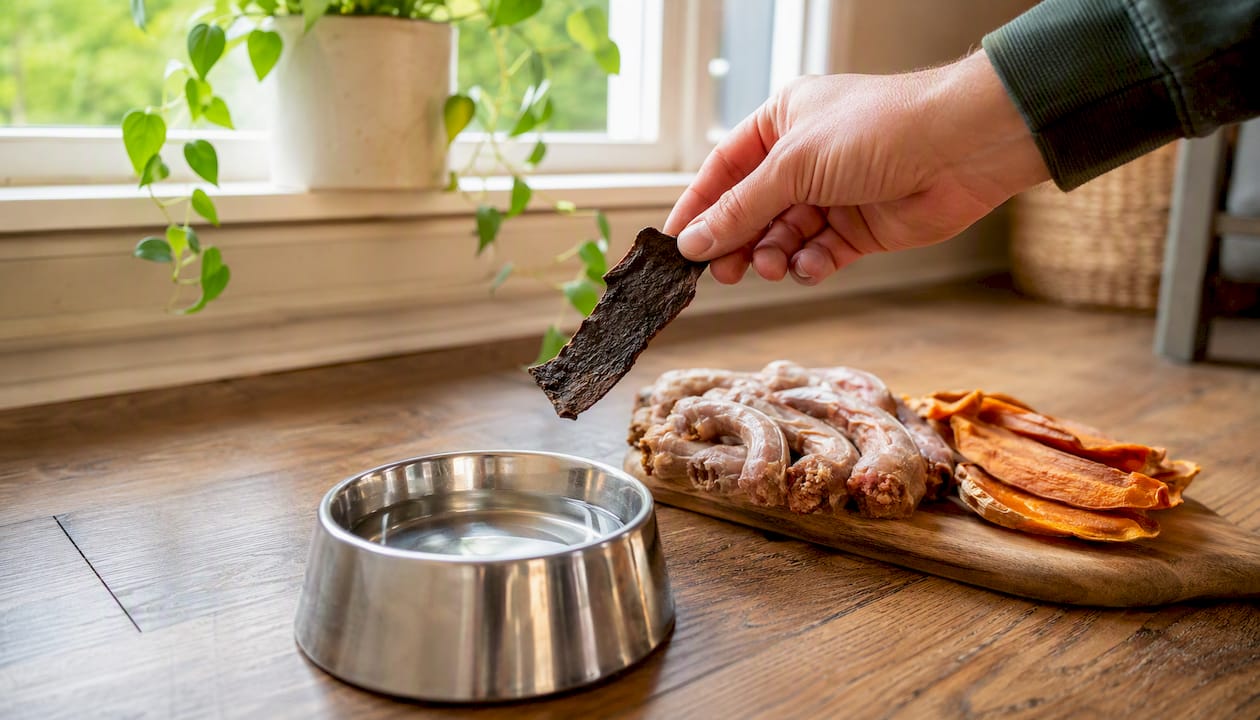
If your puppy has known food sensitivities, single-ingredient chews are actually easier to manage than mixed-ingredient treats. One protein source means you know exactly what you’re feeding.
Natural alternatives with caveats
Raw recreational bones (not cooked) and coffee wood chews are options some owners use successfully. Both require close supervision. Raw bones should be large enough that your puppy can’t fit the whole thing in their mouth, and they should always be consumed fresh, not left out to dry and splinter. Coffee wood is a harder natural option that works better for moderate chewers once teething is mostly done.
Cleaning reusable chew toys
Rubber and nylon chews collect bacteria in their grooves. Wash rubber toys with warm water and mild dish soap after each use, or run them through the top rack of the dishwasher (no detergent). Nylon chews can be rinsed and wiped down. Inspect the surface every time you clean it — cracks and deep gouges are your cue to replace the toy.
Chews you should avoid and safer swaps
Some of the most common chews on pet store shelves are also the most dangerous for puppies.
Rawhide, cooked or smoked bones, hard antlers, and pig ears are among the highest-risk chews for puppies. Rawhide can swell inside the digestive tract and cause intestinal obstruction. Cooked and smoked bones splinter into sharp shards. Hard antlers are dense enough to fracture baby teeth. Pig ears are often too high in fat for a puppy’s digestive system and can trigger GI upset.
Here’s what to avoid and what to use instead:
- Rawhide → Swap for a stuffed rubber toy or a long-lasting single-ingredient dehydrated chew (bully stick, beef cheek roll). Both satisfy the urge to gnaw without the obstruction risk.
- Cooked or smoked bones → Swap for a raw recreational bone under direct supervision, or skip bones entirely and use a stuffable toy.
- Hard antlers → Swap for a soft puppy-specific nylon chew or a rubber toy. Antlers are simply too dense for puppy teeth.
- Pig ears → Swap for a dehydrated fish skin chew or a low-fat single-ingredient treat. Pig ears are also a frequent source of Salmonella contamination.
- Tennis balls (unsupervised) → The felt exterior can fray and be swallowed, and the rubber can compress enough to become a choking hazard. Use only as a fetch toy with you present, and retire them when the felt starts peeling.
- Very hard nylon chews marketed for adult dogs → These can fracture puppy teeth. Stick to products labeled specifically for puppies.
The main hazards across all these items are the same: splintering, tooth fracture, intestinal obstruction, and high fat or calorie load. If a chew can break into sharp pieces or be swallowed in a large chunk, it doesn’t belong in a puppy’s mouth.
How to match chews to your puppy’s age and chewing style
What’s safe changes as your puppy grows, so a one-size-fits-all approach doesn’t work. Here’s a practical framework.
Teething timeline
Teething begins around 3 weeks when the first baby teeth erupt, and most puppies have their full set of adult teeth by 6 months. The heaviest chewing urge usually peaks between 3 and 6 months, when adult teeth are pushing through and gums are inflamed. After 6 months, you can gradually introduce firmer options as jaw strength increases.
Age-based selection
- Under 12 weeks: Stick to the softest options only. Soft rubber puppy toys (unfilled or lightly stuffed), soft puppy dental chews, and frozen wet washcloths. No edible chews yet.
- 3–6 months: Introduce stuffable rubber toys (frozen), soft single-ingredient edible chews in short timed sessions, and puppy-specific nylon chews for gentle chewers.
- 6+ months: Adult teeth are arriving. Firmer rubber toys become appropriate. Continue supervising edible chews and reassess hardness as jaw strength grows.
Chewing style matters as much as age
The single biggest safety factor is matching the chew to your individual puppy’s chewing style. A gentle chewer can use standard puppy dental chews without issue. An aggressive chewer needs slow-consumption, highly durable options — a soft nylon chew will be destroyed in minutes and the pieces swallowed.
Two quick hardness tests vets use
Veterinarians recommend two physical checks you can do at home before handing over any chew:
- Kneecap Tap Test: Tap the chew firmly against your kneecap. If it would hurt, it’s too hard for a puppy.
- Thumbnail Press Test: Press your thumbnail into the surface. If you can’t make an impression, the chew is too dense and risks tooth fracture.
For size, avoid anything your puppy can fit entirely in their mouth. Encourage side chewing rather than top-to-bottom gnawing, which puts more pressure on individual teeth.
Practical teething-relief options you can use today
Sore gums respond well to cold. Cold reduces gum inflammation, which is why frozen chews are so effective during peak teething.
- Frozen stuffable rubber toys. Fill a KONG Puppy Small or KONG Puppy X-Small with plain yogurt, canned pumpkin, or moistened kibble and freeze for at least two hours. This is the most vet-recommended teething option available.
- Frozen vegetables. Blanched and frozen carrots, green beans, and blueberries can soothe gums and are low in calories. Keep portions small — a few pieces per session — and supervise closely so your puppy doesn’t swallow large chunks.
- Cold wet washcloth. Dampen a clean washcloth, twist it into a rope shape, and freeze it. Let your puppy chew on it while you’re watching. Discard it the moment it starts to shred.
- Timed sessions. Limit each chewing session to 10–15 minutes, especially with edible chews. This prevents overconsumption, reduces GI upset risk, and keeps the chew novel for next time.
Pro Tip: Rotate between two or three different frozen options across the week. Puppies lose interest in the same texture quickly, and rotation also slows down how fast they consume edible chews.
How to inspect chews and know when to retire them
A quick inspection before and after every session takes less than a minute and prevents most chew-related emergencies.
Daily inspection checklist:
- Cracks, splits, or deep gouges in rubber or nylon
- Sharp edges or broken-off pieces
- Fraying strands on rope or fabric toys
- Missing chunks (and no sign of where they went)
- Discoloration or unusual smell on edible chews
The snout rule: Retire any chew that has worn down to a size shorter than your puppy’s snout. At that point, it can be swallowed whole. Keep a small bin near the toy area specifically for discards, and replace the retired chew with a rotated alternative immediately so your puppy doesn’t go looking for something else to gnaw.
Signs of trouble after a chewing session:
- Vomiting or gagging
- Lethargy or reluctance to move
- Refusal to eat at the next meal
- Straining to defecate or blood in stool
- Pawing at the mouth
Any of these warrants a call to your vet. Intestinal obstruction from a swallowed chew piece is a medical emergency.
Pro Tip: Rotate chews and use timed sessions to slow consumption, preserve novelty, and make each chew last longer. A puppy who gets the same toy every day will try to finish it faster.
Teaching your puppy what’s okay to chew
Chewing is instinctive. Your job isn’t to stop it — it’s to redirect it toward approved items and build habits that stick.
Step-by-step redirection
- Interrupt calmly. When your puppy chews something off-limits, say “no” once in a neutral tone. Don’t yell or physically correct.
- Offer an approved chew immediately. Hand them a KONG Goodie Bone or another approved toy within two seconds of the interruption.
- Praise when they accept it. A calm “good” and a brief pat reinforces the swap. Repeat this consistently and the association builds quickly.
Teaching “leave it” and “drop it”
Both cues are worth teaching in the first few weeks. For “leave it”: hold a treat in your closed fist, wait for your puppy to stop pawing and sniffing, then open your hand and reward. For “drop it”: offer a high-value treat in exchange for whatever is in their mouth. Never chase your puppy to retrieve something — that turns it into a game.
Management for unsupervised time
- Use a crate or puppy-proofed pen when you can’t watch directly.
- Leave one or two approved chews inside so your puppy has an outlet.
- Rotate which chews are available to maintain interest.
- Puppy-proof the space: remove shoes, cables, and anything else that looks chewable.
Do/don’t quick list:
- Do reward your puppy every time they choose an approved chew unprompted.
- Do swap, don’t snatch — always offer something in return.
- Don’t punish mouthing; redirect it.
- Don’t leave edible chews unsupervised, even briefly.
What to check before you buy any puppy chew
Use this checklist in-store or on a product page before adding anything to your cart.
- Size: Can your puppy fit the whole thing in their mouth? If yes, it’s too small.
- Age and breed labeling: Does the packaging specify “puppy” or list a weight range that matches your dog?
- Material and hardness: Does it pass the Kneecap Tap Test and Thumbnail Press Test?
- Edible vs. reusable: Edible chews need calorie accounting; reusable toys need cleaning and inspection.
- Calorie note: For edible chews, is the calorie count listed? Factor it into daily meals.
- Manufacturer safety labeling: Is there a recommended supervision note? If a product claims to be “indestructible” or “unsupervised safe,” treat that as a red flag, not a selling point.
- Material origin: Where is the product made and what is it made from? Single-ingredient chews should list one protein source.
- Replacement policy: Some brands offer a replacement guarantee if the toy breaks. Worth knowing before you buy.
For reusable toys, a stuffable rubber toy suits most puppies and most households. For edible chews, match the protein to what your puppy already eats to reduce allergy risk. If you’re introducing a new protein, do it one at a time and watch for itching, loose stools, or ear inflammation over the following week. Soft chew supplements that also support gut health, like probiotic soft chews, can be a useful addition when you’re transitioning between chew types.
Key Takeaways
The three most important actions right now: buy a stuffable rubber toy sized to your puppy, run supervised chew sessions of 10–15 minutes, and inspect and retire any chew that shows damage or shrinks below snout length.
| Point | Details |
|---|---|
| Start with rubber toys | Stuffable, freezeable rubber toys are the safest first chew for any puppy at any age. |
| Teething runs 3–6 months | Chewing needs change as adult teeth arrive; update your chew selection at each stage. |
| Two hardness tests | Use the Kneecap Tap Test and Thumbnail Press Test before giving any new chew. |
| Retire at snout length | Any chew shorter than your puppy’s snout is a choking hazard and must be discarded. |
| Petbite for local options | Petbite in Orléans stocks KONG puppy toys and single-ingredient treats, with free same-day delivery within 3 km. |
This article is general information, not veterinary advice. Consult your vet for breed-specific guidance and to confirm what’s appropriate for your individual puppy.
The part most puppy guides skip
The chew aisle is genuinely confusing, and most articles don’t help because they list products without telling you the one thing that actually determines safety: your specific puppy’s chewing style. A gentle Cavalier and an aggressive Labrador at the same age need completely different options. The teething timeline gives you a starting point, but chewing intensity is the variable that most owners underestimate until something goes wrong.
The other thing worth saying plainly: “puppy-safe” on a label is marketing, not a guarantee. The Kneecap Tap Test and Thumbnail Press Test exist precisely because no regulatory body certifies pet chew hardness in the United States. You are the quality check. That’s not a burden — it just means spending thirty seconds with the chew before you hand it over, which is less time than it takes to deal with a vet visit for an obstruction.
Frozen stuffable toys are the one category where the evidence, the vets, and the practical experience all point the same direction. Start there, add variety as your puppy grows, and retire anything that looks worn before your puppy decides to finish it off in one sitting.
Petbite has the puppy chews you need, delivered today
Picking the right chew is easier when you don’t have to sort through a wall of options at a big-box store. Petbite in Orléans carries a hand-picked selection of KONG puppy toys in every size, from X-Small for the tiniest breeds to Large for bigger pups, along with single-ingredient treats from trusted Canadian brands like PetKind and raw food options from Iron Will Raw for owners exploring raw feeding under vet guidance.
What sets Petbite apart from ordering through a large retailer is the curation and the speed. Every product on the shelf has been selected with quality in mind, and if you’re within 3 km of the Orléans location, free same-day delivery means your puppy’s new chew arrives before the afternoon nap. Browse the full puppy toy selection at petbite.ca or stop in to get a recommendation matched to your puppy’s breed, age, and chewing style.
Authoritative sources and further reading
The claims in this article draw from the following vetted sources. For breed-specific questions, your vet is always the best first call.
- What Puppy Can Safely Chew? — AKC
- ASPCA Position Statement on Dog Chews and Treats
- The Best and Safest Chew Bones for Dogs — Whole Dog Journal
- Petbite — local puppy chews and toys in Orléans