

The safest raw dog food storage system works like this: freeze bulk portions at 0°F (-18°C) or colder for long-term storage, move only 1–3 days’ worth to the refrigerator to thaw, and clean every surface that touched raw meat thoroughly before you move on. That’s the whole system. Everything below makes it easier to execute.
Quick rules to act on now:
- Keep your freezer at 0°F (-18°C) or colder; keep your fridge between 34°F and 40°F
- Thaw in the refrigerator only — never on the counter, never in the microwave
- Label every pack with the date, protein type, and weight before freezing
- Rotate using FIFO (first in, first out): oldest packs get used first
- Discard immediately if you notice a sour or putrid odor, sliminess, or visible mold
Key Takeaways
Proper raw dog food storage comes down to three non-negotiable habits: freeze at 0°F, thaw only in the fridge, and clean every surface that touched raw meat.
| Point | Details |
|---|---|
| Freezer temperature | Keep at 0°F (-18°C) or colder; this halts bacterial growth for safe long-term storage. |
| Fridge thaw only | Move 1–3 days’ worth to the fridge; use thawed food within 2–4 days. |
| Flat-pack and label | Portion flat, label with date/protein/weight, and freeze in a single layer before stacking. |
| Clean every time | Sanitize surfaces and bowls after every handling session to prevent cross-contamination. |
| Petbite supplies | Petbite carries ready-to-freeze raw proteins and storage-compatible products for Orléans-area raw feeders. |
Table of Contents
- How long does raw dog food last in the fridge and freezer?
- What are the best containers for freezing raw dog food?
- How do you thaw raw dog food safely?
- How do you prevent cross-contamination when handling raw pet food?
- How do you know when raw dog food has gone bad?
- How do you label, portion, and rotate raw dog food to avoid waste?
- Your raw feeding supply checklist
- What most raw feeding guides get wrong about storage
- Petbite has what you need for raw feeding in Orléans
- Sources
How long does raw dog food last in the fridge and freezer?
Temperature is the one variable you cannot negotiate. Freezing at 0°F (-18°C) or below halts bacterial growth and is the baseline for any long-term raw storage. Your fridge should stay between 34°F and 40°F — anything above 40°F puts meat in the bacterial danger zone.
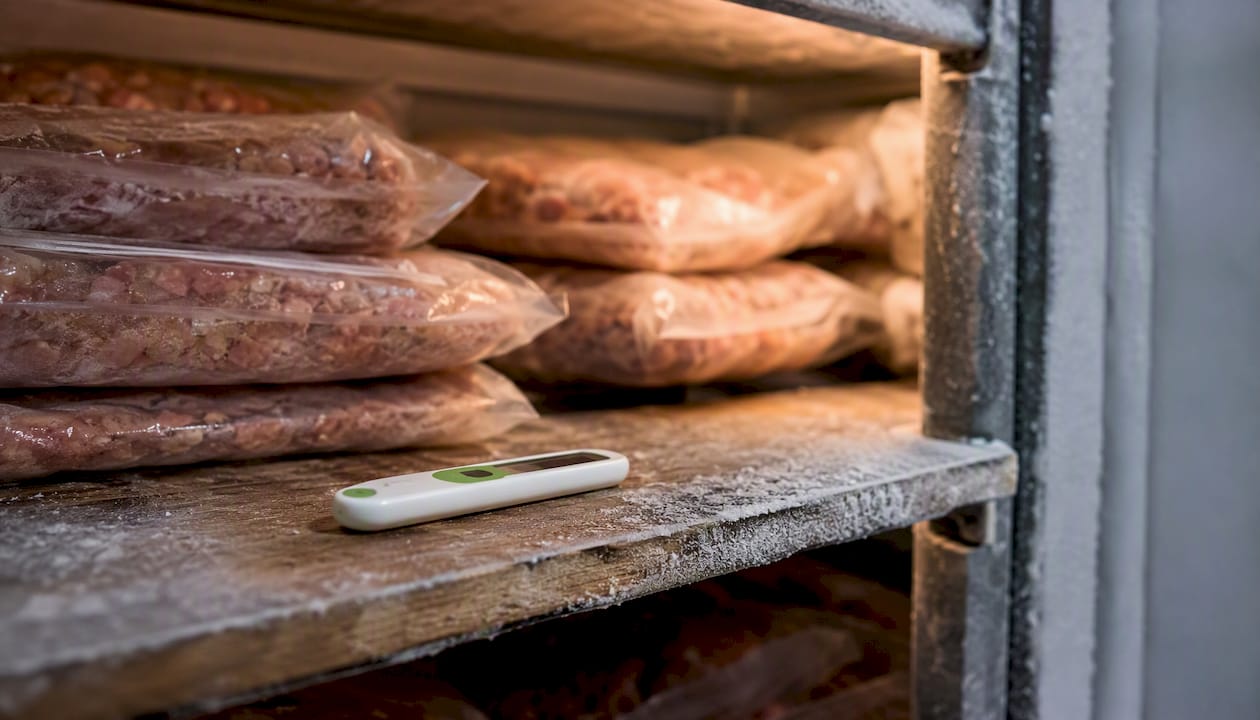
Storage windows vary by protein type and packaging method:
Community-sourced windows confirm that ground meat spoils faster than whole cuts because grinding exposes far more surface area to oxygen and bacteria. Organ meat is similarly short-lived.
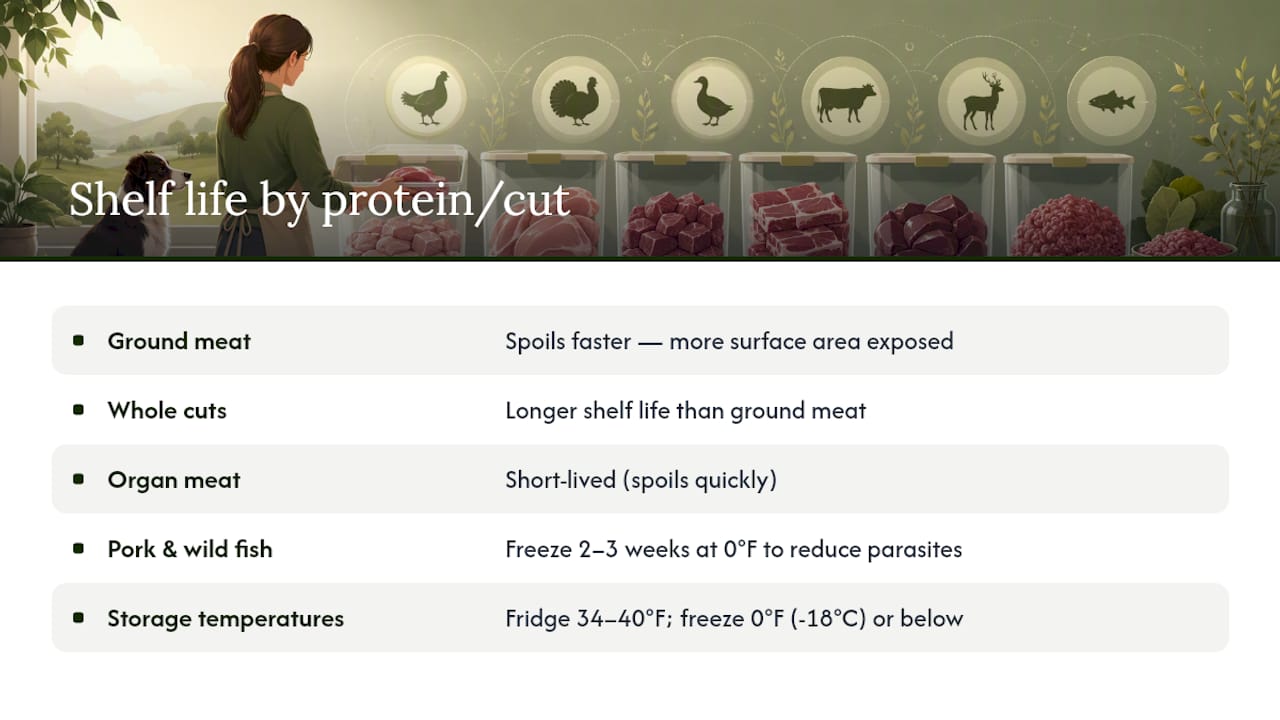
One protein-specific note: pork and wild-caught fish carry parasite risk. Freeze these proteins for 2–3 weeks at deep-freeze temperatures before feeding to reduce that risk.
Pro Tip: Slow freezing in an overloaded or warm freezer creates large ice crystals that damage muscle cell walls, leaving the meat drier after thawing. Freeze packs in a single layer until solid before stacking them — this produces faster, more even thawing and better texture.
What are the best containers for freezing raw dog food?
Packaging choice determines how long your food stays freezer-burn-free and how fast it thaws. Here are your main options:
- Vacuum-sealed bags: The best choice for long-term storage. Removing air almost entirely prevents freezer burn and extends quality windows. A vacuum sealer pays for itself quickly if you buy in bulk.
- Heavy-duty zip-top freezer bags: The practical everyday option. Press out as much air as possible before sealing. Avoid standard sandwich bags — they’re too thin and allow air transfer.
- Rigid freezer-safe plastic containers: Good for short-term fridge storage (1–3 days), less ideal for the freezer because they’re bulky and trap air.
- Tempered glass containers: Non-porous, dishwasher-safe, and excellent for fridge storage. Skip them for the freezer unless they’re explicitly rated for it.
Flat-packing portions reduces air exposure, speeds thawing, and stacks far more efficiently than stuffing thick rounds into a bag. Aim for portions roughly 1 inch thick. For most dogs, one portion equals one day’s food — though splitting into two meal-sized packs works better for large breeds eating twice daily.
If the commercial packaging is intact and vacuum-sealed, you can freeze it as-is. Once opened or repackaged, move to your own vacuum bags or heavy-duty zip-tops.
Pro Tip: Write the date frozen, protein type, and weight directly on the bag with a permanent marker (a Sharpie works well on both plastic and freezer tape). Avoid stickers — they fall off in cold, humid freezers.
How do you thaw raw dog food safely?
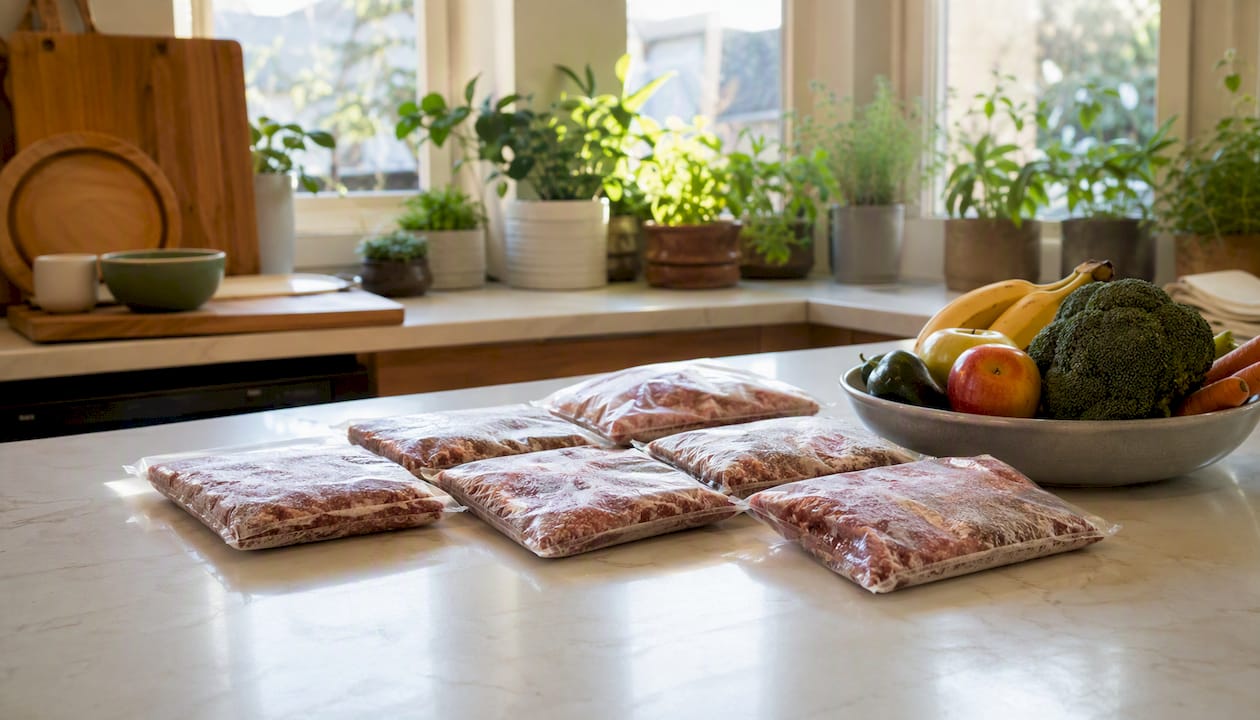
The preferred method is simple: move tomorrow’s portion from the freezer to the refrigerator the night before. A 1-lb flat-pack thaws in roughly 12–24 hours in the fridge; larger portions need more time, so plan ahead.
When you’re short on time, the cold-water method works:
- Keep the portion in its sealed bag.
- Submerge it in a bowl of cold tap water.
- Change the water every 30 minutes.
- A 1-lb portion thaws in about 1 hour.
Never thaw raw dog food on the counter. Room temperature puts meat in the bacterial danger zone (40°F–140°F) almost immediately. Microwaving is equally problematic — it heats unevenly, partially cooks the meat, and can splinter bones.
Thawed raw dog food kept in the refrigerator should be used within 2–4 days. If your dog doesn’t finish a meal within 30 minutes, remove the bowl and refrigerate or discard the remainder — don’t leave raw meat sitting out.
Refreezing fully thawed meat degrades texture and increases oxidation. In a pinch, refreezing a pack that is still partially frozen (cold throughout, not room temperature) is acceptable once — but track it and use it quickly after the second thaw.
How do you prevent cross-contamination when handling raw pet food?
Raw meat carries bacteria that can transfer to countertops, utensils, and other foods. A few consistent habits keep your kitchen safe:
- Wash hands thoroughly with soap and warm water for at least 20 seconds after handling raw food
- Use a dedicated cutting board for raw pet food — never the same one used for human meals
- Sanitize prep surfaces with hot, soapy water followed by a dilute bleach solution after every session
- Store raw pet food on the bottom shelf of the fridge, in a dedicated bin or sealed container, so drips can’t contaminate other food
- Wash your dog’s bowl after every meal with hot, soapy water; run it through the dishwasher when possible
For bowl materials, stainless steel and tempered glass are the safest choices. Plastic bowls develop micro-scratches over time that harbor bacteria even after washing.
Pro Tip: In households with young children or immunocompromised family members, prep raw food after kids are out of the kitchen and clean all surfaces before they return. Timing the prep session this way cuts exposure risk without adding much effort.
How do you know when raw dog food has gone bad?
Trust your senses, but know what you’re looking for. Spoilage signs in raw dog food include:
- Odor: A strong sour, putrid, or ammonia-like smell. Fresh raw meat has a mild, metallic scent — anything sharper is a warning.
- Texture: Sliminess or a viscous coating on the surface. Normal raw meat feels firm and slightly moist.
- Color: Significant discoloration beyond normal surface browning (oxidation). Gray or green patches are a clear discard signal.
- Mold: Any visible mold growth means the entire portion goes in the trash.
Don’t rely solely on “best by” dates if the packaging is damaged, the seal is broken, or you suspect the food experienced a temperature fluctuation (a freezer power outage, for example). When in doubt, throw it out.
If your dog shows vomiting, diarrhea, or lethargy after eating, contact your vet. Mention that the food was raw and describe any spoilage signs you noticed.
How do you label, portion, and rotate raw dog food to avoid waste?
A simple weekly prep session prevents most waste and confusion. Here’s a repeatable workflow:
- Calculate your dog’s daily portion (a common starting point is 2–3% of body weight per day, adjusted for age and activity level).
- Weigh and portion the food into flat, single-day packs.
- Label each pack: date frozen / protein type / weight (e.g., “2026-03-15 / Beef / 0.75 lb”).
- Freeze packs in a single layer on a baking sheet until solid, then stack them.
- Place new packs at the back; pull from the front (FIFO).
For a chest freezer, use labeled bins or mesh bags to separate proteins and keep the oldest stock accessible at the top.
Pro Tip: Flat-packed portions stack like books in a chest freezer. Stand them upright in a labeled bin so you can flip through them like a filing cabinet — no digging, no guessing what’s at the bottom.
Your raw feeding supply checklist
Essential tools:
- Kitchen scale (for accurate portioning)
- Heavy-duty freezer bags or a vacuum sealer
- Permanent marker and freezer tape for labeling
- Dedicated fridge bin for raw pet food
- Refrigerator/freezer thermometer (verify temps, don’t assume)
- Stainless-steel or glass food bowls
- Food-safe sanitizer or dilute bleach for surfaces
Optional upgrades:
- Small chest freezer (ideal for bulk buying and protein separation)
- Portioning trays for uniform flat-packs
- Labeled storage bins for freezer organization
Petbite stocks frozen raw options like Iron Will Raw Basic Beef that arrive ready to portion and freeze, which simplifies the first step of this whole system.
What most raw feeding guides get wrong about storage
Most articles spend half their word count on which proteins to feed and almost none on the one thing that actually determines safety: the gap between when food leaves the freezer and when it hits the bowl. That gap is where almost every raw feeding mistake happens.
The conventional advice to “just keep it cold” is technically correct but practically useless. What actually matters is building a habit around the transition point — specifically, moving tomorrow’s portion to the fridge every single evening. That one small action eliminates counter thawing, rushed microwave defrosting, and the “I forgot to thaw it” scramble that leads to bad decisions.
The other underrated move is the flat-pack. It sounds like a minor packaging detail, but it changes the entire system: faster thawing, better freezer organization, and far less freezer burn.
Start with the habit, not the equipment. A vacuum sealer is nice; a chest freezer is useful. But neither one matters if you’re still thawing on the counter.
Petbite has what you need for raw feeding in Orléans
If you’re building out your raw feeding setup and want quality proteins without a long drive, Petbite carries a range of frozen raw options from trusted Canadian brands — ready to portion, label, and freeze the same day they arrive. The Iron Will Raw Basic Salmon and Iron Will Raw Basic Rabbit packs are flat-packable straight from the bag, which means less prep work on your end.
Petbite offers free same-day delivery within 3 kilometers of their Orléans location — so you can restock your freezer without leaving the house. Browse the full raw food selection at Petbite and place your order today.
Sources
- Freezer vs. Fridge for Raw Dog Food Storage
- Raw Dog Food Safety: Handling, Storage, and Bacterial Risk | Raw Dog Food Calculator
- Freezing and Thawing Raw Dog Food: The Complete Protocol for Sensitive Doodles | HappiestDoodles
- How to Store Raw Dog Food: A Comprehensive Guide for Pet Owners | Houndsy