

Novel protein dog food is defined as any diet built around a protein source your dog has never eaten before, making it the primary dietary tool veterinarians use to manage food allergies and sensitivities. When a dog’s immune system has no prior exposure to a protein, it cannot mount an allergic response against it. This approach, formally called a novel protein elimination diet in veterinary medicine, is endorsed by the American Animal Hospital Association (AAHA) as the gold standard for diagnosing and managing canine food allergies. Common novel proteins include venison, rabbit, kangaroo, and duck. Petbite stocks several of these options for Canadian pet owners in Orléans and beyond.
How novel protein dog food helps manage food allergies
Food allergies in dogs develop after repeated exposure to the same protein over time. The immune system eventually identifies that protein as a threat and triggers a reaction. Common allergens include chicken, beef, fish, lamb, eggs, and dairy. Protein allergies are more common than grain or carbohydrate allergies. That fact surprises many pet owners who assume grains are the main culprit.
Symptoms of a food allergy often look like environmental allergies. Your dog may scratch constantly, bite at their paws, rub their face, vomit, or pass soft stools. The key difference is that food allergy symptoms often include digestive signs, which are less common when the trigger is pollen or dust. That distinction matters because it points your vet toward a dietary cause rather than a seasonal one.

A novel protein elimination diet works by removing all familiar proteins and replacing them with one the immune system has never seen. The logic is straightforward. No prior exposure means no sensitization, and no sensitization means no reaction. Veterinary dermatologists rely on this principle when designing controlled dietary trials for dogs with chronic skin or gut issues.
Common novel proteins used in elimination diets include:
-
Venison (deer meat, rarely found in standard commercial dog food)
-
Rabbit (lean, digestible, and genuinely uncommon in most dogs’ diets)
-
Kangaroo (extremely lean, contains anti-inflammatory conjugated linoleic acid, and rarely triggers reactions)
-
Duck (less common than chicken but growing in availability)
-
Alligator (one of the rarest options, useful for dogs with multiple protein sensitivities)
Novel protein diets also pair the protein with an unfamiliar carbohydrate source, such as sweet potato, tapioca, or green peas. This removes all potential allergens from both the protein and carbohydrate sides of the diet.
Pro Tip: Keep a written log of every protein your dog has eaten since puppyhood. This list tells you which proteins are already off the table and which ones are genuinely novel for your specific dog.
Novel protein vs. limited ingredient vs. hydrolyzed protein diets
These three diet types are not interchangeable. Each serves a different purpose and carries different risks.
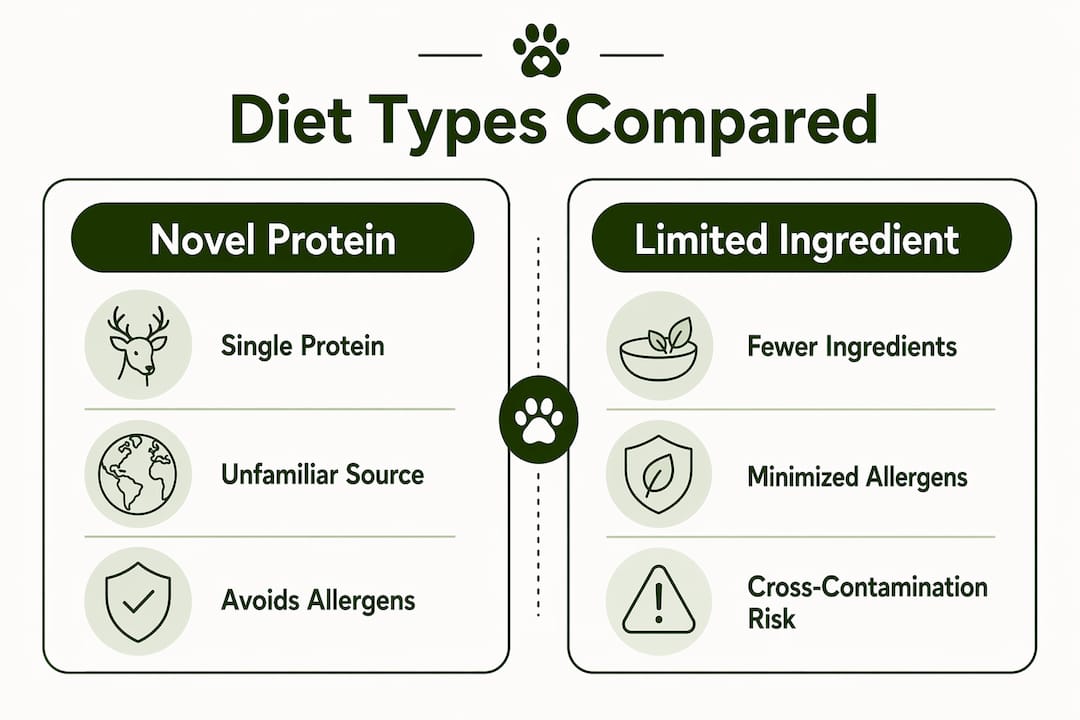
A novel protein diet uses a single, unfamiliar protein source. The goal is to avoid triggering an immune response by feeding something the dog has never encountered. This works well for dogs with known or suspected food allergies who have a clear dietary history.
A limited ingredient diet (LID) reduces the total number of ingredients to minimize allergen exposure. Retail LID products are widely available and use shorter ingredient lists. However, retail limited-ingredient diets carry a real risk of cross-contamination from shared manufacturing equipment. That contamination can invalidate an elimination trial entirely, leaving you with no useful diagnostic information.
A hydrolyzed protein diet breaks proteins into fragments so small that the immune system cannot recognize them. Hydrolyzed diets are the preferred choice for dogs with severe allergies or unknown dietary histories. They are typically available only by prescription and manufactured under strict controls.
| Diet type | How it works | Best for | Key risk |
|---|---|---|---|
| Novel protein | Uses an unfamiliar whole protein | Dogs with known dietary history | Must identify a truly novel protein |
| Limited ingredient | Fewer ingredients overall | Mild sensitivities | Cross-contamination in retail products |
| Hydrolyzed protein | Proteins broken into tiny fragments | Severe allergies, unknown history | Cost and prescription requirement |
Pro Tip: If your dog has been eating a wide variety of proteins over the years, a hydrolyzed diet may be safer than a novel protein diet. Discuss this with your vet before starting any elimination trial.
How to choose the best novel protein dog food
Choosing the right alternative protein dog food starts with one critical step: mapping your dog’s full protein history. A protein is only novel if your dog has genuinely never eaten it. Many commercial dog foods contain multiple protein sources, including secondary proteins listed deep in the ingredient panel.
Here is how to approach the selection process:
-
List every protein your dog has eaten. Include all past foods, treats, flavored medications, and supplements. Chicken, beef, and salmon appear in far more products than most owners realize.
-
Identify proteins your dog has never had. Venison, rabbit, kangaroo, and alligator are the most reliably novel options for dogs raised on standard commercial diets.
-
Check the full ingredient list, not just the front label. A bag labeled “salmon and sweet potato” may still contain chicken fat or chicken meal.
-
Consider adopted or rescue dogs carefully. Dogs with unknown dietary histories present a real challenge. A hydrolyzed protein diet is often safer in these cases because it sidesteps the guessing entirely.
-
Pair the novel protein with an unfamiliar carbohydrate. Tapioca, green peas, and sweet potato are common choices that rarely appear in standard dog food formulas.
Novel proteins like venison, rabbit, and kangaroo are defined as proteins the dog has never encountered, which is why their effectiveness depends entirely on your dog’s specific history. A protein that is novel for one dog may be a known allergen for another.
Petbite carries grain-free options like Zignature kangaroo formula for dogs whose owners have confirmed kangaroo is a genuinely new protein. Consulting a veterinary nutritionist before selecting a diet gives you the most accurate starting point, especially for dogs with complex allergy histories.
How do you transition a dog to a novel protein diet?
Switching your dog’s food too quickly causes gastrointestinal upset regardless of how good the new food is. A gradual transition over 7–10 days protects your dog’s digestive system while the gut microbiome adjusts.
Follow this schedule:
-
Days 1–2: Feed 25% new food mixed with 75% current food.
-
Days 3–5: Move to a 50/50 mix.
-
Days 6–7: Feed 75% new food and 25% current food.
-
Days 8–10: Transition fully to the novel protein diet.
Once fully transitioned, the elimination phase begins. AAHA guidelines recommend maintaining the elimination diet for 8–12 weeks before drawing conclusions. Symptoms like itching and digestive upset take time to resolve after removing the allergen. Expecting results in two weeks leads to premature abandonment of an otherwise effective trial.
During the entire elimination period, your dog must eat nothing except the novel protein diet. All ingestibles including flavored heartworm preventatives, dental chews, training treats, and supplements must be checked for hidden allergens. A single flavored chew containing chicken can invalidate weeks of dietary work.
After symptoms improve, the food challenge phase confirms the diagnosis. You reintroduce the original food and watch for symptom return. This two-phase process is the only reliable way to confirm a true food allergy rather than a coincidental improvement.
Pro Tip: Take weekly photos of your dog’s skin and coat during the elimination trial. Visual documentation makes it much easier to track genuine improvement versus day-to-day variation.
Key Takeaways
Novel protein dog food works by removing familiar allergens and replacing them with proteins the immune system has never encountered, making it the most practical first-line dietary tool for managing canine food allergies.
| Point | Details |
|---|---|
| Define “novel” for your dog | A protein is only novel if your specific dog has never eaten it before. |
| Retail LIDs carry real risk | Cross-contamination on shared equipment can invalidate an elimination trial. |
| Commit to 8–12 weeks | Symptoms need time to resolve; short trials produce unreliable results. |
| Check every ingestible | Flavored medications and treats can contain hidden allergens that ruin the trial. |
| Confirm with a food challenge | Reintroducing the original food is the only way to confirm a true food allergy. |
What I’ve learned from watching owners manage canine food allergies
Most pet owners I talk to have already cycled through three or four retail brands before they consider an elimination diet. That pattern is understandable. Switching to a “salmon formula” feels like a logical step. But jumping straight to a vet-supervised elimination diet saves months of frustration and produces an actual diagnosis rather than a guess.
The part that catches people off guard is the cross-contamination issue with retail limited ingredient diets. Owners buy a product with a short ingredient list, assume it is clean, and then wonder why their dog is still scratching. The manufacturing reality is that shared equipment introduces trace proteins that do not appear on the label. This is not a labeling fraud issue. It is a production reality that makes retail LIDs unreliable for serious elimination trials.
The other mistake I see regularly is abandoning the trial at week four because the dog “seems the same.” Skin inflammation takes time to resolve at the cellular level. Eight weeks is the minimum for a reason. Owners who stick with it consistently report clearer results and a much easier conversation with their vet at the follow-up appointment.
My honest recommendation: start with your vet, build a complete protein history for your dog, and treat the elimination trial like a clinical test rather than a casual food switch. The data you collect during those 8–12 weeks is genuinely useful, but only if the trial is clean.
— mostafa
Novel protein options available at Petbite
Petbite carries a curated selection of raw and wet novel protein foods for dogs with allergies or sensitivities.
Iron Will Raw Basic Rabbit is a frozen raw formula made with a single animal protein, human-grade ingredients, and a short ingredient list that makes it a reliable choice for elimination diets. For dogs that tolerate fish, Iron Will Raw Basic Salmon offers the same quality standard with salmon as the primary protein. Both products are available through Petbite with free same-day delivery within 3 kilometers of the Orléans location. Petbite’s team can help you confirm whether a specific protein qualifies as novel for your dog before you commit to a full bag.
FAQ
What is novel protein dog food?
Novel protein dog food is a diet built around a single protein source your dog has never eaten before. The goal is to prevent an immune response by removing all familiar allergens from the diet.
How long does a novel protein elimination diet take?
A proper elimination trial lasts 8–12 weeks. Shorter trials do not give the immune system enough time to calm down and produce reliable results.
What are the best novel proteins for dogs with allergies?
Venison, rabbit, kangaroo, and duck are the most commonly used novel proteins. Kangaroo is particularly useful because it is lean, anti-inflammatory, and rarely found in standard commercial dog food.
Can I use retail limited ingredient food for an elimination trial?
Retail limited ingredient diets are not ideal for elimination trials. Shared manufacturing equipment creates a real risk of cross-contamination with allergens that do not appear on the label.
Do I need a vet to start a novel protein diet?
Veterinary guidance is strongly recommended before starting an elimination trial. A vet can confirm the diagnosis, rule out environmental allergies, and help you identify which proteins are truly novel for your dog.
Recommended
-
Zignature Limited Ingredient Grain Free Kangaroo Dog Food 12 / 13 oz - Petbite
-
Charlee Bear Nuggets Shepherd’s Pie Grain Free Dog Treat 6oz - Petbite
-
Charlee Bear Grain Free Crunch Chicken, Pumpkin & Apple Flavor Crunchy Dog Treats 8oz - Petbite
-
PetKind Single Animal Protein Lamb Tripe Formula 12 x 13 oz - Petbite