

Yes, trim the hair between your dog’s paw pads if it’s reducing traction, trapping debris, forming snow and ice balls, or hiding cuts and infections. Skip it if the hair is short and causing no problems. The one-line method: use quiet mini-clippers or round-tipped scissors and a gentle scoop motion that follows the paw’s natural shape, never a straight cut toward the pad. Keep styptic powder within reach in case you nick the skin, and if your dog won’t hold still, Petbite’s groomers handle this safely every week.
Key Takeaways
Trimming paw pad hair improves traction and cleanliness and only requires a scoop motion, a quiet tool, and a calm dog to do safely.
| Point | Details |
|---|---|
| Trim only when needed | Skip it if hair is short and causing no traction or debris problems. |
| Use the scoop method | Glide clippers or round-tipped scissors under the hair and lift away from the pad. |
| Choose quiet tools | Low-noise mini-clippers cause less stress than bulky, loud clippers. |
| Keep styptic powder ready | Apply pressure and styptic powder immediately if you nick the skin. |
| Trim regularly as needed based on your dog’s coat growth rate and activity level | Adjust based on coat growth rate and activity level, not the calendar. |
| Book Petbite when unsure | Petbite’s grooming service handles anxious dogs and complicated trims safely. |
Table of Contents
- How Do You Trim Hair Between Dog Paw Pads?
- What Tools Do You Need for Paw Pad Trimming?
- Is It Safe to Trim Fur Around Dog Paws?
- Which Dogs Need Paw Hair Trimming Most Often?
- How Often Should You Trim Paw Pad Hair?
- What Mistakes Do Owners Make When Trimming Paw Hair?
- When Should You Book a Professional Groomer Instead?
- Grooming Support That Goes Beyond Paw Trims
- Frequently Asked Questions
- Sources
How Do You Trim Hair Between Dog Paw Pads?
Trimming paw pad hair isn’t complicated, but it rewards patience over speed. Follow these steps in order, and stop the moment your dog seems stressed rather than pushing through.
- Settle your dog first. Ten minutes after a walk or meal, when energy is lower, works better than right after playtime.
- Lift the paw and hold the leg close to the body. This stabilizes the joint and stops sudden pulling motions.
- Inspect the pad before touching a tool to it. Look for burrs, cracked pads, or redness hiding under the fur, since vet-reviewed guidance notes this is often when owners catch injuries early.
- Comb the hair upward and outward so you can see exactly what you’re cutting.
- Scoop, don’t slice. Glide mini-clippers or round-tipped scissors under the hair and lift away from the pad in short passes, scooping twice in each direction rather than forcing one deep cut.
- Check your work from two angles, then reward with a treat immediately.
Keep blades parallel to the skin the entire time. If your dog flinches, freezes, or tries to pull away, stop and try again later rather than muscling through it.
Pro Tip: Start on the back paws first. Dogs tend to notice handling less there, so you both build confidence before moving to the more sensitive front paws.
What Tools Do You Need for Paw Pad Trimming?
Quiet mini-clippers beat full-size clippers for this job. Their smaller housing and lower noise level mean less startling, and testing on narrow-blade paw trimmers found they make close, precise work noticeably easier than bulkier tools. Small round-tipped grooming scissors work fine too, as long as you keep the tips rounded and away from skin. A professional groomer’s advice generally favors mini-trimmers over scissors specifically because they’re harder to misuse.
Build a small kit before your first attempt:
- Quiet mini-clippers with a narrow blade
- Round-tipped grooming scissors as backup
- A fine comb, like a rotating comfort comb, to lift hair before cutting
- Styptic powder or cornstarch for accidental nicks
- Dog-safe paw balm
- Treats for reinforcement
- Wet wipes for cleanup afterward
Look for a low-noise motor, rounded blade tips, and removable parts you can clean, since debris buildup dulls blades fast.
Is It Safe to Trim Fur Around Dog Paws?
It’s safe when you work slowly and respect a few rules. Hold the leg close to your body so it can’t jerk away mid-cut. Keep the dog calm with a steady voice and short sessions rather than one long ordeal. Always cut away from the pad, never toward it, and rely on low-speed, quiet tools over anything loud or aggressive.
If you nick the skin anyway:
- Apply firm, direct pressure with a clean cloth for one to two minutes.
- Dab on styptic powder or plain cornstarch to stop the bleeding.
- Call your vet if bleeding continues past a few minutes or the pad looks torn rather than nicked.
Afterward, rub in a dog-safe balm or a light touch of coconut oil, discourage excessive licking for a few hours, and check the paw again that evening for redness or a limp.
Which Dogs Need Paw Hair Trimming Most Often?
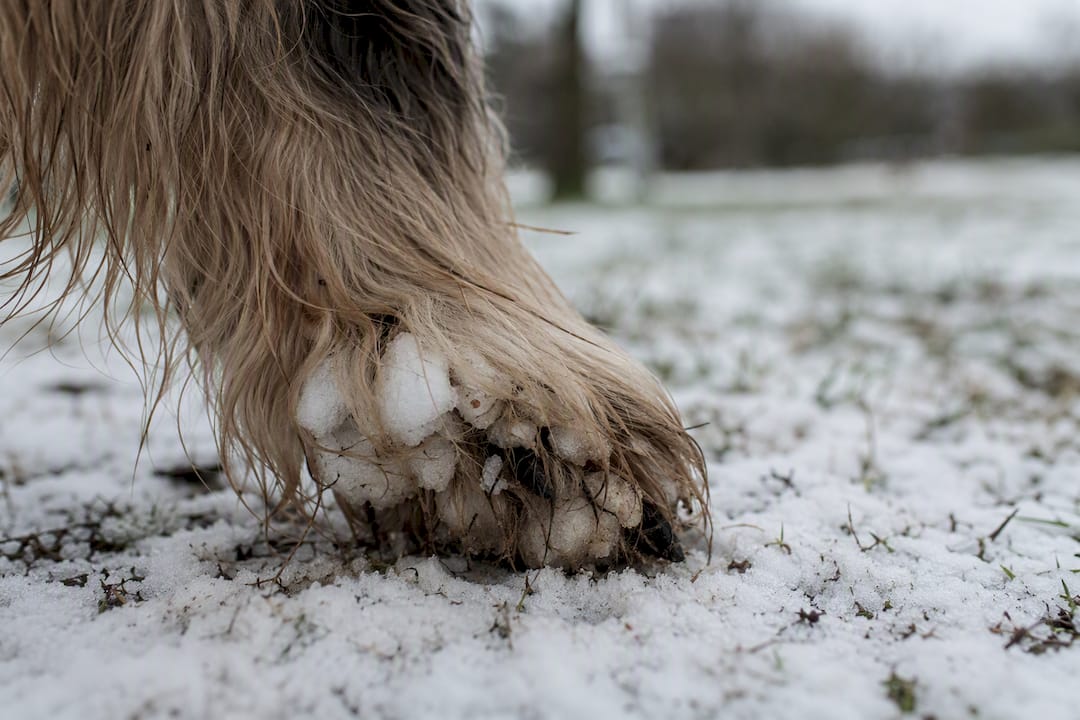
Long-haired and double-coated breeds, spaniels, and some terriers grow paw fur fast enough that it needs regular attention, since hair trapped between the toes collects snow, dirt, and burrs more easily than a short coat does. Winter is the busiest season for this: overgrown hair packs into painful ice balls between the toes on cold walks. Our winter paw care guide covers that in more detail. Summer hikes mean more foreign debris to check for, and rainy stretches raise the risk of matting and trapped moisture against the skin. Check paws more often in winter and right after any hike.
How Often Should You Trim Paw Pad Hair?
Most long-haired dogs benefit from regular trimming every month or two depending on coat growth and activity. Short-haired breeds might only need a seasonal check rather than a regular schedule. Skip the calendar and watch for these signs instead:
- Hair visibly covering or overhanging the pad
- Slipping on hardwood or tile floors
- Snowballs or ice clumps forming between toes
- Debris, mats, or burrs stuck between the toes
- Trouble seeing bare skin during a routine paw check
Active dogs and fast-growing coats need more frequent trims than a couch-loving short-haired dog. Let growth rate and lifestyle set the schedule, not a fixed date on the calendar.
What Mistakes Do Owners Make When Trimming Paw Hair?
Cutting too close to the pad is the most common error, and it usually happens because someone rushes instead of scooping in small passes. Loud, bulky clippers spook dogs before the blade even touches fur, which makes every mistake on this list more likely. Trimming while your dog is visibly tense guarantees a bad experience for round two. Missed hair tucked in the crevices between toes and pads is another frequent miss, along with over-shaving, which leaves the pad exposed and more sensitive to rough ground.
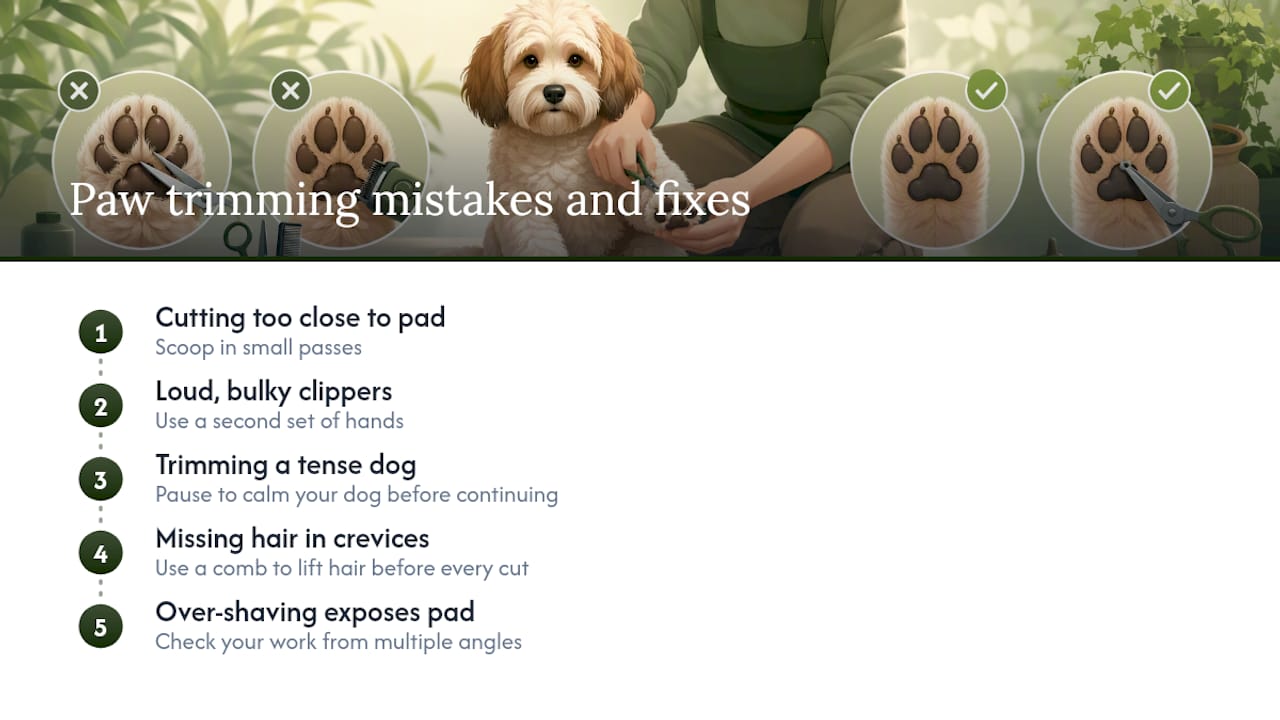
Fix these by pausing to calm your dog before continuing, using a comb to lift hair before every cut, and checking your work from multiple angles rather than just one. A second set of hands to steady a wriggly dog solves more problems than any tool upgrade. Build tolerance ahead of time with short daily paw touches and treats. A dog desensitized to handling over a couple of weeks trims far more calmly than one experiencing it cold.
When Should You Book a Professional Groomer Instead?
Some dogs and situations call for a professional rather than a DIY attempt. Book a groomer if your dog is aggressive or extremely anxious around handling, if mats have become dense and close to the skin, if there’s a history of paw injuries, or if the breed’s trim pattern is complicated enough that a mistake is costly. Owners who simply prefer a guaranteed, no-risk result belong in this category too, and inexperienced owners are generally better off with a groomer or clippers over scissors according to veterinary guidance.
Before booking, ask a few direct questions:
- How much experience do they have specifically with paw pad trims?
- Do they use quiet trimmers rather than loud clippers?
- What’s their plan for handling an anxious dog mid-session?
- What’s the price and how long will it take?
Petbite’s Professional Pet Grooming Service is built around exactly this kind of low-stress handling, with trained staff and same-day local scheduling for dog owners who’d rather skip the DIY risk entirely.
A Groomer’s Honest Preference
Quiet mini-clippers make for a calmer trim than scissors in almost every case I’ve walked through, and that preference shapes this whole guide. Owners who’d rather skip the learning curve entirely are better served by Petbite’s grooming team. and
Grooming Support That Goes Beyond Paw Trims
Petbite is the practical backup for dog owners who tried the DIY route and decided their time is better spent elsewhere. Rather than gambling on a first attempt with a squirming dog and a pair of scissors, book a session with trained groomers who handle paw trims calmly and consistently, backed by a track record of over 500 dogs groomed and a 5-star average rating.

Beyond grooming, Petbite stocks the raw food and treats that keep coats and paw skin healthy from the inside, including options like PetKind tripett Red Meat Formula Wet Dog Food. Anyone within 3 kilometers of the Orléans location gets free same-day delivery, so restocking grooming supplies or dog food never means an extra errand. If your dog fits the profile from the section above, aggressive during handling, prior paw injuries, or you just want a guaranteed clean result, book the Professional Pet Grooming Service directly and skip the DIY risk altogether.
Frequently Asked Questions
Is it necessary to trim the hair between my dog’s paw pads? Only if the hair is causing problems, like slipping on floors, trapping snowballs, or hiding debris and cuts. Short, well-behaved fur doesn’t need routine trimming.
Can I use regular scissors instead of clippers? Round-tipped grooming scissors work if you go slowly and scoop rather than slice. Quiet mini-clippers are generally safer for beginners because they’re harder to misuse near skin.
What if I accidentally cut my dog’s paw pad? Apply firm pressure with a clean cloth, then styptic powder or cornstarch to stop bleeding. Call your vet if bleeding doesn’t stop within a few minutes or the pad looks torn.
How short should I trim the paw hair? Trim it level with the pad surface, following the paw’s natural rounded shape rather than cutting straight across.
My dog won’t let me touch its paws. What now? Build tolerance gradually with short daily touches and treats before attempting a trim, or book a professional groomer who’s trained to handle anxious dogs safely.
Sources
- How to Trim Hair on Dogs’ Paws: 8 Vet-Reviewed Tips & Advice | The Vet Desk
- How To Remove Fur From Dog Paws At Home - A Dog Groomer’s Top Tips — Healthy Happy Paws
- I Tested the Best Dog Pedicare Paw Hair Trimmer: My Honest Review for Safe, Easy Grooming
- Caring for Your Dog’s Paw Pads - Companion Animal Hospital of Lewisburg TN