

Canadian winters are brutal on dog paws. Road salt burns, ice balls form between toes, and freezing pavement can crack pads during walks. The good news: a consistent routine keeps your dog comfortable all season.
The core habits every Canadian dog owner needs:
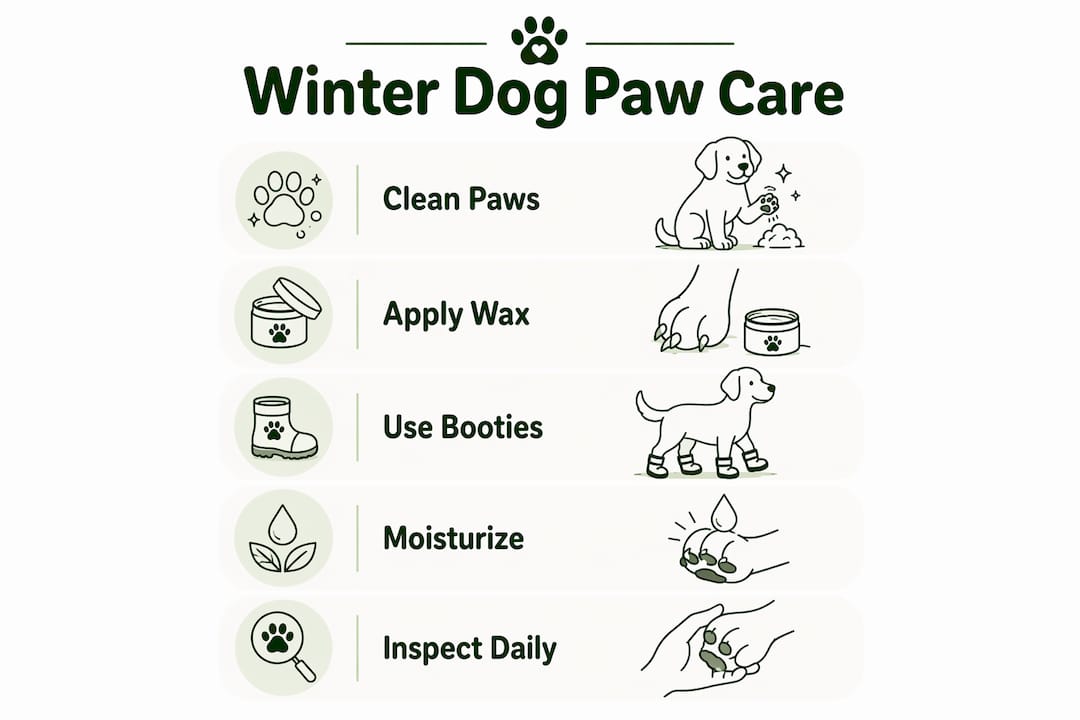
- Wash paws with warm, soapy water after every walk, getting between the toes where salt hides
- Dry thoroughly to prevent moisture buildup and secondary irritation
- Trim fur between toes to help reduce ice balls from forming
- Keep nails short so your dog’s weight distributes evenly
- Apply a paw wax before walks for protection, and a healing balm at bedtime for repair
- Watch for redness, licking, limping, or swelling after walks
- Use booties for maximum protection, especially on salted sidewalks
Pro Tip: Apply a paw wax right before heading outside, then switch to a moisturizing balm at bedtime. The wax blocks salt and ice; the balm repairs any damage while your dog sleeps.
How to clean and protect your dog’s paws after winter walks
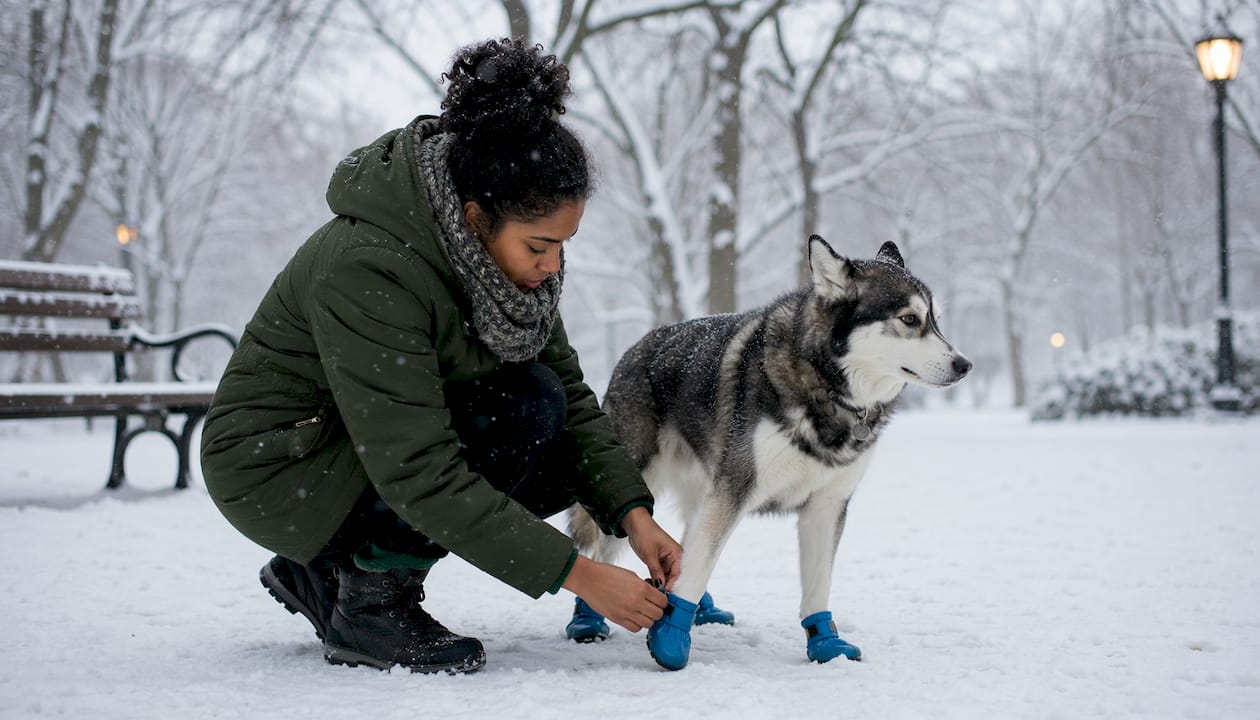
Wiping paws after every single walk is the single most effective habit you can build. Salt and de-icing chemicals linger on pads and between toes, and your dog will lick them off if you don’t remove them first.
Step-by-step post-walk cleaning:
- Use a warm, damp cloth or dog-safe wipe to remove visible debris immediately at the door
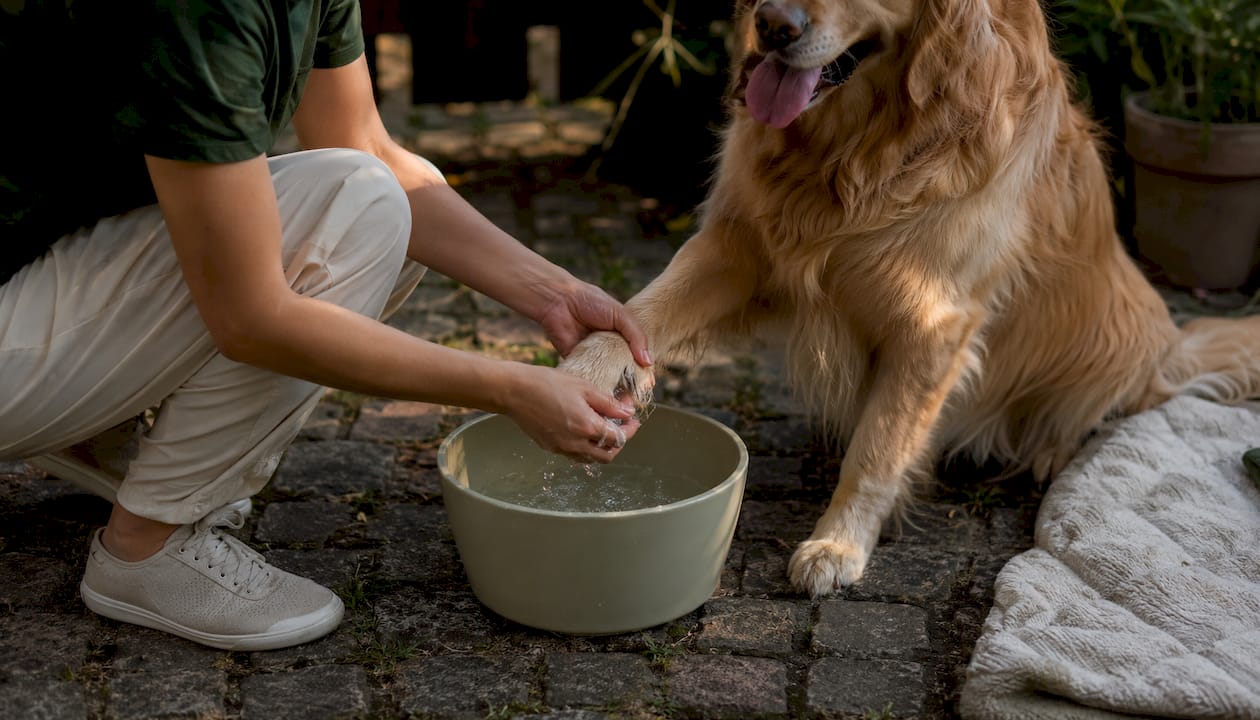
- Wash paws with warm, soapy water, parting each toe to reach hidden salt deposits
- Rinse thoroughly so no soap residue remains
- Squeeze each paw gently with a dry towel, then let air dry before your dog walks on hardwood
- Check between pads for cuts, redness, or ice still stuck to the fur
Common harmful residues to remove:
- Calcium chloride and sodium chloride (road salt)
- De-icing chemicals that can blister pads or cause toxicity if licked
- Ice balls packed between paw pads
- Mud carrying fertilizers or yard chemicals
A portable paw washer works well for dogs that resist the sink routine. Fill it with warm water, insert the paw, and twist gently. Dog-safe wipes are a solid backup for short walks when a full wash feels like overkill.
Winter grooming tips that actually protect paw health
Grooming is not just cosmetic in winter. Two specific habits prevent the most common cold-weather paw problems.
- Trim inter-digital fur regularly. Hair between the toes traps snow, which compresses into painful ice balls that pull at the skin and collect salt. Use clippers, never scissors, in that tight space.
- Keep nails at the right length. Nails that touch the ground when your dog stands force the toes to splay, which stresses the joints and increases the chance of slipping on ice. Regular trimming is important for most dogs.
- Use a soft-bristled brush on paw fur between grooming appointments to loosen debris before it mats.
- Moisturize before and after walks. Dry winter air pulls moisture from pads just like it does from human skin.
Pro Tip: Apply balm right after a bath or paw wash, while the pads are still slightly damp. The moisture helps the balm absorb deeper into the pad tissue instead of sitting on the surface.
Should you use booties or paw balm? Here’s how to choose
Both work. The question is which fits your dog and your conditions.
Veterinarians recommend booties as the most effective physical barrier against ice, salt, and frostbite. Nothing else blocks chemical contact as completely. That said, plenty of dogs refuse to wear them, and a balm used consistently is far better than booties that come off after half a block.
Choosing booties:
- Measure your dog’s paw width at the widest point, not just length
- The bootie should stay on without restricting the natural gait
- Rubber-soled options grip ice better than fabric-only styles
- Senior dogs and dogs recovering from injuries benefit most from the added stability
- Introduce booties indoors first, with treats, before expecting cooperation outside
Choosing a paw balm or wax:
- Waxes create a water-resistant barrier before exposure; balms repair and hydrate after
- Using both together gives you layered protection: wax before the walk, balm at night
- Look for formulas with natural waxes like carnauba or beeswax, and avoid products containing petroleum jelly or coconut oil, which can upset a dog’s stomach if licked
- Products labeled for dogs only; human hand creams often contain xylitol or fragrances that are toxic to dogs
There is no universal temperature at which paws are guaranteed safe. A practical test: press the back of your hand to the pavement for seven seconds. If you pull away, it is too harsh for your dog’s pads.
How to recognize and manage dog paw injuries
Paws take constant punishment and heal slowly because of the pressure every step puts on them.
Signs something is wrong:
- Persistent licking or chewing at one paw (this signals discomfort, not grooming)
- Visible cracks, redness, or dark discoloration on the pad surface
- Ice balls or debris packed between toes
- Limping, holding a paw up, or reluctance to walk
- Swelling around the toes or wrist joint
Paw pad hyperkeratosis looks like extreme dryness but is actually an overgrowth of keratin that causes crusty, cracked pads. It is frequently misdiagnosed as simple chapping and requires targeted management to prevent deep fissures and infection. If standard moisturizing does not improve the pads within a week, see your vet.
For minor cuts, clean the wound with an antibacterial solution, apply antibacterial cream, and bandage from the toes up to the wrist or ankle. The bandage must be snug enough to stay on but loose enough that you can slip a finger underneath. Minor wounds that show no improvement after three days, or any wound with persistent bleeding or swelling, need veterinary attention. For guidance on managing pain during recovery, alternative pain relief options for dogs are worth discussing with your vet.
Local Canadian resources for paw care and grooming
Petbite, located in Orléans, is one of the most practical local options for Canadian dog owners dealing with winter paw problems. Their certified grooming service covers inter-digital trimming, nail care, and paw pad inspection, with over 500 animals groomed and a 5-star average rating. For owners who cannot get out, Petbite offers free same-day delivery within 3 kilometers, so you can restock paw balm or wipes without leaving the house.
PawPawDear Pet Supplies Store is another local source for paw-specific products, stocking protective gear suited to Canadian winter conditions.
What your dog eats affects their paw health
Paw pads are skin, and skin quality tracks closely with diet. Two deficiencies show up directly in paw condition.
Insufficient dietary protein reduces keratin production, which is the structural protein that keeps pads tough and resilient. A protein-deficient diet leaves pads soft and prone to cracking. Zinc deficiency causes dry, cracked pads alongside hair loss and crusty skin around the eyes and nose. Both are correctable through diet before they become a vet issue.
Omega-3 fatty acids reduce skin inflammation and support the lipid barrier that keeps pads from drying out. Salmon-based raw food is a practical way to increase omega-3 intake alongside high-quality protein. A diet built around whole proteins and healthy fats addresses paw health from the inside out, which no balm can fully replicate on its own.
Adjusting your walks to reduce paw exposure in winter
Route and timing matter more than most owners realize. Freshly salted sidewalks right after a snowplow passes are the worst surface your dog can walk on. Waiting even 30 minutes after a city salting, or choosing a parallel residential street that gets less treatment, cuts chemical exposure significantly.
Walk earlier in the morning before municipal crews re-salt, or stick to parks and trails where natural snow is the main surface. Grass and packed snow are far gentler on pads than treated concrete. Keep winter walks shorter on the coldest days, and watch your dog’s gait: picking up a paw repeatedly mid-walk is a clear signal to head home.
Which paw balms and moisturizers actually work?
The best formulas for cracked paw pads combine a protective wax layer with healing ingredients like shea butter, vitamin E, or natural plant oils. Wax-based products applied before walks create a physical barrier against salt and moisture loss. Balm-based products applied after walks or at bedtime penetrate the pad tissue and repair micro-cracks before they deepen.
Avoid Vaseline and coconut oil on pads. Both cause stomach upset when licked, and coconut oil can trigger allergic reactions that worsen the very dryness you are trying to fix. Stick to products formulated specifically for dogs, and check that every ingredient is safe for ingestion since your dog will lick their paws regardless.
For dogs with recurring pad issues, raw rabbit food and other whole-protein options from Petbite support the skin health that makes topical treatments more effective.

Key Takeaways
Consistent cleaning after every walk, combined with protective wax before walks and a healing balm at night, gives Canadian dogs the best defense against winter paw damage.
| Point | Details |
|---|---|
| Clean after every walk | Wash with warm, soapy water between the toes to remove salt and de-icing chemicals. |
| Trim fur between toes | Regular inter-digital trimming prevents ice balls from forming during winter walks. |
| Layer wax and balm | Apply wax before walks for protection and balm at bedtime to repair micro-cracks. |
| Watch for injury signals | Persistent licking, limping, or redness after walks warrants a close paw inspection. |
| Support pads through diet | Adequate protein, zinc, and omega-3 fatty acids keep pad tissue resilient from within. |