

The short answer: book a groomer who holds a verifiable certification from the NDGAA or IPG, uses reward-based handling, and lets you inspect the facility before you commit. Because the grooming industry is largely unregulated, those three filters alone will eliminate most risky options.
Your 3-step starting checklist:
- Verify credentials. Ask for the groomer’s NDGAA or IPG certificate number, or proof of Pet First Aid training. A photo of the certificate is the minimum.
- Inspect the facility. Look for clean tubs, non-slip surfaces, supervised drying stations, and no strong chemical odors. Ask for photos if you can’t visit in person.
- Confirm emergency preparedness. Ask which veterinary clinic they contact in an emergency and whether they carry liability insurance.
Petbite’s certified groomers in Orléans have handled many animals with positive reviews, and they offer a meet-and-greet before the first full appointment. That kind of transparency is exactly what you should expect from any groomer you consider.
Key Takeaways
Choosing a safe groomer comes down to three non-negotiables: verified credentials, a facility you can inspect, and a clear emergency plan. No amount of low pricing or convenience should make you skip any of them.
| Point | Details |
|---|---|
| Verify credentials first | Ask for NDGAA or IPG certification numbers and confirm Pet First Aid training before booking. |
| Inspect or request facility photos | Check for supervised drying, non-slip surfaces, and no strong chemical odors. |
| Ask about emergency protocols | Confirm the groomer has a named vet relationship and carries liability insurance. |
| Prioritize reward-based handling | A groomer who uses treats, calm greetings, and adjusts pace for anxious pets is the safer choice. |
| Petbite as a vetted local option | Petbite’s certified groomers in Orléans offer a meet-and-greet, 5-star average rating, and over 500 animals groomed. |
Table of Contents
- How to choose a pet groomer: credentials and certifications that actually matter
- What to look for when you inspect the grooming facility
- Does the groomer have real experience with your pet’s breed and needs?
- Questions to ask before you book your first appointment
- Emergency preparedness, insurance, and salon policies
- How to use reviews and referrals to vet a groomer
- What to expect at your pet’s first grooming appointment
- How grooming pricing works and what to expect
- Mobile grooming vs. salon grooming: which is right for your pet?
- Red flags that should make you walk away
- Why Petbite’s grooming service meets the safety-first standard
- Book a grooming session at Petbite in Orléans
- Sources
How to choose a pet groomer: credentials and certifications that actually matter
The grooming industry has no mandatory licensing in most of Canada, which means anyone can legally call themselves a professional groomer. That makes voluntary credentials the most reliable signal you have.
What to look for:
- NDGAA (National Dog Groomers Association of America): requires hands-on testing and written exams. A groomer who passed the NDGAA practical test has been evaluated on actual dogs, not just theory.
- IPG (International Professional Groomers): emphasizes continuing education and professional standards. Members must renew, which means their skills stay current.
- Pet First Aid / CPR certification: a separate credential, often through the Red Cross or a pet-specific provider. Ask for the issuing organization and expiry date.
- Breed-specific or coat-type training: hand-stripping for wire-coated terriers, double-coat handling for Huskies, or scissoring for Poodles each require distinct skills. Ask directly whether the groomer has completed coursework or apprenticeship in your breed’s coat type.
To verify authenticity, request a photo of the certificate and the membership number, then check it against the issuing organization’s directory. If the groomer gets vague or defensive, that tells you something.
Red flags at this stage: a groomer who says “I’ve been doing this for years” but can’t name a single training program or certifying body. Longevity is not a substitute for verified skill.
Pro Tip: Ask, “What’s the most recent continuing-education course you completed, and when?” A groomer who takes their craft seriously will answer without hesitation and probably tell you more than you asked.
What to look for when you inspect the grooming facility
A clean, well-organized salon is not just aesthetically pleasing. It tells you how the groomer thinks about safety.
Physical signs to check:
- Tubs and grooming tables wiped down between clients, with no visible hair buildup or residue
- Non-slip mats on all surfaces where pets stand
- Clipper blades and scissors stored cleanly, not left loose on counters
- Organized supply areas with labeled products and no expired shampoos
- Odor level: a faint clean smell is normal; a sharp chemical or ammonia odor is not
Safety features to confirm:
- Drying stations are attended. Drying boxes and unattended heat sources can cause severe injury, so ask specifically whether dogs are supervised throughout the drying process.
- A visible first-aid kit stocked with pet-appropriate supplies
- Secure crates or containment for dogs waiting between steps, with no overcrowding
- Separate flow for cats and dogs where possible, or at minimum, visual barriers
If you can’t visit in person, ask for a short video walkthrough of the grooming area. A groomer with nothing to hide will send one within a day. What the video reveals: whether the space is genuinely clean or just tidied for photos, and whether drying equipment is set up for supervision.
Pro Tip: Visit unannounced if the salon allows drop-ins. The mid-day state of a grooming salon tells you far more than a scheduled tour.
Does the groomer have real experience with your pet’s breed and needs?
Breed experience is not the same as general grooming experience. A groomer who has bathed hundreds of Labrador Retrievers may have never hand-stripped a Wire Fox Terrier or managed a double-coated Samoyed in a full shed. The techniques are genuinely different.
Questions to verify breed-specific experience:
- “Have you groomed [breed] before, and how often?”
- “Do you hand-strip or use clippers for this coat type?” (For wire-coated breeds, clipping changes coat texture permanently.)
- “How do you handle de-shedding on a double coat without damaging the undercoat?”
- “What’s your approach for a senior dog with joint pain or skin folds?”
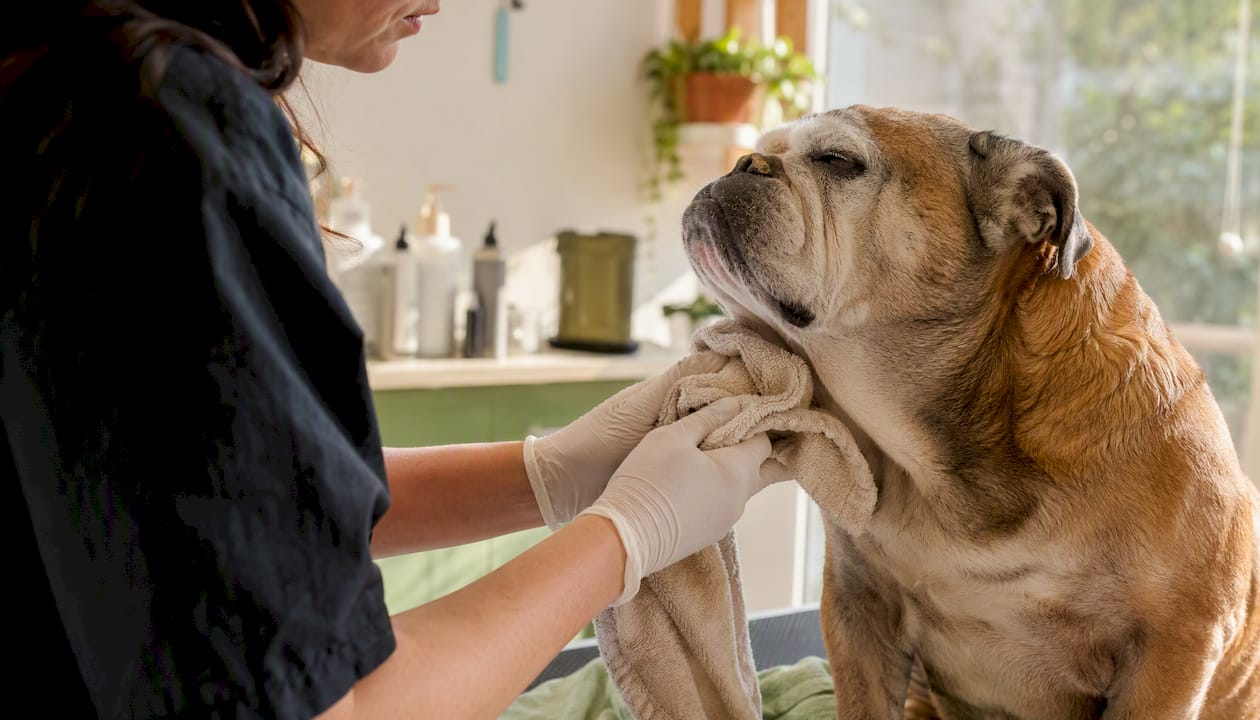
Signs of good handling go beyond technique. A groomer who bends down to calmly greet your dog at eye level and uses treats or praise during the meet-and-greet is likely to apply the same patience during the groom itself. Reward-based handling and gradual desensitization reduce stress for anxious pets and are a reliable marker of higher-quality care.
For seniors or dogs with physical quirks, ask specifically: “If my dog has skin folds, how do you clean and dry them?” or “How do you position a dog with hip dysplasia during a bath?” A groomer who has handled these situations will give you a specific, confident answer. One who hasn’t will generalize.
Questions to ask before you book your first appointment
A five-minute phone call or a short intake form can tell you most of what you need to know. Transparency works both ways: a good groomer wants your pet’s history just as much as you want their credentials.
Core questions to ask:
- Do you require proof of current vaccinations (rabies, Bordetella)?
- Do you offer a meet-and-greet before the first full groom?
- How do you handle a dog who becomes anxious or reactive mid-groom?
- What is your sedation policy? (The answer should be: we do not sedate; sedation is a veterinary procedure.)
- What’s included in a full groom, and what costs extra?
- How many animals are in the salon at one time?
What good answers sound like: specific, calm, and non-defensive. “We stop the groom if a dog is too stressed and call the owner” is a good answer. “Oh, we handle all kinds” is not.
How to rank your candidates:
- Safety first: does the groomer have clear protocols for anxious or reactive pets?
- Transparency: do they give specific answers, or do they deflect?
- Accommodation: are they willing to adjust pace, technique, or session length for your pet’s needs?
A groomer who scores well on all three is worth a trial appointment. One who scores poorly on safety, regardless of price or convenience, is not.
Emergency preparedness, insurance, and salon policies
This is the section most owners skip, and it’s the one that matters most if something goes wrong.
Policy checklist:
- Does the groomer hold Pet First Aid and CPR certification?
- Which veterinary clinic do they contact in an emergency, and how far away is it?
- Is there a written emergency protocol, or do they handle it case by case?
- Do they carry liability insurance? Ask for the provider’s name.
- Do they use a consent form that covers injury risk and emergency treatment authorization?
A groomer who has thought through emergencies will answer these questions without hesitation. To ask without sounding accusatory, frame it this way: “I always ask this of any groomer I’m considering: what’s your process if a pet needs urgent veterinary care during a groom?” That phrasing is professional, not confrontational, and the answer will tell you everything.
If a groomer has no named vet relationship and no liability insurance, that is a hard stop. Accidents happen even with skilled groomers. What separates a trustworthy provider from a risky one is whether they have a plan.
How to use reviews and referrals to vet a groomer
Online reviews are useful, but they require some filtering. A groomer with 200 four-star reviews is not automatically better than one with 40 five-star reviews if the latter’s reviews consistently mention calm handling, a consistent groomer, and clear communication.
Where to look and what to look for:
- Google reviews: search for mentions of specific behaviors (“my dog came home relaxed,” “they called me when she got anxious”) rather than generic praise
- Vet referrals: your vet sees the results of grooming. Ask, “Is there a groomer you’ve seen good outcomes from?” That question gets you a real recommendation, not a polite deflection.
- Local community groups: neighborhood Facebook groups or Reddit threads often surface honest, recent experiences
Trust signals in a groomer’s public profile:
- Published certifications or staff bios with training history
- Photos showing clean, organized facilities (not just cute pet photos)
- Transparent pricing listed by service
- Vaccination requirements stated clearly on their website or intake form
A good groomer will ask about behavior, health, and vaccination history before the first appointment. If their intake process skips all of that, their reviews deserve extra scrutiny.
Referral script for your vet or trainer: “I’m looking for a groomer for [breed]. Have you seen any clients come in after a groom and mentioned a groomer by name? I’m specifically looking for someone patient with [anxious dogs / senior pets / a double coat].” That level of specificity gets you a useful answer instead of a shrug.
What to expect at your pet’s first grooming appointment
A well-run first groom follows a predictable sequence. Knowing it helps you spot when something is off.
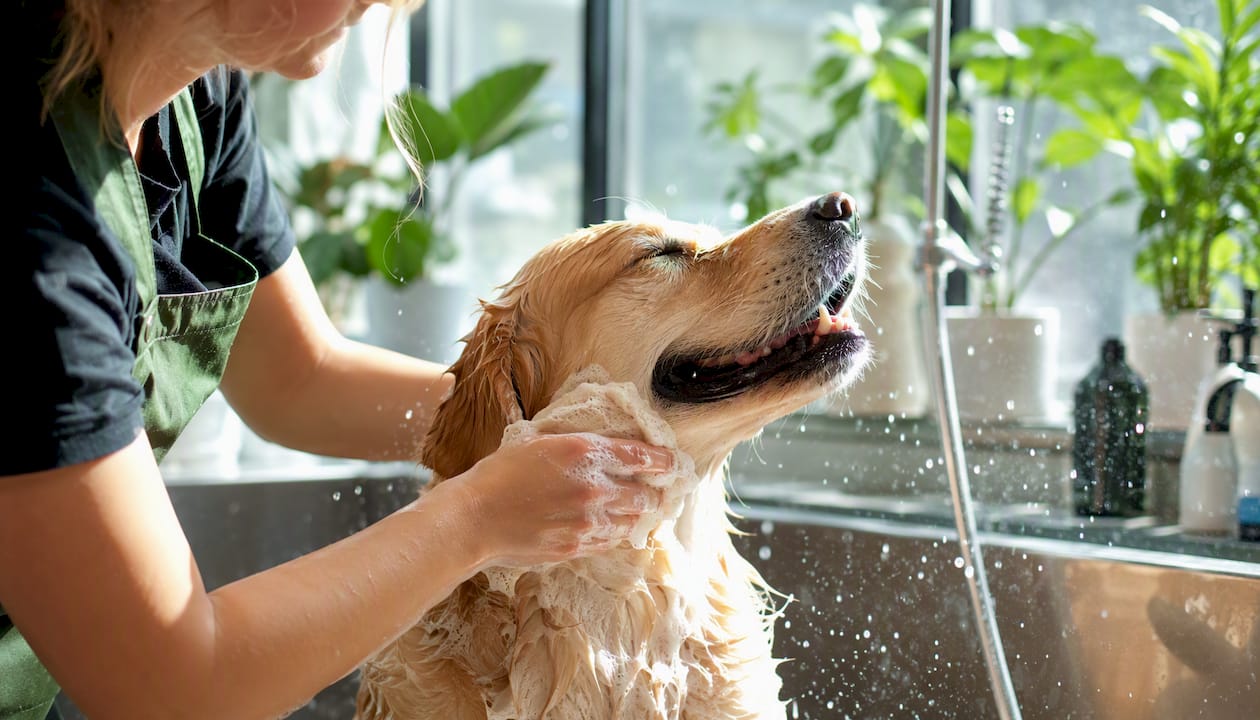
Typical first-groom timeline:
| Service | Typical Duration |
|---|---|
| Intake and behavioral assessment | 10 minutes |
| Warm-up and pre-brush | 10 minutes |
| Bath and rinse | 15 minutes |
| Supervised drying | 20–40 minutes |
| Trim, finish, and nail care | 20 minutes |
| Owner debrief | 5 minutes |
| Full groom total | 2 hours |
| Bath-only service | 45 minutes |
A first groom that wraps up quickly for a full-sized dog may indicate skipped steps or rushing. Either steps were skipped or the pet was rushed.
Owner prep checklist before the appointment:
- Bring vaccination records (rabies, Bordetella at minimum)
- Note any behavioral triggers in writing: loud dryers, nail handling, strangers touching ears
- Avoid bringing a pet who is unwell, overtired, or hasn’t eaten recently
- Pre-brush if the coat is matted; severe matting found at the salon often triggers a de-matting surcharge
The ASPCA recommends gradual desensitization for nail trims and paw handling, so if your dog is sensitive in those areas, tell the groomer before they start. Between professional grooms, a slicker brush used a few times a week keeps the coat manageable and makes the next salon visit faster and less stressful.
How grooming pricing works and what to expect
Price alone is a poor proxy for quality. A groomer charging significantly below the local average is often cutting time, not costs.
What drives the price:
- Breed and coat type (a Bichon Frise costs more to groom than a Beagle)
- Coat condition: matted coats require extra time and often trigger a surcharge
- Size: most salons price by weight band
- Add-ons: de-shedding treatments, specialty shampoos, teeth brushing, ear cleaning, and anal gland expression are usually priced separately
Common surcharges to watch for:
- De-matting fee (charged per 15-minute increment in some salons)
- Extended appointment fee for reactive or anxious pets
- First-visit fee at some salons to cover the extra intake time
- Late pickup fee if you don’t collect your pet within a set window
Tipping: 15–20% of the service total is a reasonable baseline for a standard groom. For a particularly complex coat, a reactive dog, or a groomer who went well beyond the scope, 20–25% is appropriate. Tips are especially meaningful for independent groomers who set their own rates.
A groomer who can’t explain their pricing structure or who quotes a flat rate for every dog regardless of coat type is worth questioning. Transparent, breed-based pricing is a sign of a professional who knows what the work actually involves.
Mobile grooming vs. salon grooming: which is right for your pet?
Neither format is universally better. The right choice depends on your pet’s temperament and your own priorities.
| Factor | Mobile Grooming | Salon Grooming |
|---|---|---|
| Stress level | Lower for many dogs (one-on-one, no other animals) | Higher if the dog is reactive to other pets |
| Equipment | Limited to van setup | Full range of tubs, dryers, tables |
| Emergency logistics | Groomer is alone; nearest vet may be farther | Staff on hand; established vet relationship nearby |
| Convenience | Comes to you | Requires drop-off and pickup |
| Ventilation | Depends on van design; ask specifically | Usually better in a purpose-built salon |
| Wait time | Your pet is the only one | May share space with other animals |
Mobile-specific questions to ask: Where do you park the van? Is there climate control? What’s your emergency plan if my dog needs a vet while you’re on the road?
Salon-specific checks: How many animals are in the salon at one time? Is drying always supervised? Do cats and dogs share the same space?
For anxious dogs who do poorly around other animals, mobile grooming often produces calmer results. For large breeds or dogs who need specialized equipment, a well-equipped salon is usually the stronger choice.
Red flags that should make you walk away
Some issues are correctable. These are not.
Walk away immediately if you see:
- Cage dryers running with no staff member in the room
- Strong chemical or ammonia odors throughout the space
- Staff who are visibly rushed, rough, or dismissive when handling animals
- Refusal to show you the grooming area before you book
- No vaccination requirement at intake
- Vague or evasive answers about emergency procedures
If an incident occurs during a groom:
- Request a written account of exactly what happened and when.
- Take your pet to a veterinarian immediately, even if injuries appear minor.
- Document everything: photos, the groomer’s written account, your vet’s findings.
- Report serious incidents to your local animal services authority or provincial SPCA.
The RSPCA specifically flags unattended drying equipment as a source of severe injury. If a groomer dismisses that concern or tells you their dryers are “fine,” that’s your answer.
If a red flag is borderline (a slightly disorganized supply area, one vague answer), ask for a corrective action: “Can you show me how the drying station is set up?” A groomer who responds well to a direct question is worth a second look. One who gets defensive is not.
Why Petbite’s grooming service meets the safety-first standard
Petbite’s certified groomers in Orléans have groomed over 500 animals with a 5-star average rating. The service is built around the same criteria this article covers: verified credentials, reward-based handling, and a clear intake process that starts with a meet-and-greet.
What Petbite’s grooming service includes:
- Certified, trained groomers with hands-on experience across breeds
- A meet-and-greet before the first full groom so your pet can acclimate
- Transparent service scope and pricing discussed at booking
- In-store grooming with a clean, organized facility you can inspect
- Free same-day delivery within 3 km of the Orléans location for grooming products and supplies
How to book: visit the grooming booking page, select your service, and note any behavioral or health considerations in the intake form. Bring vaccination records to the first appointment.
For home care between visits, Petbite also stocks grooming tools including the Kong ZoomGroom, which works well for regular coat maintenance and doubles as a bath-time massager.
The groomer relationship is worth building carefully
Most owners spend more time researching a new restaurant than they do vetting a groomer. That’s worth flipping. A groomer who knows your dog’s triggers, coat history, and behavioral quirks will produce better results every single visit, and your dog will be noticeably calmer walking in the door.
The trial groom is not just a test of the groomer’s skill. It’s the start of a working relationship. Go in with your checklist, ask your questions, and pay attention to how your pet looks and behaves when you pick them up. A dog who comes home relaxed and coat-clean, with a groomer who debriefs you on anything notable, is a dog in good hands.
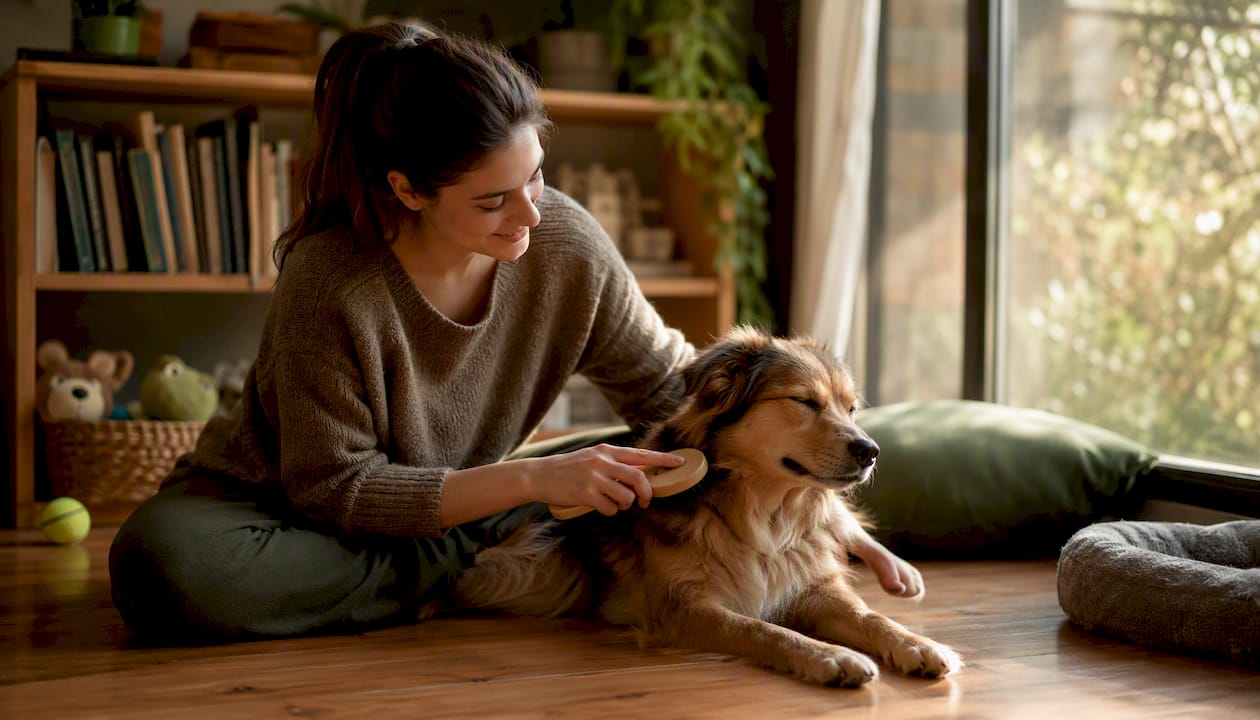
Between appointments, a few minutes of brushing with a quality tool keeps the coat from matting and makes the next professional groom faster and less stressful for your pet. That consistency, at home and at the salon, is what good long-term coat health actually looks like.
Book a grooming session at Petbite in Orléans
Petbite offers professional pet grooming with certified groomers who have earned a 5-star average across more than 500 animals groomed. Every new client starts with a meet-and-greet, so your pet isn’t walking into an unfamiliar situation cold.
Bring your vaccination records, note any behavioral triggers in the booking form, and the team handles the rest. For Orléans residents within 3 km, free same-day delivery means you can also stock up on grooming supplies, premium food like PetKind’s Red Meat Formula, or home-care tools without leaving the house. Book your appointment directly on the Petbite grooming page.
Sources
- Questions to ask potential groomers (AKC)
- Dog grooming tips (ASPCA)
- How to find the best groomer for your pet (BC SPCA)
- Choosing the right dog groomer (RSPCA)