

For most dogs who pull or have any neck, respiratory, or heart issues, a well-fitted non-tightening front-clip harness is the safer choice. If your dog already walks reliably on a loose lead, a flat collar works fine. That’s the short answer — the rest of this article explains why, and helps you pick the right device for your specific dog.
Quick rules: if your dog pulls, use a front-clip harness. If your dog is brachycephalic (think Bulldogs, Pugs, French Bulldogs), use a harness. If your dog walks calmly and consistently on a loose leash, a flat collar is acceptable. Keep a collar on for ID regardless of which you choose for walks.
Key Takeaways
For most dogs, a non-tightening front-clip harness is the safest walking device, while a flat collar remains the right place for ID tags regardless of which you use on walks.
| Point | Details |
|---|---|
| Pullers need a harness | A front-clip non-tightening harness reduces pulling without concentrating force on the neck. |
| Harnesses for health conditions | Dogs with neck, respiratory, heart, or tracheal issues should always use a harness, per AKC guidance. |
| Collars work for calm walkers | A flat collar is the least restrictive option for dogs that already walk on a loose lead. |
| Fit determines safety | Check two-finger clearance under every strap; re-check after weight changes or coat growth. |
| Petbite offers fitting help | Stop in or book a grooming appointment at Petbite for hands-on harness and collar fitting guidance. |
Table of Contents
- What you need to know about collars: types, pros, and real risks
- Harnesses: types, benefits, and what to watch out for
- How to choose: a practical decision checklist
- Fitting and safety: how to size correctly and avoid common mistakes
- What the evidence and experts say about pulling, welfare, and humane choices
- Petbite has the gear your dog actually needs
- Sources
What you need to know about collars: types, pros, and real risks
Collars are the default choice for most dog owners, and for calm, trained walkers, they’re perfectly reasonable. The two types you’ll encounter most often are the flat collar and the martingale (also called a limited-slip collar).
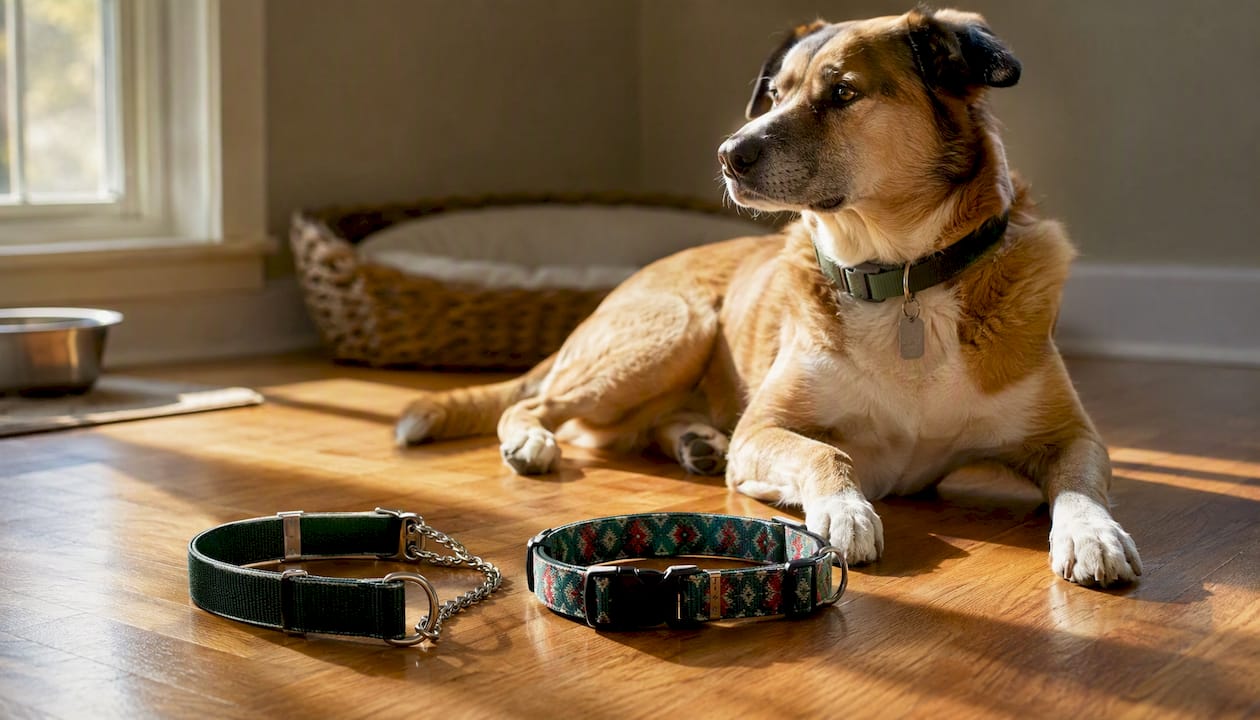
A flat collar is exactly what it sounds like: a fixed loop of nylon or leather with a buckle or snap. It’s simple, cheap, and ideal for holding ID tags. A martingale has a second loop that tightens slightly when the dog pulls, then releases — it won’t choke, but it does apply pressure. According to the Whole Dog Journal, martingales are commonly recommended for narrow-headed breeds like Greyhounds and Whippets, which can slip out of standard flat collars.
Pros of collars:
- Simple to put on and take off
- Best place to attach ID tags and rabies tags
- Least restrictive for dogs that already walk on a loose lead
- Lower cost than most harnesses
- Widely available in every pet store
Cons and real risks:
- Concentrated neck pressure when a dog pulls, which can stress the trachea, thyroid, and cervical spine
- Escape risk for sighthounds and other narrow-headed breeds with flat collars
- Not appropriate for dogs with neck pain, collapsing trachea, or respiratory conditions
- Choke and prong collar variants carry documented welfare risks and should be avoided
One peer-reviewed study using a simulated neck model found that some collar designs concentrate pressure to levels that, in other species, would risk tissue damage under high leash forces. That’s not a reason to panic if your dog is a calm walker, but it is a reason to take pulling seriously.
Who suits a collar: dogs that have already learned loose-leash walking, adult dogs without neck or respiratory issues, and any dog that needs to wear ID tags during walks.
Pro Tip: Fit check for collars: slide a finger flat under the collar. If they slide in easily but the collar doesn’t sag, the fit is right. If you can fit more than two fingers, it’s too loose; if you can barely get one in, it’s too tight.
For a deeper look at collar types and our picks, the best dog collars guide on Petbite covers martingales, flat collars, and what to look for by breed.
Harnesses: types, benefits, and what to watch out for
A harness wraps around the dog’s chest and shoulders rather than the neck, which distributes leash pressure across a much larger and more resilient area. That single design difference is why the AKC recommends harnesses for dogs with neck, respiratory, or heart issues, and for breeds where the head is similar in size to the neck.
Common harness types and when to use them:
- Back-clip harness: the leash attaches at the dog’s back. Good for calm walkers and small dogs; gives less steering control for pullers.
- Front-clip (non-tightening) harness: the leash attaches at the chest. Redirects a pulling dog toward you without applying neck pressure. This is the type most supported by evidence for dogs that pull.
- Step-in harness: the dog steps into two loops and you clip it at the back. Useful for dogs sensitive to having things put over their heads.
- Y-shaped or chest-strap harness: designed to keep the straps away from the shoulder joint, reducing gait interference. Worth seeking out for active or athletic dogs.
- Head halter: fits around the muzzle and behind the ears, giving steering control similar to a horse halter. Effective for strong pullers but requires careful introduction and should never be used with a sudden jerk.
The AKC’s harness fitting guide also notes that step-in harnesses can reduce escape risk for dogs sensitive to head handling, and that harnesses are especially helpful for puppies, seniors, and broad-headed breeds.
What to watch out for: some harness designs can alter gait if they press on the shoulder joint or restrict front-leg movement. A PMC study on canine gait found that certain harness styles affect stride length and joint angles in some dogs. The fix is choosing a Y-shaped or chest-strap design and checking that the front straps sit clear of the shoulder blades. Also avoid any harness that tightens under tension — those carry the same welfare concerns as choke collars.
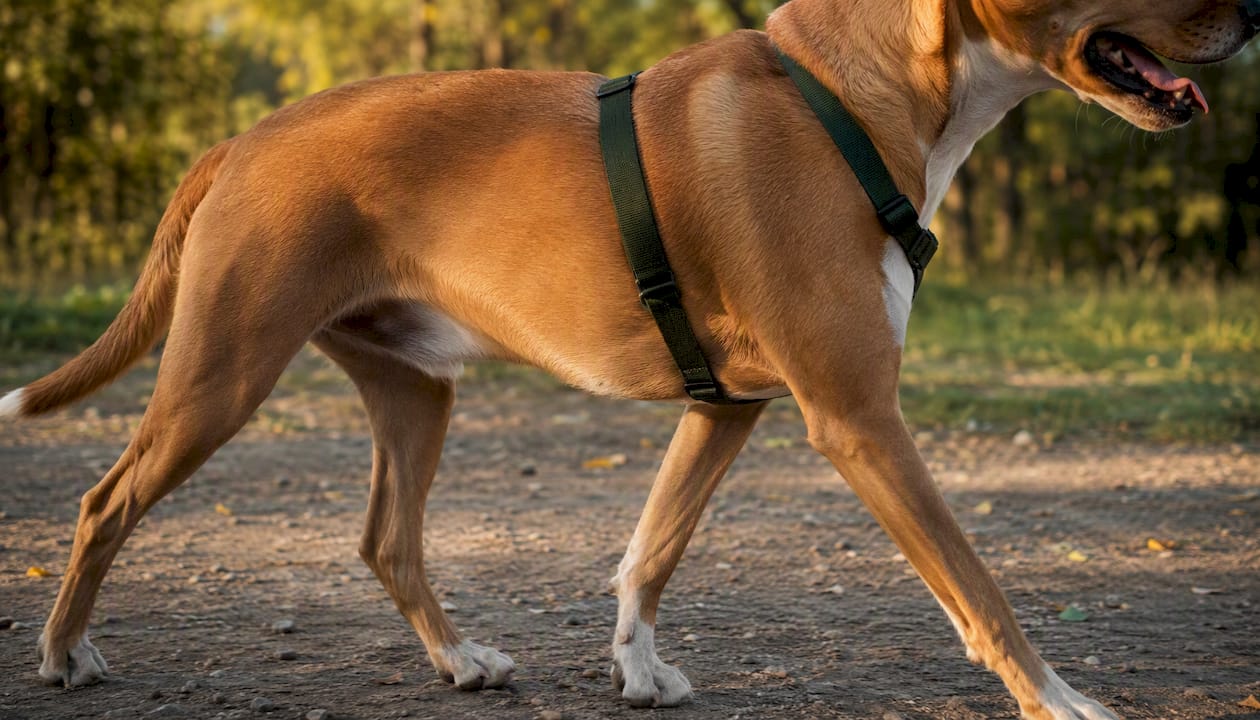
Pro Tip: Before buying a harness, measure your dog’s girth (the widest part of the chest, just behind the front legs) and neck circumference. Most sizing charts use girth as the primary measurement. When in doubt, size up and adjust the straps.
How to choose: a practical decision checklist
Work through these questions in order. The first answer that applies to your dog gives you a clear direction.
- Does your dog pull on the leash? If yes, go with a front-clip non-tightening harness. Pulling with a collar concentrates force on the neck; a front-clip harness redirects without that risk.
- Does your dog have any neck, respiratory, tracheal, or heart issues? If yes, a harness is non-negotiable. This includes dogs with collapsing trachea, brachycephalic breeds (Bulldogs, Pugs, Shih Tzus, Boston Terriers), and any dog whose vet has flagged neck sensitivity.
- Is your dog a puppy under six months? Use a harness. Puppies are still developing, and neck pressure during the learning phase is an unnecessary risk.
- Is your dog a sighthound or narrow-headed breed? A martingale collar reduces escape risk better than a flat collar, but a well-fitted harness is often the safer long-term choice.
- Is your dog a senior with joint issues? A harness with a handle on the back lets you support your dog on stairs or uneven ground, which a collar cannot do.
- Does your dog walk calmly on a loose lead, consistently? A flat collar is fine. No need to add equipment that isn’t necessary.
- Do you need to attach ID tags? Keep a flat collar on for ID regardless of which device you use for walks. A harness is not a substitute for a collar with tags.
Pro Tip: Use a harness for walks and a flat collar for ID. Most trainers and vets recommend this combination — it covers safety, control, and identification without compromise.
For a curated list of non-pull harness options, the best no-pull harness guide on Petbite walks through front-clip designs that won’t restrict shoulder movement.
Fitting and safety: how to size correctly and avoid common mistakes
Getting the fit right matters as much as choosing the right device. A collar that’s too loose becomes an escape route; a harness that’s too tight can restrict breathing or chafe.
Collar fit check:
- Slide two fingers flat under the collar. Snug but not tight is correct.
- For martingales, the tightened loop should still leave two fingers of space at full tension.
- Check the fit every few months — weight changes and coat growth shift the fit.
Harness fit check:
- Measure girth (behind the front legs) and neck before buying.
- With the harness on, run two fingers under every strap. You should be able to do it without forcing.
- Watch your dog take a few steps. The front straps should not pull back toward the shoulder blades when the dog moves forward.
- Do an escape test: gently push the harness forward and backward. If it slides over the head or slips off a shoulder, it’s too loose.
Veterinary guidance consistently flags that an improperly fitted harness can cause as much harm as the wrong device entirely — chafing, restricted gait, and escape risk all trace back to fit, not just design choice.
Signs a device isn’t working:
- Coughing or gagging on walks (collar pressure on the trachea)
- Reluctance to move or sit down when the harness is on (too tight or pressing on a joint)
- Hair loss or skin redness under straps (chafing from poor fit or wrong material)
- Repeated escapes (too loose or wrong design for the dog’s body shape)
If you see any of these, stop using the device and reassess fit before the next walk. A vet visit is warranted if coughing or breathing difficulty persists.
Pro Tip: Re-check harness fit after any significant weight change, a seasonal coat blow, or after a puppy’s growth spurt. What fit perfectly in March may be too tight by June.
What the evidence and experts say about pulling, welfare, and humane choices
The research on this topic is more nuanced than most articles let on. A 2025 systematic review published in Animals (MDPI) analyzed 21 full-text articles and two abstracts comparing collars, harnesses, and head collars. Its headline finding: there is no single best device for every dog. For dogs that pull, non-tightening front-clip harnesses tend to offer the best balance between reducing pulling and minimizing discomfort. For dogs that already walk on a loose lead, flat collars are the least restrictive option.
The “harnesses cause pulling” myth
This one comes up constantly, and it’s wrong. Dogster’s training guidance puts it plainly: harnesses don’t cause pulling — lack of leash training does. A harness simply makes pulling less likely to damage the neck. The solution to pulling is reward-based leash training, not switching back to a collar.
On aversive devices
The Whole Dog Journal and most professional trainers are consistent here: prong collars, choke chains, and tightening harnesses carry welfare risks and can damage the dog-handler relationship. The evidence doesn’t support them as necessary tools when humane alternatives exist.
| Source | Key finding |
|---|---|
| Animals (MDPI), 2025 review | No single best device; front-clip non-tightening harnesses best for pullers |
| AKC veterinary guidance | Harnesses recommended for brachycephalic breeds, neck/respiratory/heart issues |
| Dogster trainer guidance | Pulling is a training issue, not a device issue |
| Whole Dog Journal | Aversive tools (prong, choke) carry welfare risks; humane options preferred |
| PMC gait study | Some harness designs alter stride length and joint angles; fit and design matter |
Reward-based leash training, combined with the right equipment, is the approach that holds up across both the research and professional guidance. If pulling is severe, a certified professional dog trainer (CPDT-KA credential) is worth consulting.
A note on how Petbite approaches the collar vs. harness choice
Choosing between a harness and a collar isn’t a one-time decision — it shifts as your dog grows, gains or loses weight, or develops health issues. At Petbite, the approach is always safety first, fit second, and training third. No piece of equipment replaces leash manners, but the right gear makes the process safer and more humane while you’re building those skills.
If you’re unsure which harness fits your dog’s body shape, our grooming appointments are a natural opportunity to get hands-on fitting help from people who handle dogs every day. We’re also happy to answer fitting questions directly. Getting the fit right the first time saves money and keeps your dog comfortable.
Petbite has the gear your dog actually needs
Choosing the right walking equipment is one part of keeping your dog healthy and comfortable. Petbite carries a curated selection of harnesses, collars, and accessories chosen for quality and fit, not just price. If you’re in the Orléans area, you can stop in and get hands-on help finding the right size, or book a professional grooming session where our certified groomers can check harness and collar fit as part of the appointment.

Free same-day delivery within 3 km of our location means you don’t have to wait to get your dog set up with the right gear. Browse our full selection at Petbite and reach out with any fitting questions before you buy.
Sources
- Collars, harnesses and head collars for walking dogs: a review (Animals, MDPI)
- Dog harness vs. collar (AKC)
- How to choose the right training collar or harness for your dog (Dogster)
- Dog Collars vs Harnesses (Whole Dog Journal)
- Relevant study reporting effects of restraint devices on canine gait (PMC)