

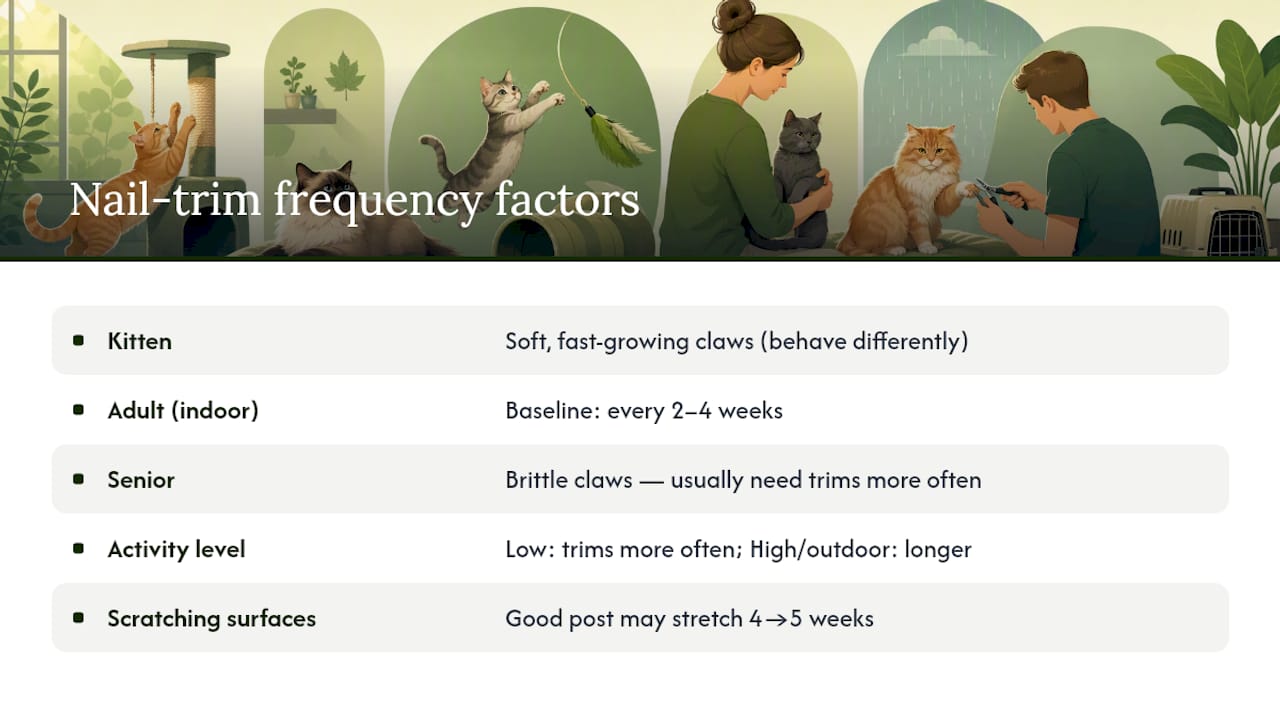
Most cats need their nails trimmed every two to four weeks, though Consumer Reports and VCA Animal Hospitals both point to that same window as the reliable baseline for indoor cats. Outdoor cats that climb, dig, and scratch on rough surfaces often go longer between trims since their nails wear down naturally. Indoor cats, especially older or less active ones, usually need trims more often because nothing files those nails down for them.
Your cat’s age, activity level, and access to scratching surfaces all shift that number up or down. A kitten’s soft, fast-growing claws behave differently than a fourteen-year-old cat’s brittle ones, and a cat with a good scratching post at home may stretch four weeks into five.
Key Takeaways
Most cats need a nail trim every two to four weeks, adjusted for age, activity level, and how much natural wear their claws get from scratching surfaces.
| Point | Details |
|---|---|
| Baseline frequency | Trim indoor cats every 2 to 4 weeks; outdoor or active cats can often wait 4 to 6 weeks. |
| Use the 5mm rule | Trim once a nail extends more than 5 millimeters past the pink quick. |
| Adjust by age | Kittens and seniors often need closer attention than mid-life adult cats. |
| Build the habit gradually | Trim one or two nails per session and reward with treats to reduce stress over time. |
| Get help when needed | Petbite’s groomers handle anxious or medically complex cats when at-home trims aren’t safe. |
Table of Contents
- How Often to Trim Cat Nails Based on Lifestyle
- What Signs Mean It’s Time for a Trim?
- How Do You Safely Trim a Cat’s Nails at Home?
- Which Tools Do You Need for Nail Trimming?
- How Do You Calm an Anxious Cat for Nail Trims?
- What’s the Best Way to Decide Your Cat’s Schedule?
- When Should You Call a Vet Instead of Trimming Yourself?
- Why Declawing Isn’t the Answer
- A Groomer’s Honest Take on Nail Trim Routines
- Get Professional Nail Trims or the Right Tools at Petbite
- Sources
How Often to Trim Cat Nails Based on Lifestyle
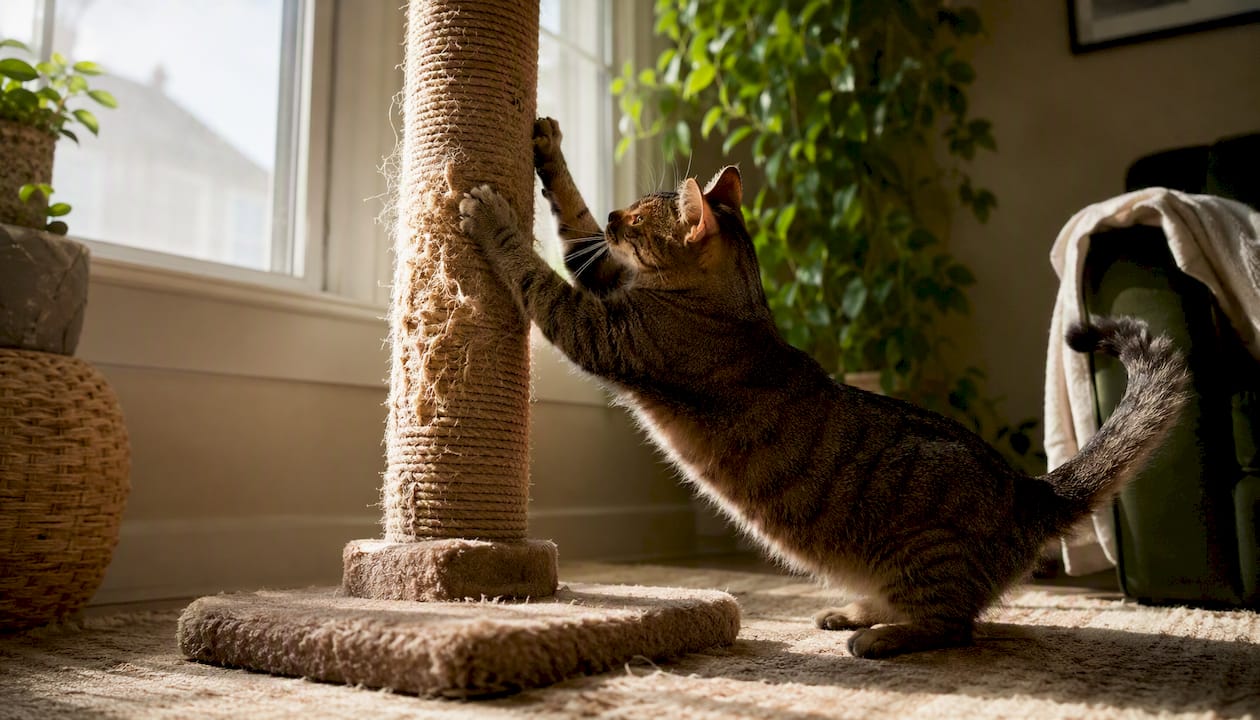
Activity level drives nail length more than anything else. Cornell’s Feline Health Center notes that less active or older cats often fail to wear nails down naturally, which means the job falls entirely on you. An outdoor cat scratching tree bark and pavement gets some natural filing built into its day. An indoor cat lounging on the couch gets none of that.
Age matters just as much. Kittens grow nails fast and benefit from short, frequent handling sessions that double as training. Adult cats settle into a predictable rhythm. Senior cats often need closer attention because their nails can thicken and grow unevenly.
Rough example schedules:
- Kittens: Check weekly, trim tips every 2 to 3 weeks as claws grow in.
- Indoor adult cats: Every 2 to 4 weeks, per Purina’s guidance.
- Outdoor or highly active adult cats: Every 4 to 6 weeks, sometimes longer.
- Senior cats: Every 2 to 3 weeks, with closer attention to thickened or ingrown nails.
What Signs Mean It’s Time for a Trim?
Skip the guesswork with a simple visual check: a nail growing more than 5 millimeters past the pink quick is ready to be trimmed. That five millimeter mark is the closest thing to an objective rule in cat grooming, and it works whether your cat is due next week or next month.
Short of pulling out a ruler, watch for these signals during your monthly once-over:
- Nails snag on carpet, blankets, or your sweater.
- Claws curl visibly when your cat’s paw rests flat.
- You hear clicking on hardwood or tile floors.
- Your cat scratches furniture more aggressively than usual, sometimes from irritation at overgrown tips.
- Dewclaws (the ones higher on the leg that never touch the ground) look long or hooked, since they never get natural wear.
Run this check monthly. It takes under a minute per paw and catches problems before a nail curls into the pad.
How Do You Safely Trim a Cat’s Nails at Home?
Start with a calm cat and good lighting, not a fast grip and a prayer. Pick a quiet moment, maybe after a meal or a play session when your cat is naturally relaxed, and settle into a comfortable position with the cat facing away from you or nestled in your lap.
- Get settled. Hold your cat gently but securely, ideally wrapped in a towel if it’s your first few tries.
- Extend one nail. Press the paw pad gently between your thumb and forefinger; the claw pushes out on its own.
- Look for the quick. That pink area inside the nail has blood vessels and nerves. You’re cutting only the clear, curved tip beyond it.
- Cut at an angle, not straight across. A single clean snip beyond the quick is enough. When unsure, trim less rather than more.
- Reward immediately. A treat or a few seconds of praise after each nail (or even each paw) turns the process into something your cat tolerates, then eventually accepts.
- Stop if your cat struggles. Finishing four nails today and the rest tomorrow beats forcing all eighteen in one stressful sitting.
If you nick the quick, don’t panic. Press a pinch of styptic powder or plain cornstarch against the nail tip for about 30 seconds; the bleeding usually stops fast, per VCA’s grooming guidance. Comfort your cat, end the session there, and try again in a day or two rather than pushing through.
Pro Tip: Watching a demo video or set of step-by-step photos before your first trim helps more than any written instructions. Seeing exactly how much nail to cut removes most of the hesitation that causes shaky, unsafe trims.
Which Tools Do You Need for Nail Trimming?
Scissor-style clippers work well for most cats and give you the most control for a clean, angled cut. Guillotine-style clippers cut fast but can crush thicker or curved nails if not aligned precisely. Grinders smooth the tip after a cut and suit cats who tolerate the vibration and sound, though many cats need weeks of desensitization first.
Beyond clippers, keep these on hand:
- Styptic powder or cornstarch for accidental nicks.
- High-value treats the cat only gets during trimming sessions.
- A towel for gentle, secure wrapping if your cat squirms.
- A stable, well-lit surface, like a table or your lap with a towel underneath.
A well-designed pair like the JW GripSoft cat nail clipper offers a non-slip grip and a small enough blade for cat claws specifically, which matters since dog clippers are often too bulky. If you’d rather skip the DIY route entirely, professional trims at most groomers run a modest flat fee and take just a few minutes.
How Do You Calm an Anxious Cat for Nail Trims?
Some cats fight every trim no matter how careful you are. Gradual desensitization fixes most of that over time. Handle your cat’s paws daily outside of trimming sessions, just a few seconds of gentle touch with a treat afterward. Get your cat used to the sound of clippers separately, since the noise alone spooks many cats before the blade ever touches a claw.
Calming pheromone sprays applied about 15 minutes before a session can take the edge off for sensitive cats. If trimming still isn’t happening safely:
- Keep scratching posts or pads accessible; a cat that scratches regularly needs fewer trims.
- Try nail caps, soft vinyl covers glued over trimmed nails that blunt sharp tips for weeks at a time.
- Book a professional groomer for cats that fight every attempt at home.
- Ask your vet about short-term calming medication for extreme cases, never as a substitute for gentler handling.
Pro Tip: Trim one or two nails per session instead of all eighteen. A cat that associates trimming with a thirty-second interaction, not a ten-minute wrestling match, gets easier to handle every time.
What’s the Best Way to Decide Your Cat’s Schedule?
A short checklist beats vague guessing every time:
- Inspect monthly. Check all four paws, including dewclaws, once a month at minimum.
- Measure against the quick. If a nail extends more than 5 millimeters past the pink, trim it.
- Adjust for activity. Indoor, sedentary, or senior cats usually need trims closer to every two weeks; active outdoor cats can often wait four to six.
- Watch for dewclaws separately, since they never touch the ground and don’t wear down on their own.
- Call your vet if you notice unusual growth, curling, or a claw that seems to be growing into the pad.
When Should You Call a Vet Instead of Trimming Yourself?
Some situations call for professional hands, not another attempt at home. Watch for:
- Bleeding that doesn’t stop after a few minutes of pressure and styptic powder.
- A broken, split, or visibly ingrown nail.
- Swelling, discharge, or a foul smell around the nail bed, which points to infection.
- A cat so fearful or aggressive that handling risks injury to you or the cat.
Medical issues (infection, ingrown nails, unusual bleeding) call for a vet visit. Handling and fear issues are often better solved with a professional groomer experienced in calming anxious cats. Most professional trims cost a modest flat fee and take only a few minutes.
Why Declawing Isn’t the Answer
Declawing amputates the last bone of each toe, not just the nail, and veterinary and humane organizations broadly discourage the procedure because it can cause chronic pain and lasting behavior changes. Regular trimming solves the same problem without the surgery.
Safer alternatives include:
- Routine trims on the schedule outlined above.
- Sturdy scratching posts that file nails naturally.
- Nail caps for cats prone to scratching furniture or people.
- Vet-guided behavior support for cats with genuinely severe scratching issues.
A Groomer’s Honest Take on Nail Trim Routines
Frequent, tiny trims beat occasional marathon sessions every time. A cat that gets one nail clipped every few days barely notices; a cat pinned down for all eighteen nails once a month remembers it. That’s the pattern worth building, not the calendar reminder.
Trimming is a learnable skill, not a talent some owners have and others don’t, and it’s a far safer long-term habit for your cat than any surgical shortcut. Watching hundreds of cats go through grooming sessions makes one thing obvious: the cats who do best are the ones whose owners started early and kept sessions short.
Get Professional Nail Trims or the Right Tools at Petbite
If your cat turns nail trims into a wrestling match every time, you don’t have to keep white-knuckling it alone. Petbite’s certified groomers in Orléans have handled over 500 cats and dogs with a calm, practiced touch, and booking a professional grooming session takes the stress off both of you, especially for cats with anxiety or medical nail issues that need a gentler hand.

Prefer to keep trimming at home? Petbite stocks cat-specific clippers built for small, curved claws, plus grooming tools like the KONG ZoomGroom for cats to keep handling sessions calm before and after a trim. And if your cat’s next trim goes smoothly, reward the effort with a treat from Petbite’s raw food selection, since a high-value snack makes every future session easier. Free same-day delivery within 3 kilometers of the Orléans store means your supplies show up before your cat forgets why it’s mad at you. Book a grooming slot or order your trimming kit today.
Sources
These sources informed this guide because they combine veterinary expertise with practical, evidence-based trimming advice:
- How to Trim Cat Nails
- How to Trim a Cat’s Nails | VCA Animal Hospitals
- How to clip your cat’s claws | Consumer Reports
- How to Trim Cat Nails: Step-by-Step | Purina
- Cornell Feline Health Center — Choosing and caring for your new cat