

The single best hypoallergenic dog shampoo for sensitive skin is Earthbath Oatmeal & Aloe Shampoo — fragrance-free, dye-free, and built around colloidal oatmeal that actually adheres to the skin surface to soothe and moisturize. If your dog scratches after every bath, this is the first bottle to try.
Runner-up picks worth knowing:
- Epi-Soothe Shampoo — vet-recommended, soap-free, with SPHERULITES® microcapsule technology for slow-release soothing; the go-to when a dermatologist or vet has already weighed in.
- Burt’s Bees Hypoallergenic Dog Shampoo — simple, fragrance-free, widely available at Target and Walmart; the right call for mild sensitivity on a budget.
- Elanco Relief Shampoo (Pramoxine & Colloidal Oatmeal) — contains pramoxine, an actual antipruritic agent, for dogs whose itching needs more than oatmeal alone.
- Virbac KetoChlor Medicated Shampoo — ketoconazole plus chlorhexidine for confirmed fungal or bacterial involvement; use only under veterinary guidance.
Every pick on this list is fragrance- and dye-free, soap-free or pH-optimized, and built around at least one clinically recognized soothing agent: colloidal oatmeal, aloe vera, or a pharmaceutical antipruritic.
Table of Contents
- What are the best hypoallergenic dog shampoos compared side by side?
- How do you choose a truly hypoallergenic dog shampoo?
- When should you use a medicated shampoo instead of a gentle one?
- How do you bathe a dog with sensitive skin for the best results?
- Petbite’s grooming service is built for sensitive dogs
What are the best hypoallergenic dog shampoos compared side by side?
| Product | Best for | Key soothing ingredients | Soap-free / pH-safe | Fragrance / dye | Where to buy |
|---|---|---|---|---|---|
| Earthbath Oatmeal & Aloe | Everyday sensitive skin | Colloidal oatmeal, aloe vera | Yes / yes | Both free | Pet retailers, Amazon |
| Burt’s Bees Hypoallergenic | Mild sensitivity, budget | Aloe vera | Yes / yes | Both free | Target, Walmart, Amazon |
| Epi-Soothe | Vet-directed soothing | Oat derivatives, glycotechnology | Yes / yes | Both free | Vet clinics, online vet pharmacies |
| We Love Doodles 4-in-1 | Multi-use convenience | Gentle conditioners | Yes / yes | Fragrance-free | Amazon, specialty pet stores |
| Project Sudz Shampoo Bar | Low-waste, minimal ingredients | Plant-based oils | Yes / yes | Both free | Specialty retailers, Etsy |
| Pet Honesty Allergy Anti-Itch | Allergy-related itching | Aloe, anti-itch botanicals | Yes / yes | Fragrance-free | Amazon, Chewy |
| Elanco Relief Shampoo | Acute itch, stronger relief | Pramoxine, colloidal oatmeal | Yes / yes | Both free | Chewy, Amazon, vet offices |
| Virbac KetoChlor Medicated | Fungal/bacterial infections | Ketoconazole, chlorhexidine | Medicated / yes | Both free | Vet clinics, vet pharmacies |
| Veterinary Formula Clinical Care | Hot spots, intense irritation | Salicylic acid, hydrocortisone | Medicated / yes | Both free | Walmart, Amazon, Chewy |
A few practical notes:
- Epi-Soothe is typically purchased through a vet clinic or online vet pharmacy. No prescription is required, but it is positioned as a professional-grade product.
- Virbac KetoChlor and Veterinary Formula Clinical Care are medicated. Use them for a diagnosed condition, not as a routine wash.
- Elanco Relief Shampoo sits in the middle: OTC availability, but pramoxine is a pharmaceutical antipruritic. If your dog’s itching has not improved after two or three baths with a gentle formula, this is the logical next step before a vet visit.
- Project Sudz suits owners who want a minimal-ingredient, low-waste option. The bar format takes a little getting used to, but the ingredient list is genuinely short.
- Colloidal oatmeal adheres to the skin surface and soothes moisture and elasticity, and soap-free formulas will not reduce the effectiveness of spot-on flea and tick preventives — a practical reason to prioritize both features.
How do you choose a truly hypoallergenic dog shampoo?
“Hypoallergenic” is not a regulated term. Any brand can print it on a bottle. What actually matters is what is inside.
What to look for:
- Colloidal oatmeal, aloe vera, ceramides, or omega fatty acids as primary soothing agents
- Fragrance-free AND dye-free (two separate claims; a product can be one without the other)
- Soap-free or pH-optimized for dogs — dog skin pH differs from human skin, and using a human shampoo disrupts the acid mantle and worsens irritation
- A full, transparent ingredient list published on the label or brand website
What to avoid:
- Artificial fragrance (listed as “fragrance” or “parfum”)
- Synthetic dyes (FD&C or D&C colorants)
- Sodium lauryl sulfate or other harsh sulfate detergents
- Unnecessary alcohols (isopropyl, denatured)
- Vague “natural” claims with no ingredient list to back them
Decision checklist:
- Match to condition. Mild sensitivity calls for a gentle oatmeal formula. Confirmed allergies with itching may need an antipruritic like pramoxine. Fungal or bacterial involvement requires a medicated active (ketoconazole, chlorhexidine).
- Check soap-free status. If your dog uses a spot-on flea or tick preventive, a soap-free formula preserves its effectiveness.
- Verify dwell time instructions. A shampoo that gets rinsed immediately after lathering delivers a fraction of its benefit.
- Review preservatives. Parabens and formaldehyde-releasing preservatives appear in some budget formulas. They are not universally harmful, but dogs with contact sensitivities may react to them.
Pro Tip: Before committing to a full bath, apply a small amount of the new shampoo to the inside of your dog’s thigh, leave it for the recommended dwell time, then rinse. Wait 24–48 hours and check for redness, hives, or increased scratching. A single patch test can save a lot of discomfort.
When should you use a medicated shampoo instead of a gentle one?
A gentle hypoallergenic formula handles routine sensitive skin and mild seasonal itching. Medicated shampoos address a specific diagnosed cause, and the distinction matters.
Signs that point to a vet visit rather than a new shampoo:
- Lesions that spread or do not improve after two baths with a soothing formula
- Open sores, crusting, or a foul odor (signals secondary infection)
- Systemic signs: fever, lethargy, loss of appetite alongside skin symptoms
- Heavy hair loss in patches
When medicated shampoos are appropriate:
- Antifungal (ketoconazole): yeast overgrowth, often presenting as greasy skin, a musty smell, or darkened skin folds
- Antibacterial (chlorhexidine): surface bacterial infections, hot spots, folliculitis
- Keratolytic (salicylic acid, sulfur): seborrhea, flaking, or scaling conditions
- Antipruritic (pramoxine, hydrocortisone): acute itch relief while the underlying cause is being treated
Most medicated shampoos are available OTC in the U.S., but that does not mean they are interchangeable. Choosing the right medicated shampoo depends on identifying the underlying cause — using an antifungal on a bacterial infection, or vice versa, will not help and may delay proper treatment. When in doubt, a single vet appointment is faster and cheaper than cycling through the wrong products.
Prescription vs. OTC: Virbac KetoChlor and Veterinary Formula Clinical Care are OTC. Some stronger formulations (higher-concentration chlorhexidine, prescription antifungals) require a veterinary prescription. Always follow the frequency and dwell-time directions on the label.
How do you bathe a dog with sensitive skin for the best results?
Getting the technique right matters as much as picking the right product.
- Leave on for 5–10 minutes. This is the step most owners skip. A dwell time of 5–10 minutes is required for actives like colloidal oatmeal and antipruritic agents to penetrate and be effective; rinsing immediately cuts the benefit significantly.
- Follow with a leave-on conditioner or hydrating spray if the coat is dry or prone to static. A hydrating detangling spray applied after towel-drying helps maintain moisture without re-wetting the skin.
Bathing frequency by condition:
| Skin condition | Recommended frequency |
|---|---|
| Mild sensitivity (no active flare) | Every 2–4 weeks |
| Active allergy flare | Weekly, or as directed by vet |
| Medicated shampoo course | Per label or vet instruction (often 2–3x/week) |
| Healthy skin, maintenance | Every 4–6 weeks |
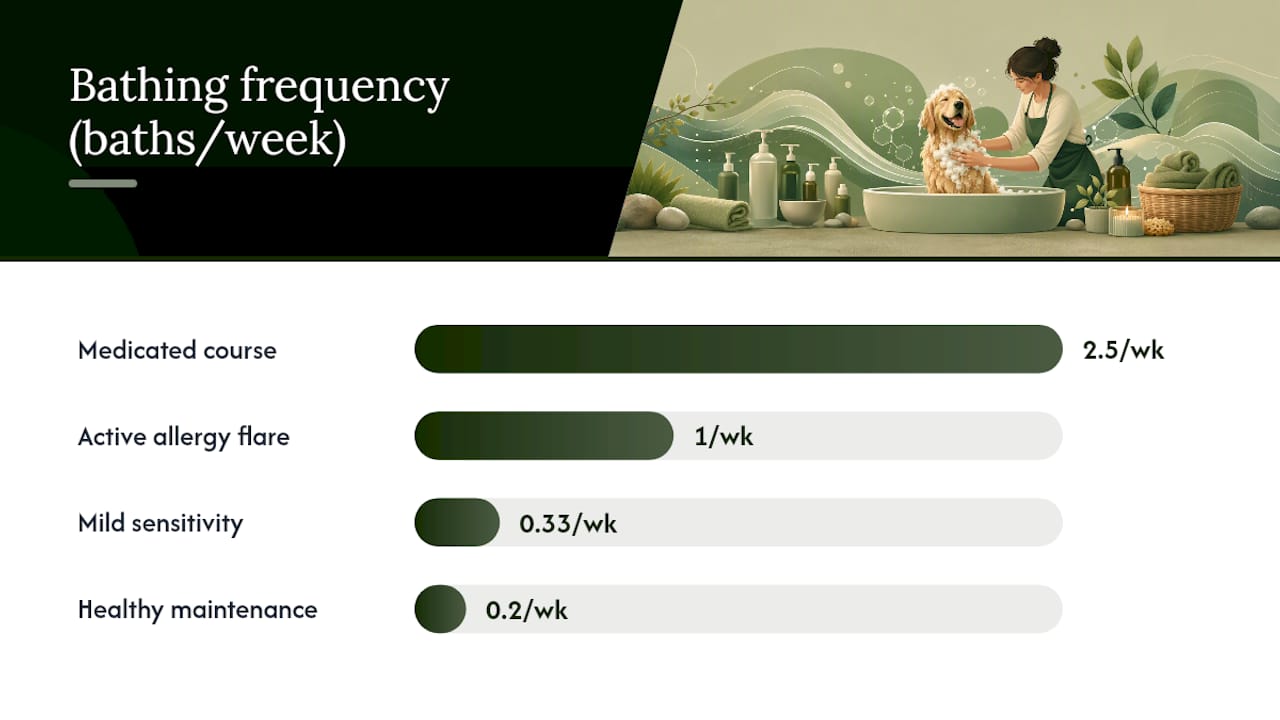
Over-bathing strips the skin’s natural oils and makes sensitivity worse. Most dogs do not need a bath more than once a week, and for dogs with mild sensitivity, every two to four weeks is usually plenty.
Spot-on preventive compatibility: Soap-free formulas are the safest choice when your dog uses a topical flea or tick treatment. Detergent-based shampoos can reduce the preventive’s absorption and shorten its effective window.
How picks were chosen and what signals were used to vet them
Every product on this list was evaluated against the same criteria:
- Veterinary or clinical references: — vet-pharmacy listings, Dailymed documentation, or peer-reviewed ingredient data
- U.S. market availability: — all products are purchasable in the United States through major retailers or vet channels
Products were excluded if the ingredient list was incomplete, if “fragrance-free” was claimed but not confirmed, or if the only supporting evidence was the brand’s own marketing copy.
A note on limitations: not every brand publicly discloses pH values, and some clinical studies on individual ingredients are small. Where pH data was not published, soap-free status was used as the practical proxy, since soap-free formulas are consistently associated with lower irritation risk and spot-on compatibility.
For further reading, Petbite’s natural dog shampoo guide covers ingredient selection in more depth.
Key Takeaways
For dogs with sensitive or allergy-prone skin, the most reliable shampoo choice combines a fragrance- and dye-free formula with colloidal oatmeal or aloe, a soap-free base, and a 5–10 minute dwell time before rinsing.
| Point | Details |
|---|---|
| “Hypoallergenic” is unregulated | Read the full ingredient list; fragrance-free, dye-free, and soap-free are the real filters. |
| Dwell time changes results | Leave shampoo on for 5–10 minutes so colloidal oatmeal and antipruritic agents can penetrate. |
| Soap-free protects spot-on treatments | Soap-free formulas preserve the effectiveness of topical flea and tick preventives. |
| Medicated shampoos need a diagnosis | Match the active ingredient to the cause; using the wrong medicated formula delays recovery. |
| Petbite for local help | Petbite’s certified groomers in Orléans use sensitive-skin products and offer same-day delivery within 3 km. |
The part most owners get wrong
The most common mistake with sensitive-skin dogs is not the shampoo choice — it is the rinse. Owners who switch products every few weeks looking for the “right” formula often have the right product already; they are just rinsing too fast and leaving residue that causes the very itching they are trying to stop.
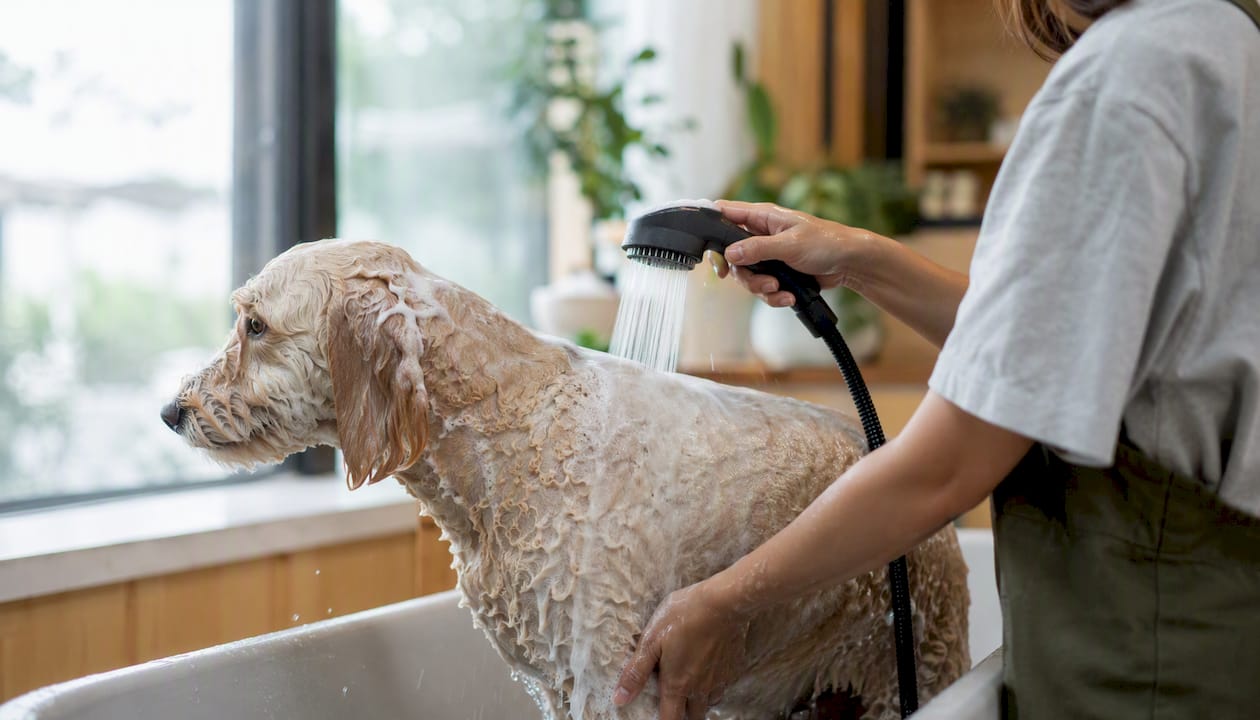
The second mistake is frequency. Bathing a reactive dog every few days feels proactive, but it strips oils faster than the skin can replace them, which makes the barrier weaker and the itching worse. Less is usually more, unless a vet has prescribed a specific medicated course.
There is also a tendency to reach for the most medicated option available, assuming stronger means better. For a dog with mild seasonal dryness, a gentle oatmeal shampoo used correctly will outperform a medicated formula used incorrectly. Save the pharmaceutical actives for when you have a confirmed reason to use them.
Petbite’s grooming service is built for sensitive dogs
If your dog’s skin reacts to the wrong product, a professional bath with the right one makes a real difference. Petbite’s certified groomers in Orléans have handled over 500 animals and hold a 5-star average rating. They select shampoos matched to each dog’s skin condition, use stress-minimizing handling, and know how long to leave a soothing formula on before rinsing.
For owners who prefer to bathe at home, Petbite stocks a curated range of sensitive-skin shampoos and delivers within 3 km of the Orléans location the same day. No trip to a big-box store, no guessing which bottle to grab off a crowded shelf.
Book a grooming session or browse the shampoo range at Petbite’s professional grooming page.
Useful sources
The recommendations above draw on the following authoritative sources:
- Vetericyn FoamCare® Medicated Pet Shampoo — Vetericyn
- Davis Oatmeal & Aloe Shampoo (Dailymed)
- How to Choose the Best Medicated Shampoo for Your Dog